Why Does a Vape Mouthpiece Get Hot, and How Can You Fix It?
Many users have run into this problem: after building a new coil and taking just a few puffs, the atomizer becomes so hot at the mouthpiece that it's almost unusable. What causes a vape mouthpiece to heat up, and how can you solve it? The issue is directl
Many users have encountered this issue: after setting up a new coil and taking a few puffs, the atomizer becomes too hot to use. What causes the vape mouthpiece to heat up, and how can you fix it?
What causes the vape mouthpiece to heat up?
This issue is directly related to the coil data, the power used, the size of the atomization chamber, and the airflow.
We know that the higher the power used, the greater the heat generated. At the same voltage, a lower coil resistance and a larger heating wire volume will result in higher heat generation. A larger atomization chamber will reduce heat accumulation, allowing for more space for heat dissipation. The greater the airflow, the more heat is carried away.
Thus, we can analyze which aspect is causing the atomizer to overheat.
 How to fix a hot vape mouthpiece?
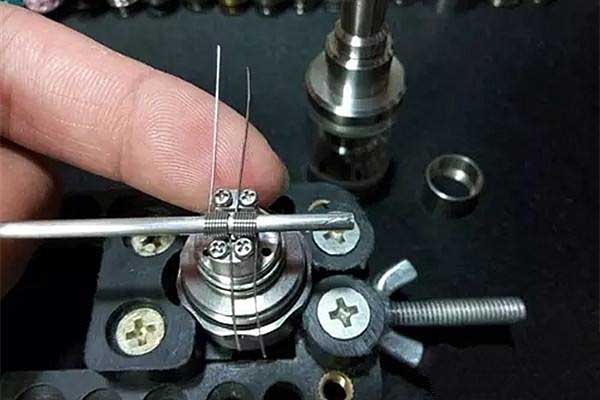
If you are using flavor-type dripping atomizers like nipples, HOBO, or Ant AX, do not choose to install lower resistance heating wires or fancy heating wires (both low resistance and fancy heating wires require higher power to reach a suitable working state).
This type of atomizer usually has less airflow and a very compact atomization chamber, making it easy for the heat generated by the heating wire to conduct to the atomizer body. In this situation, the temperature of the vapor is also very high, making it unsuitable for use.
Therefore, it is recommended to use heating wires with a diameter of 0.4mm or below for such atomizers.
Traditional flavor-type oil storage atomizers, such as the KF series and Firebird series, have very small atomization chambers and air passages, and the oil delivery paths are usually small, making it unsuitable to install thicker heating wires.
If you forcibly use low-resistance coils (under the power that matches the data), you will inevitably encounter issues such as overheating vapor, overheating atomizers, and insufficient oil supply.
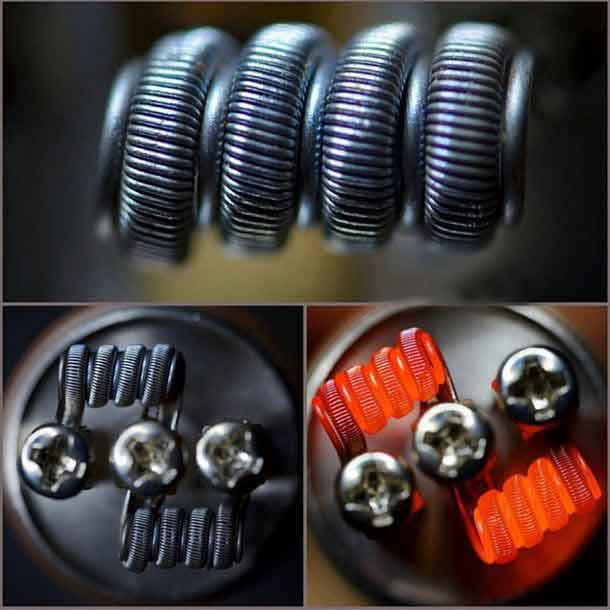
Therefore, it is also recommended to use heating wires with a diameter of 0.4mm or below for such atomizers.
For non-flavor-type dripping atomizers, the data used is much more flexible. They usually have larger atomization chambers and a much greater airflow, so most heating wires can be compatible.
However, when using dual fancy heating wires and coils with a resistance of 0.15Ω or below, overheating can still occur, so users can consider reducing the power used.
Although the atomization chamber of large vapor storage atomizers is larger compared to flavor-type ones, it still cannot match the size of dripping atomizers, and the atomization chamber is located outside the atomizer, making it difficult to dissipate heat effectively (the stored e-liquid will absorb most of the heat, but it may cause changes in the flavor of the e-liquid).
Moreover, most storage atomizers have a tapered design at the top of the atomization chamber, which is intended to enhance the richness of flavor but also increases the temperature of the vapor (relatively reducing cooling effects).
The structure of the electrode column and oil delivery also determines to some extent that storage atomizers cannot use dual fancy heating wires and standard coils with extreme resistance.
For storage atomizers, I highly recommend using heating wires of 0.32 or 0.4mm in a dual wire configuration, as they perform excellently in terms of cooling and vapor production.
As for pre-built atomizers, there’s not much to say; manufacturers have already designed everything, and users just need to use the recommended power provided by the manufacturer to achieve a good experience.
In summary, the reason for the overheating of the atomizer is the failure to use coil data that is highly compatible with the atomizer and suitable power. Therefore, we need to understand the atomizer in our hands and decide what kind of coil data and output power to use based on the characteristics of the atomizer itself.
What causes the vape mouthpiece to heat up?
This issue is directly related to the coil data, the power used, the size of the atomization chamber, and the airflow.
We know that the higher the power used, the greater the heat generated. At the same voltage, a lower coil resistance and a larger heating wire volume will result in higher heat generation. A larger atomization chamber will reduce heat accumulation, allowing for more space for heat dissipation. The greater the airflow, the more heat is carried away.
Thus, we can analyze which aspect is causing the atomizer to overheat.
How to fix a hot vape mouthpiece?If you are using flavor-type dripping atomizers like nipples, HOBO, or Ant AX, do not choose to install lower resistance heating wires or fancy heating wires (both low resistance and fancy heating wires require higher power to reach a suitable working state).
This type of atomizer usually has less airflow and a very compact atomization chamber, making it easy for the heat generated by the heating wire to conduct to the atomizer body. In this situation, the temperature of the vapor is also very high, making it unsuitable for use.
Therefore, it is recommended to use heating wires with a diameter of 0.4mm or below for such atomizers.
Traditional flavor-type oil storage atomizers, such as the KF series and Firebird series, have very small atomization chambers and air passages, and the oil delivery paths are usually small, making it unsuitable to install thicker heating wires.
If you forcibly use low-resistance coils (under the power that matches the data), you will inevitably encounter issues such as overheating vapor, overheating atomizers, and insufficient oil supply.
Therefore, it is also recommended to use heating wires with a diameter of 0.4mm or below for such atomizers.
For non-flavor-type dripping atomizers, the data used is much more flexible. They usually have larger atomization chambers and a much greater airflow, so most heating wires can be compatible.
However, when using dual fancy heating wires and coils with a resistance of 0.15Ω or below, overheating can still occur, so users can consider reducing the power used.
Although the atomization chamber of large vapor storage atomizers is larger compared to flavor-type ones, it still cannot match the size of dripping atomizers, and the atomization chamber is located outside the atomizer, making it difficult to dissipate heat effectively (the stored e-liquid will absorb most of the heat, but it may cause changes in the flavor of the e-liquid).
Moreover, most storage atomizers have a tapered design at the top of the atomization chamber, which is intended to enhance the richness of flavor but also increases the temperature of the vapor (relatively reducing cooling effects).
The structure of the electrode column and oil delivery also determines to some extent that storage atomizers cannot use dual fancy heating wires and standard coils with extreme resistance.
For storage atomizers, I highly recommend using heating wires of 0.32 or 0.4mm in a dual wire configuration, as they perform excellently in terms of cooling and vapor production.
As for pre-built atomizers, there’s not much to say; manufacturers have already designed everything, and users just need to use the recommended power provided by the manufacturer to achieve a good experience.
In summary, the reason for the overheating of the atomizer is the failure to use coil data that is highly compatible with the atomizer and suitable power. Therefore, we need to understand the atomizer in our hands and decide what kind of coil data and output power to use based on the characteristics of the atomizer itself.