E-Cigarette Explosions? Here’s a Vaping Safety Guide (Illustrated)
In 2015, a man was hospitalized with severe facial injuries after an e-cigarette exploded while he was smoking it. Another victim suffered severe burns to his hands and had his tongue blown out and his teeth chipped. Why do e-cigarettes explode? How do they explode? How can you minimize the risk of explosion? Here's a guide to e-cigarette safety.
Admittedly, it's a bit much to say that e-cigarettes “explode”, but this is something that has clearly raised concerns. Out of concern for burns and consumer safety, the U.S. Fire Administration (USFA) conducted a survey. The survey, titled "E-Cigarette Fires and Explosions (PDF)," was published in late 2014. To be clear, this survey was based on a collection of e-cigarette incident reports that occurred between 2009 and August 2014 (25 in total).

Batteries are the biggest problem with e-cigarettes
Most e-cigarettes are powered by lithium-ion batteries, which are a source of fire hazards. Lithium-ion batteries are used in many places, from cell phones to cameras to hybrid cars. When you smoke an e-cigarette, the battery powers a heating element, which then converts the chemical solution in the pipe into vapor. For other, more handmade e-cigarettes, you have to hit a switch when you smoke. Either way, the lithium-ion battery is involved.
We know that lithium-ion batteries can raise the risk of catching fire if they leave a specific pressurized area, such as the baggage compartment on an airplane, and in early 2015, the Federal Aviation Association banned e-cigarettes and other spare lithium-ion batteries from being placed in checked baggage. While under normal circumstances, the likelihood of a lithium-ion battery failing is fairly low (about one in a million). In rare cases it is, as the NFPA report explains:
The typical pattern of lithium-ion battery failure is that the electrolyte is heated to the boiling point, and the internal pressure of the battery rises to a point where the sealing plate at the top of the battery ruptures, and a sudden release of pressure flushes out the sealed end of the battery.
However, the cylindrical design of e-cigarettes and the structurally weak top of e-cigarettes make the risk of catching fire much greater.
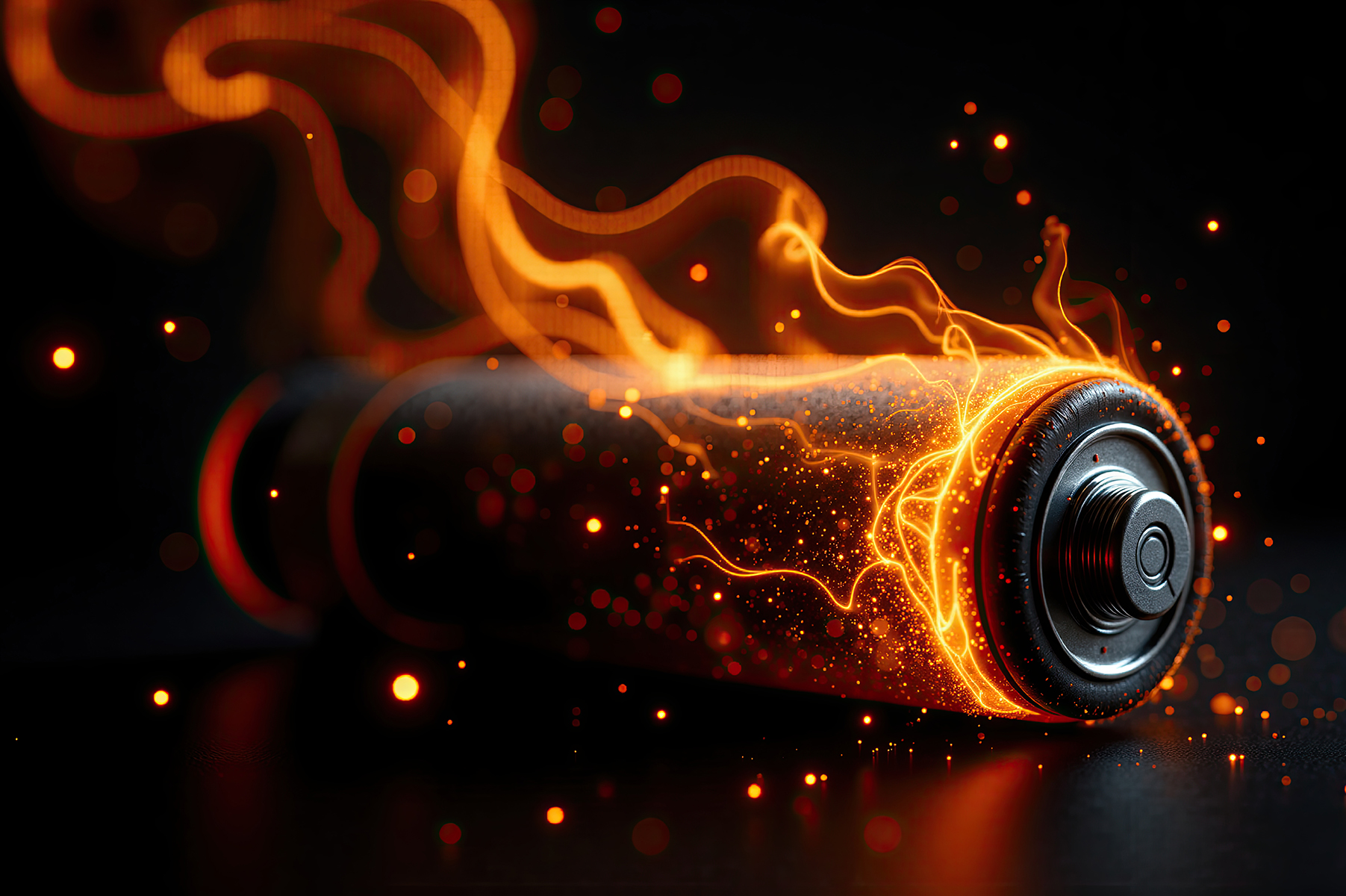
When the battery sealing plate (at the top of the battery) ruptures, the pressure inside the e-cigarette cylinder is suddenly released, usually from the top. This causes either the battery or the e-cigarette cylinder or both to go through the room like a bullet or a small rocket. In contrast to e-cigarettes, cylindrical lithium-ion batteries are used in laptops and portable products, where they are housed in hard plastic, making them strong enough to prevent the battery from flying out like a “rocket” if it fails. Catching fire is indeed the result of battery failure, but most fires are initially confined to devices in which the battery is already installed.
In general, problems with lithium-ion batteries occur when they are excessively heated by an external heat source (such as direct sunlight), shorted, or overcharged. Of the 25 incidents cited in the NFPA report, 20 were due to e-cigarettes' batteries failing while being charged using a USB port.
Typically, batteries have safety devices to prevent short circuiting and overcharging. However, e-cigarettes usually have a USB port, which seems to be compatible with any USB cable and charger. One would think that any charger would work, including those from recognized and unrecognized manufacturers, third parties, as long as it works, but that is not the case.
According to the National Fire Protection Agency and the Consumer Product Safety Commission (CPSC), charging e-cigarettes with an unapproved power adapter “may cause the battery voltage to exceed safe voltages” and increase the risk of overheating (thermal runaway). Once thermal runaway occurs, the battery power is dissipated, a lot of heat is radiated, and the electrolyte reaches its boiling point …… and then, you can guess what happens next.

How to Minimize the Risk of E-Cigarette Malfunctions
The U.S. Food and Drug Administration (FDA) recently stated that they will be regulating the management of e-cigarettes. While the emphasis is on ingredients and packaging, it also includes “parts ”, including “batteries ”.
The Federal Register confirms that the FDA is concerned about e-cigarette explosions and has proposed draft guidance on the safety requirements that companies will have to comply with. For example, the FDA says that product labels should include text or graphics to tell users to charge the product only with a specified charger to minimize the risk of battery failure. As of now, however, those guidelines have not been finalized. #p#Page break #e#
In the meantime, you can learn more about the subject to keep yourself a little safer. Most importantly, be careful with your e-cigarette battery (or any lithium-ion battery). Here are a few key points:
• Use the charger provided by the manufacturer: always use the charging device that came with it and follow the manufacturer's instructions. That way, you know the battery is compatible with the charger. Don't leave the battery connected to the charger overnight.
• Be careful when plugging your e-cigarette into a power source: don't plug it into any old USB port. Manufacturers' user manuals usually include specifications for the appropriate voltage.
•Sourcing from reputable companies and suppliers: there are many homemade, or DIY, low-cost modifications to e-cigarettes. This is not safe, as homemade e-cigarettes may not have a built-in safety mechanism to prevent overheating.
•Check if the battery is “safe”: the battery capacity should not be larger than the device needs. Also, there are different quality batteries. Shoddy, low-priced, knock-offs generally don't work and are more likely to have problems. Online forums often share information about product recalls, safety precautions, and what batteries not to buy.
• Careful maintenance: if the battery is dirty, the Ashtray Blog suggests you use paper towels and towels dipped in alcohol to clean the battery. Always disconnect the battery when you're not using your e-cigarette. Finally, they recommend not overtightening the battery when installing it. If you suspect the battery is damaged, then get a new one.
To prevent the battery from overheating, it is recommended to keep the device away from flammable objects (if safe to operate) and in a hard, non-combustible place. If possible, remove the battery. If it catches fire, use a fire extinguisher (only if it's a lithium metal battery) or water or other non-alcoholic liquid (soda is fine) to put it out.
Not all battery failures are preventable, but the likelihood of an e-cigarette battery failing is statistically low. Still, with the growing popularity of e-cigarettes (more than 2.5 million Americans smoke e-cigarettes, according to the latest statistics from the National Fire Protection Agency), it's still very possible. So if you smoke e-cigarettes, be careful.