Can you vape in Hong Kong, and is vaping illegal there?
Can you vape in Hong Kong, and is vaping illegal there? Many people online say that e-cigarettes are banned in Hong Kong. Why does Hong Kong want to ban e-cigarettes? Ultimately, young people are not very resistant to e-cigarettes, as their image is not too bad. After tightening policies, it will certainly help rewrite the public perception of e-cigarettes; if the media and politicians stop spreading misinformation, "反而反" (opposing for the sake of opposing) could actually promote e-cigarettes due to anti-government sentiments, and the effect would be immediate.
The coin has two sides, and e-cigarette policies are no exception. Tightening policies is certainly beneficial for public health; relaxing policies allows citizens more freedom, and both tightening and relaxing have their advantages. It's similar to the regulation of firearms and marijuana in the West; any change in tightening or relaxing will inevitably lead to controversy. Recently, the Hong Kong government proposed amending laws to strengthen the regulation of e-cigarettes, which naturally sparked heated discussions in society.
For smokers, it’s bad, but for youth, it’s very good. Why tighten e-cigarette policies? The main reason is that e-cigarettes are becoming increasingly popular among young people: firstly, they do not have the same health risks as traditional tobacco; secondly, manufacturers target the young and female markets with flavors like fruit and mint that are easier to accept; thirdly, the government has not yet specifically regulated e-cigarettes, so even students can easily purchase them in the market; additionally, an e-cigarette is cheap, costing only about 20 yuan, and can be sold for just a few yuan on domestic shopping sites, making it affordable for students.
A survey by the Hong Kong Smoking and Health Council last year found that the proportion of primary school students from grades 2 to 4 who had used e-cigarettes increased from 2.9% to 4.5% in just one year, a staggering increase of 55%! It is evident that the rate and growth of e-cigarette use among middle and high school students, as well as university students, are likely even higher. Undoubtedly, preventing the popularity of e-cigarettes among young people is a major goal of tightening related policies.
In fact, looking at the overall picture, if smokers switch from traditional tobacco to e-cigarettes, it is somewhat welcomed by society, as e-cigarettes are indeed less harmful; however, the current crisis society faces is that more and more non-smokers are turning to e-cigarettes, especially among young people. Overall, this may be a "mathematical problem"—does allowing e-cigarettes result in a larger number of former smokers or a larger number of new users?
However, from the perspective of public health and long-term social health development, the number of young users is certainly significant. Therefore, striving to reduce the number of young smokers is absolutely essential and is the core of this policy adjustment. Those who believe that the policy ignores the benefits of e-cigarettes are essentially ignoring their greater harms; in weighing the two, tightening policies is undoubtedly more beneficial than continuing the current unregulated model.
Smuggling is inevitable; the focus is on curbing popularity.
Next, we need to consider: will tightening e-cigarette regulations lead to smuggling issues? If smuggling occurs, wouldn’t that mean the measures are futile?
Indeed, no regulation is perfect. Even if the law states that murderers should die, it does not mean that murder cases will disappear. Who can say that there are no hidden firearms in the Hong Kong market? The important thing is that a restricted market will certainly be far less active than an unrestricted one. Taking firearms as an example, although smuggling issues certainly exist, can the average citizen easily purchase them? Certainly not! Therefore, the real consideration is not whether smuggling exists or whether e-cigarettes exist, but whether e-cigarettes will continue to become popular after tightening the laws. Otherwise, using the same reasoning, should we also oppose gun bans and drug bans?
It can be said with certainty that a complete ban on the import, manufacture, sale, distribution, and promotion of e-cigarettes will certainly curb their further popularity—although the effect may not be 100%, the positive impact is undoubtedly significant; the only question is how effective it will be, and how to maximize policy benefits in terms of administration, management, and enforcement. This is the challenge for the future, as e-cigarettes are inherently more difficult to detect than drugs or metals. They are small in size, and each transaction involves a small quantity, making them easy to purchase online. Currently, the proposed amendments to e-cigarettes are not illegal, so it is not ruled out that some people will take advantage of the legislative gap to purchase large quantities for backup...
Education must go hand in hand; do not oppose for the sake of opposing.
However, like many laws, legislation is not only about enforcement but also about education, aiming to educate the public that e-cigarettes belong to a category that is legally unacceptable. It’s similar to combating drunk driving and indoor smoking bans; at the beginning of the legislation, didn’t some people worry about enforcement difficulties? But today, because the spirit of the relevant laws is deeply ingrained in the minds of citizens, who dares to smoke indoors openly? Drivers also actively reduce drinking at banquets. All of this fully highlights the educational significance of legislation.
Ultimately, young people are not very resistant to e-cigarettes, as their image is not too bad. After tightening policies, it will certainly help rewrite the public perception of e-cigarettes; if the media and politicians stop spreading misinformation, "反而反" could actually promote e-cigarettes due to anti-government sentiments, and the effect would be immediate.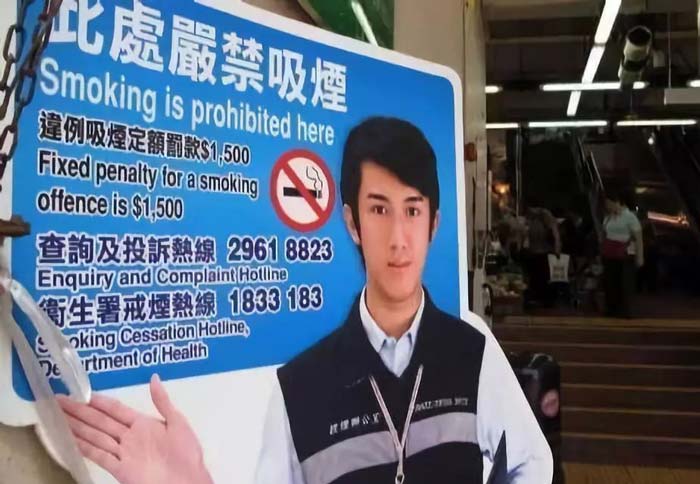 In the past, when the government planned to launch a "campus drug testing" program, it faced considerable resistance from "反而反" (opposing for the sake of opposing), which greatly undermined subsequent efforts to combat drug problems, and the issue of student drug use still troubles campuses today. Ironically, the party that opposed drug testing at that time criticized it as using students as "guinea pigs"; but now, the same party criticizes the government for the latest e-cigarette policy as being insufficiently forceful, even claiming that e-cigarettes should be banned, seemingly throwing aside the banners of freedom and human rights...
Of course, drug testing is different from e-cigarettes, and the party's stance has shifted, but undoubtedly, their intention to attack government policies remains the same... Finally, taking firearms as an example: some Americans support stricter regulations to reduce the ongoing campus shootings; others oppose, believing it restricts freedom and human rights.
Can you vape in Hong Kong, and is vaping illegal there? It can only be said that many policies have both pros and cons, and it is difficult to have a clear right or wrong; however, it must be emphasized that everyone’s thinking direction should be to objectively, rationally, and pragmatically weigh the pros and cons, and not let prejudice dominate their stance. The core issue is: should the popularity of e-cigarettes among young people be addressed? If so, how can we ensure that the situation is reversed? At the same time, how can we achieve an appropriate balance to avoid losing sight of one side or going too far?