
Lebanon’s Tobacco Industry Is Booming Because of the War in Syria
Beirut - The Syrian conflict has caused hundreds of thousands of refugees to flee to Lebanon, putting immense pressure on the Lebanese economy and its already crumbling infrastructure.
However, five years of civil war in Syria has been a boon for at least one economic sector: the tobacco industry.
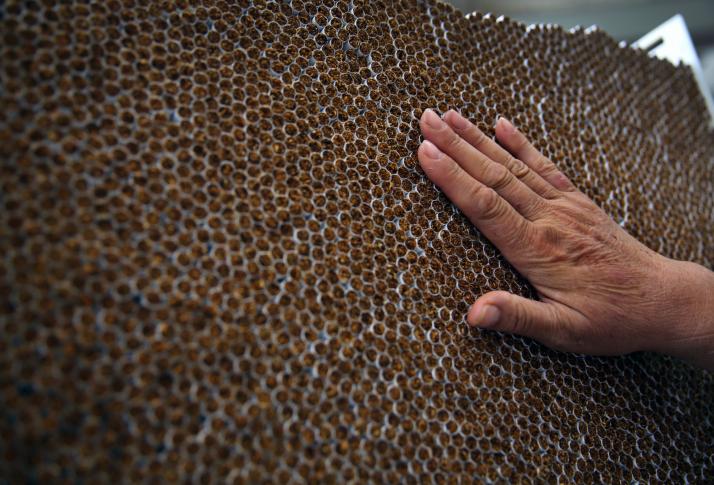
At Lebanon's main cigarette factory, located southeast of the capital, Beirut, employees work four-hour shifts but can barely keep up with the high demand for locally manufactured cigarettes.
“We are lucky to have Syrians in Lebanon,” said George Hubeika, a senior official at the state-owned factory, noting that consumption of some local brands has more than tripled in Lebanon over the past five years.
Lebanon has registered over a million Syrian refugees. Unofficial estimates suggest that the number of Syrians who have fled to Lebanon is close to two million. Many of them struggle to find work and spend much of their day smoking in tent camps or temporary accommodations across the country.
In the months following the outbreak of war in March 2011, many Syrian cigarette factories closed. Others could not meet market demand after tobacco imports ceased, leading to a sharp rise in demand for Lebanese cigarettes - particularly Cedar, a brand similar to the widely smoked Hamra cigarettes in Syria. Sales of Lebanon's state-owned tobacco company peaked at $1 billion in 2012.
Later that year, Syrians began importing cheaper brand cigarettes through their ports, leading to a decline in imports from Lebanon. However, demand in Lebanon remains high due to the Syrian refugee population, prompting the introduction of two new premium labels, Cedar Silver and Cedar Plus, which have taken market share away from expensive imported brands.
The Lebanese government-owned REGIE Libanaise des Tabacs et Tombacs, better known as REGIE, is the only company authorized to produce and import cigarettes and tobacco in the country, making it a rare success story in a company often plagued by irregularities. It is one of the few institutions bringing funds into the national treasury.
At the REGIE factory in the Hadath district of Beirut, all machines are operating at nearly maximum capacity, and Italian engineers are installing new machines expected to produce 12,000 cigarettes per minute to boost production.
“There is high demand for Cedar to export to neighboring countries, but unfortunately, demand in Lebanon exceeds our production capacity,” Hubeika, a board member of REGIE, said while sitting in his office overlooking Beirut International Airport.
Kareem Dawali, 36, runs a small shop where he sells coffee and cigarettes in the city center and says he sells an average of about 20 packs of Cedar Silver daily compared to 17 packs of Marlboro, which is nearly double the price.
“It has a clean taste and is also good,” Dawali said as an undercover police officer bought two packs of Cedar Silver.


