Which Is Better, the Gomoku Atomizer or the KF4 Atomizer?
When it comes to classic atomizers, the Gomoku and KF4 are classics among classics. Both are flavor-focused atomizers, but differences in the details create different flavor experiences. Which is better, the Gomoku atomizer or the KF4 atomizer? The Gomoku
When it comes to atomizers, the classic ones are the Gomoku and the KF4, both of which are considered classics among classics. Both atomizers belong to the flavor atomizer category, but their details differ, resulting in different flavor experiences. Which is better, the Gomoku atomizer or the KF4 atomizer?
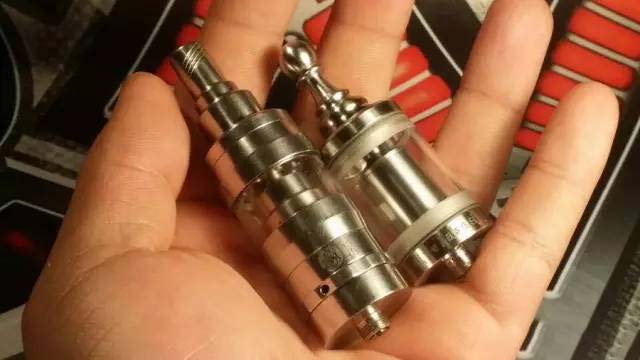
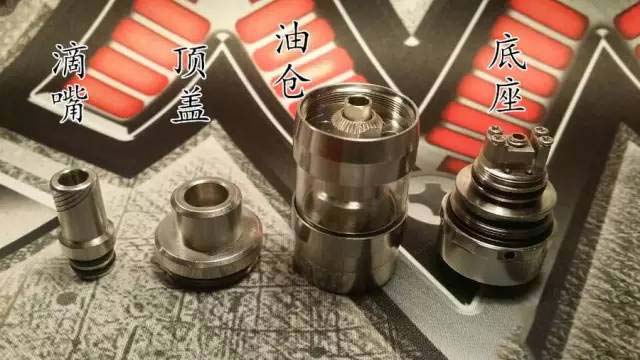
The structure of the Gomoku consists of a drip tip, top chamber, chimney, atomization chamber, acrylic oil reservoir, and base.
The KF4 has a rather complex structure; I personally divide it into several major components, which I will explain one by one: the drip tip, oil storage atomization chamber, and base.
Both the Gomoku and KF4 drip tips have the characteristics of flavor atomizers, which is a small diameter. In comparison, the Gomoku has a conical drip tip, meaning that the smoke is compressed twice before entering the mouth, while the KF4's drip tip is a straight small diameter, so the KF4's drip tip has almost no impact on the smoke.
The top cap of the Gomoku is designed to be very rounded to correspond with the drip tip design, and the connection to the acrylic reservoir ensures a sealed effect.
The KF4's top cap has been improved to be detachable; the purpose of this is to allow the KF4 to replace the glass reservoir, making it easier to refill from the top. Both serve the same purpose, but the KF4 has added a detachable top cap for easier refilling.
The oil reservoir of the Gomoku is the outer acrylic that serves as the oil storage chamber. Although the genuine acrylic is of better quality, it can still be corroded by high VG over time.
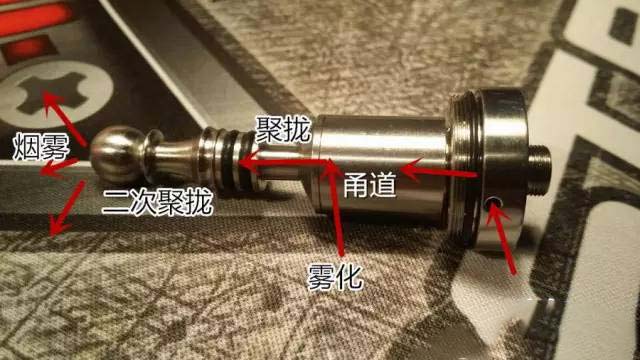
The oil passage of the Gomoku consists of the atomization chamber and chimney combined. It can be said to be simple to the point of being primitive; nothing can be missing. The chimney of the Gomoku is directly connected to the drip tip, so the smoke produced does not have the opportunity to mix with air, making the Gomoku a representative of concentrated flavor.
The KF4's oil reservoir is not integrated but is made up of three sections, tightened with upper and lower stainless steel rings around the middle glass chamber. However, our designer cleverly combined the atomization chamber and chimney into one unit, adding threads to the top of the chimney, allowing the three sections of the oil reservoir to be fixed on top of the atomization chamber. After installing the top cap, the oil reservoir can be inverted for easy replacement of the heating wire, making the design very user-friendly.
 From the perspective of the oil reservoir to the atomization chamber, the KF4's design is definitely more reasonable. In terms of flavor, the Gomoku's flavor is more intense than that of the KF4, while the KF4's airflow passage is longer and wider than that of the Gomoku, allowing for smoother airflow.
The base of the Gomoku is very simple; the positive pole connects directly to the positive platform, while the rest is negative. The Gomoku's base is quite friendly for beginners; making coils is simple; you just need to place the prepared heating wire coil over the airflow hole, secure the two sides of the heating wire to the electrode screws, tighten the heating wire, and remove the excess wire ends, raising the coil about 3mm above the airflow hole for better heat dissipation.
The KF4's base is much more complex, divided into many parts. I divide it into the base airflow chamber and the lift platform. The base airflow chamber can be further divided into three small parts: the 510 interface base, airflow ring, and lift platform screws. First, the 510 base connects to the airflow ring, with a nylon slide for lubrication in between. The internal structure of the 510 base is a square groove, while the square protrusion at the bottom of the lift platform screw fits perfectly into the square groove of the base, meaning that the screw and base are clamped with the airflow ring in between. The screw and base remain stationary, allowing the airflow ring to move freely through the nylon lubrication. Then, a hollow flat-head screw is used to fix the three components.
The lift platform is the coil-making platform, which connects to the base airflow chamber via the screw. It can rise and fall, allowing for control over the oil flow.
 Well, seeing this, you might think that the KF4's structure is quite complex, but every part has its purpose. I feel that the KF4 is a high-end atomizer, but in comparison, I must mention that the Gomoku's base is stable in conductivity, simple in structure, and easy to use, which is undoubtedly a plus for beginners. The KF4's structure is certainly reasonable, but it is prone to jumping resistance, accumulating condensate, and its complex structure is inherent. So whether you prefer the obedient Gomoku or the rebellious KF4, it depends on personal preference.
Both the Gomoku and KF4 use a negative pressure oil guiding structure. The Gomoku's oil guiding allows the e-liquid from the oil reservoir to flow directly into the bottom oil guiding groove through negative pressure into the atomizer's cotton. By balancing the pressure inside the oil reservoir, the chance of leaking oil is greatly reduced as long as the cotton is placed reasonably. The advantage is that it is relatively easy to operate and control, but the downside is that the oil guiding speed is not suitable for lung hits.
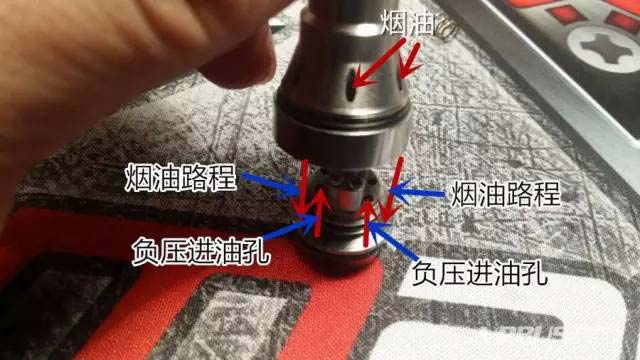
The KF4's oil guiding is more complicated; the e-liquid flows from the oil reservoir through six small holes on the atomization chamber to the lift platform, and then from the four small holes below the coil-making platform into the cotton. The advantage is sufficient oil supply, but due to the long oil guiding path, you will find that it consumes more e-liquid, with some remaining in the atomization chamber and lift platform. However, it also ensures the oil supply speed during dual coil use.
The Gomoku's base has a small airflow hole on the side, and an airflow passage directly leads to the airflow hole inside the atomization chamber, acting on the heating wire. Next to the 510 electrode post of the base, there is a small flat-head screw that can adjust the airflow passage size. After the heating wire heats the e-liquid, the smoke is effectively collected through the conical chimney and delivered to the drip tip. The Gomoku's chimney is directly connected to the drip tip, resulting in a short smoke path, and with the drip tip's secondary compression, the flavor is very concentrated.
The KF4 has much larger airflow than the Gomoku, with four airflow holes on the airflow ring. Air flows into the airflow chamber and then through the hex screw at the bottom of the lift platform into the passage. The hex screw has a small airflow hole on each of its six sides, which is not visible from the front. Then, the airflow passes through the six small holes into the atomization chamber, cooling the heating wire. This airflow is much larger than that of the Gomoku, allowing for lung hits. Additionally, due to the increased airflow, the passage length increases, and the drip tip diameter also increases, resulting in a relatively lighter flavor compared to the Gomoku. However, among the KF series atomizers, the flavor is still quite concentrated, but I personally prefer the flavor produced by the KF4.
Gomoku usage data: Heating wire: Kanthal A1, 0.32mm, coil diameter: 2.5mm, number of coils: 6.
The atomization speed is particularly fast, with concentrated flavor and rich taste, suitable only for mouth hits. The flavor is compressed to a single note after passing through the chimney and drip tip twice. However, the main tone is well blended, so I personally think it is more suitable for single flavors or two combined flavors, as it will be easier to control.
KF4 usage data: Heating wire: Kanthal A1, 0.32mm, coil diameter: 2.5mm, number of coils: 6.
The atomization speed is similar, but with the same data, the flavor is relatively smoother and not as concentrated as the Gomoku, due to the larger airflow in the base airflow chamber, allowing for smoother airflow. The vapor produced is relatively softer, but this softness is only relative to the Gomoku. Compared to other atomizers, it does not feel soft.
 The pros and cons of the Gomoku:
The Gomoku atomizer is overall simple, with a clear structure, suitable for beginners. It expresses e-liquid well for single and dual flavors. Due to the two compressions through the chimney and drip tip, the vapor is more concentrated, and the airflow is suitable for mouth hits, making it ideal for replacing traditional cigarettes and for those who enjoy single flavors. However, I believe the refilling method is not very convenient, and the acrylic reservoir can be corroded by high VG. Overall, I think it is a worthwhile atomizer for beginners and also suitable for replacing traditional cigarettes.
The pros and cons of the KF4:
The KF4 is a classic among classics. I believe many veteran players have a KF4 stored on their shelves, not only for the joy it brings in flavor but also for the process of mastering it, proving that we take this seriously. The KF4 atomizer allows for top refilling and can invert the oil reservoir for easy replacement of the heating wire. The enlarged airflow at the bottom ensures sufficient airflow for dual coils, allowing for both single and dual coil atomization. All these features show the designer's dedication. However, it is prone to jumping resistance, locking up, and leaking oil, which are unavoidable issues. As for how to solve these problems, you can search for "Steam Bus" on Youku, subscribe, and find the solutions in the videos. Therefore, I believe this complex atomizer is suitable for players with a certain foundation and also for collectors.
In summary:
The simplicity of the Gomoku and the complexity of the KF4 are both reasonable, but there are small regrets in each. Whether it’s the Gomoku’s refilling method, the acrylic reservoir, or the KF4’s tendency to jump resistance and lock up, these imperfections are part of life. There is no perfect solution; finding an atomizer that suits you is what matters.
The structure of the Gomoku consists of a drip tip, top chamber, chimney, atomization chamber, acrylic oil reservoir, and base.
The KF4 has a rather complex structure; I personally divide it into several major components, which I will explain one by one: the drip tip, oil storage atomization chamber, and base.
Both the Gomoku and KF4 drip tips have the characteristics of flavor atomizers, which is a small diameter. In comparison, the Gomoku has a conical drip tip, meaning that the smoke is compressed twice before entering the mouth, while the KF4's drip tip is a straight small diameter, so the KF4's drip tip has almost no impact on the smoke.
The top cap of the Gomoku is designed to be very rounded to correspond with the drip tip design, and the connection to the acrylic reservoir ensures a sealed effect.
The KF4's top cap has been improved to be detachable; the purpose of this is to allow the KF4 to replace the glass reservoir, making it easier to refill from the top. Both serve the same purpose, but the KF4 has added a detachable top cap for easier refilling.
The oil reservoir of the Gomoku is the outer acrylic that serves as the oil storage chamber. Although the genuine acrylic is of better quality, it can still be corroded by high VG over time.
The oil passage of the Gomoku consists of the atomization chamber and chimney combined. It can be said to be simple to the point of being primitive; nothing can be missing. The chimney of the Gomoku is directly connected to the drip tip, so the smoke produced does not have the opportunity to mix with air, making the Gomoku a representative of concentrated flavor.
The KF4's oil reservoir is not integrated but is made up of three sections, tightened with upper and lower stainless steel rings around the middle glass chamber. However, our designer cleverly combined the atomization chamber and chimney into one unit, adding threads to the top of the chimney, allowing the three sections of the oil reservoir to be fixed on top of the atomization chamber. After installing the top cap, the oil reservoir can be inverted for easy replacement of the heating wire, making the design very user-friendly.
From the perspective of the oil reservoir to the atomization chamber, the KF4's design is definitely more reasonable. In terms of flavor, the Gomoku's flavor is more intense than that of the KF4, while the KF4's airflow passage is longer and wider than that of the Gomoku, allowing for smoother airflow.The base of the Gomoku is very simple; the positive pole connects directly to the positive platform, while the rest is negative. The Gomoku's base is quite friendly for beginners; making coils is simple; you just need to place the prepared heating wire coil over the airflow hole, secure the two sides of the heating wire to the electrode screws, tighten the heating wire, and remove the excess wire ends, raising the coil about 3mm above the airflow hole for better heat dissipation.
The KF4's base is much more complex, divided into many parts. I divide it into the base airflow chamber and the lift platform. The base airflow chamber can be further divided into three small parts: the 510 interface base, airflow ring, and lift platform screws. First, the 510 base connects to the airflow ring, with a nylon slide for lubrication in between. The internal structure of the 510 base is a square groove, while the square protrusion at the bottom of the lift platform screw fits perfectly into the square groove of the base, meaning that the screw and base are clamped with the airflow ring in between. The screw and base remain stationary, allowing the airflow ring to move freely through the nylon lubrication. Then, a hollow flat-head screw is used to fix the three components.
The lift platform is the coil-making platform, which connects to the base airflow chamber via the screw. It can rise and fall, allowing for control over the oil flow.
Well, seeing this, you might think that the KF4's structure is quite complex, but every part has its purpose. I feel that the KF4 is a high-end atomizer, but in comparison, I must mention that the Gomoku's base is stable in conductivity, simple in structure, and easy to use, which is undoubtedly a plus for beginners. The KF4's structure is certainly reasonable, but it is prone to jumping resistance, accumulating condensate, and its complex structure is inherent. So whether you prefer the obedient Gomoku or the rebellious KF4, it depends on personal preference.Both the Gomoku and KF4 use a negative pressure oil guiding structure. The Gomoku's oil guiding allows the e-liquid from the oil reservoir to flow directly into the bottom oil guiding groove through negative pressure into the atomizer's cotton. By balancing the pressure inside the oil reservoir, the chance of leaking oil is greatly reduced as long as the cotton is placed reasonably. The advantage is that it is relatively easy to operate and control, but the downside is that the oil guiding speed is not suitable for lung hits.
The KF4's oil guiding is more complicated; the e-liquid flows from the oil reservoir through six small holes on the atomization chamber to the lift platform, and then from the four small holes below the coil-making platform into the cotton. The advantage is sufficient oil supply, but due to the long oil guiding path, you will find that it consumes more e-liquid, with some remaining in the atomization chamber and lift platform. However, it also ensures the oil supply speed during dual coil use.
The Gomoku's base has a small airflow hole on the side, and an airflow passage directly leads to the airflow hole inside the atomization chamber, acting on the heating wire. Next to the 510 electrode post of the base, there is a small flat-head screw that can adjust the airflow passage size. After the heating wire heats the e-liquid, the smoke is effectively collected through the conical chimney and delivered to the drip tip. The Gomoku's chimney is directly connected to the drip tip, resulting in a short smoke path, and with the drip tip's secondary compression, the flavor is very concentrated.
The KF4 has much larger airflow than the Gomoku, with four airflow holes on the airflow ring. Air flows into the airflow chamber and then through the hex screw at the bottom of the lift platform into the passage. The hex screw has a small airflow hole on each of its six sides, which is not visible from the front. Then, the airflow passes through the six small holes into the atomization chamber, cooling the heating wire. This airflow is much larger than that of the Gomoku, allowing for lung hits. Additionally, due to the increased airflow, the passage length increases, and the drip tip diameter also increases, resulting in a relatively lighter flavor compared to the Gomoku. However, among the KF series atomizers, the flavor is still quite concentrated, but I personally prefer the flavor produced by the KF4.
Gomoku usage data: Heating wire: Kanthal A1, 0.32mm, coil diameter: 2.5mm, number of coils: 6.
The atomization speed is particularly fast, with concentrated flavor and rich taste, suitable only for mouth hits. The flavor is compressed to a single note after passing through the chimney and drip tip twice. However, the main tone is well blended, so I personally think it is more suitable for single flavors or two combined flavors, as it will be easier to control.
KF4 usage data: Heating wire: Kanthal A1, 0.32mm, coil diameter: 2.5mm, number of coils: 6.
The atomization speed is similar, but with the same data, the flavor is relatively smoother and not as concentrated as the Gomoku, due to the larger airflow in the base airflow chamber, allowing for smoother airflow. The vapor produced is relatively softer, but this softness is only relative to the Gomoku. Compared to other atomizers, it does not feel soft.
The pros and cons of the Gomoku:The Gomoku atomizer is overall simple, with a clear structure, suitable for beginners. It expresses e-liquid well for single and dual flavors. Due to the two compressions through the chimney and drip tip, the vapor is more concentrated, and the airflow is suitable for mouth hits, making it ideal for replacing traditional cigarettes and for those who enjoy single flavors. However, I believe the refilling method is not very convenient, and the acrylic reservoir can be corroded by high VG. Overall, I think it is a worthwhile atomizer for beginners and also suitable for replacing traditional cigarettes.
The pros and cons of the KF4:
The KF4 is a classic among classics. I believe many veteran players have a KF4 stored on their shelves, not only for the joy it brings in flavor but also for the process of mastering it, proving that we take this seriously. The KF4 atomizer allows for top refilling and can invert the oil reservoir for easy replacement of the heating wire. The enlarged airflow at the bottom ensures sufficient airflow for dual coils, allowing for both single and dual coil atomization. All these features show the designer's dedication. However, it is prone to jumping resistance, locking up, and leaking oil, which are unavoidable issues. As for how to solve these problems, you can search for "Steam Bus" on Youku, subscribe, and find the solutions in the videos. Therefore, I believe this complex atomizer is suitable for players with a certain foundation and also for collectors.
In summary:
The simplicity of the Gomoku and the complexity of the KF4 are both reasonable, but there are small regrets in each. Whether it’s the Gomoku’s refilling method, the acrylic reservoir, or the KF4’s tendency to jump resistance and lock up, these imperfections are part of life. There is no perfect solution; finding an atomizer that suits you is what matters.