What Should You Do If Your Vape Leaks?
You’ve just bought a new vape and want to show it off to your friends. Then after one puff, your hand feels wet — it’s leaking. Awkward. For users, vape leakage is a common and frustrating problem. Is it caused by poor quality, or by incorrect operation?
You just got a new e-cigarette and want to show it off to your friends. After taking a puff, you find your hands are wet—it's leaking oil? What an embarrassing situation! Many vapers have encountered this awkwardness, and I’m sure you’re feeling quite troubled too.
Is the e-cigarette leaking oil due to poor quality? Or is it because I’m using it incorrectly? Why do I feel like I’ve inhaled oil? Newbies often find themselves confused and asking these questions.
Today, let’s talk about the issue of e-cigarette oil leakage!
First, let’s define what e-cigarette oil leakage is.
Oil leakage refers to e-liquid flowing out through abnormal channels, such as the outer glass of the atomizer, the base of the atomizer, or the outer side of the mouthpiece.
For new users, oil leakage from the atomizer is often caused by improper operation at the beginning, typically due to the following issues:
Filling too quickly or too full (this is the most common mistake for beginners).
Some new users rush when saturating the coil, adding too much e-liquid too quickly, causing the coil to become oversaturated or some e-liquid not to be absorbed by the coil and instead flow into the base. Overfilling can also lead to oil leakage.
Solution:
When filling, try not to overfill! Generally, do not exceed 2/3 of the tank capacity. Add a little at a time, and refill after you finish vaping, rather than trying to fill it all at once.
This is determined by the structure and working principle of the atomizer. The e-liquid in the tank seeps through small holes into the coil, which is then heated to vaporize the e-liquid, producing vapor that comes out of the mouthpiece.
If overfilled, the air pressure inside the atomizer is low, causing more e-liquid to seep into the coil under gravity, which can easily flow out of the mouthpiece or be inhaled.
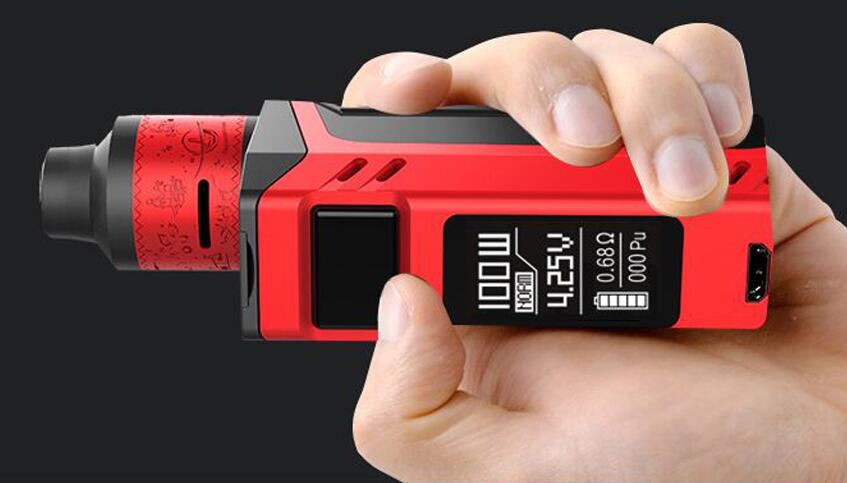
Incorrect usage.
Many users have a habit of blowing into the atomizer while using it, which is incorrect.
Firstly, the structure of pre-filled and dripping atomizers is different. Blowing air into a pre-filled atomizer for a long time can sometimes blow e-liquid into the base, combined with accumulated condensation, leading to oil leakage.
Solution:
Try not to blow into the mouthpiece. If you hear gurgling sounds while vaping, it indicates that there are condensation droplets on the inner wall of the vapor path. In this case, tilt the mouthpiece down and shake it a few times to expel the liquid; blowing into it will not solve the problem.
Loss or damage of the atomizer's sealing O-ring.
The sealing O-ring is the most likely component to be lost or damaged during the use of the atomizer. If the O-ring that connects the coil to the base is lost or damaged, it can also cause oil leakage.
Solution:
When unscrewing the atomizer to fill it, do so gently and avoid touching the sealing O-ring. If you accidentally remove the O-ring, carefully reinstall it after filling with e-liquid and then tighten it. If it is lost or damaged, replace it with a new atomizer (the O-ring from an old atomizer can be removed and kept as a spare).
Loose threads at the atomizer connection.
The filling part of the atomizer and the battery connection are sealed with an O-ring and threads. If the threads are not tightened, the O-ring will not be compressed, failing to create a seal, which can lead to e-liquid seeping from the mouthpiece or the battery connection.
Solution:
After tightening the threads, give it a slight additional turn until it cannot be turned anymore, ensuring that all threads are securely tightened.
Incorrect usage and excessive or rapid inhalation can lead to e-liquid being inhaled.
Many new users often complain about e-liquid getting into their mouths, suspecting it’s a quality issue with the e-cigarette. In reality, this is largely due to a lack of understanding of how to use e-cigarettes.
In such cases, aside from a few genuine quality issues, most are caused by excessive inhalation force or speed. Unlike traditional cigarettes, where the harder you inhale, the faster it burns and the more smoke you get, with e-cigarettes, the longer you inhale, the more vapor you produce.
Solution:
When using an e-cigarette, do not hold the mouthpiece downwards; instead, tilt it upwards at a 45-degree angle. During inhalation, avoid rapid or forceful pulls; maintain a steady and moderate force. This is because e-cigarettes do not require combustion; you just need to ensure that the vaporized smoke is inhaled (if you want bigger puffs, just inhale longer).
Long-term storage.
If the e-liquid in the atomizer is not used up and is left for a long time, it can also cause oil leakage.
Most pre-filled atomizers use a negative pressure oil guiding structure. If left for a long time, the pressure inside the atomizer remains, causing continuous oil guiding, and excess e-liquid in the coil can seep into the base, leading to leakage.
Solution:
When adding e-liquid, try to add according to your usage amount, ensuring that the oil added on the same day is used up that day. If you need to store it for a long time, unscrew the atomizer and expel the e-liquid inside.