
How Do You DIY E-Liquid Yourself?
How do you DIY e-liquid yourself? The tools for making e-liquid are also very simple, generally divided into two types: measuring tools and electronic scales; the difference is only whether you use volume or weight as the unit. Today we’ll introduce how t
How to DIY e-liquid for your e-cigarette? The tools for making e-liquid are quite simple, generally divided into two types: measuring tools and electronic scales, with the difference being whether they measure by volume or weight. Today, we will introduce the method of mixing e-liquid using an electronic scale.
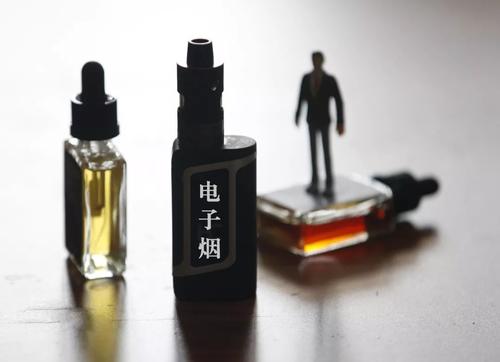
Step 1
Put on rubber gloves and add the VG solution containing nicotine to the container. Since nicotine is very viscous, it tends to settle at the bottom when mixing e-liquid, so it needs to be shaken for a while before adding.
Step 2
Pour flavoring, PG, and VG into the container. As for the ratio of these four components, aside from a small amount of nicotine, flavoring generally accounts for 10%-15%. The ratio of PG to VG should be adjusted according to actual needs; more PG will provide a stronger throat hit and lighter vapor, while VG does the opposite. Those who prefer big clouds often favor e-liquids with more VG, while pod systems typically use a 50:50 ratio to balance throat hit and vapor production.
Step 3
After pouring everything in, you will notice that due to the different densities of these four components, the e-liquid will clearly separate into four layers. At this point, you need to shake it continuously to ensure they blend thoroughly. Just shaking isn't enough; to fully integrate these four components, they need to be left to sit for a while. Alternatively, you can use warm water or an ultrasonic cleaner to speed up the blending process. At this point, your e-liquid is ready.
Although the process of making e-liquid is quite simple, meeting different taste preferences and adjusting the right flavoring ratio can be complex. In the simplest e-liquids, flavoring is divided into top notes and base notes like perfume. However, complex flavored e-liquids may involve a mix of various flavorings, requiring constant experimentation to find the right ratios. For example, the flavoring in the image below is categorized into seven types: top note 1, top note 2, middle note, sub-note 1, sub-note 2, base note 1, and base note 2.
While making e-liquid may seem straightforward and the required tools are common, the actual formulation process—balancing the ratio of PG and VG, the form of nicotine, and the selection and proportion of flavorings—are all crucial factors in determining whether an e-liquid is "suitable for vapor," "pleasant to inhale," "provides a good throat hit," and "is not harsh on the throat."
How to DIY e-liquid for your e-cigarette? The formulation of e-liquid involves many professional considerations, so we do not recommend that everyone attempt to mix e-liquid at home, nor do we suggest using DIY e-liquids.
Step 1
Put on rubber gloves and add the VG solution containing nicotine to the container. Since nicotine is very viscous, it tends to settle at the bottom when mixing e-liquid, so it needs to be shaken for a while before adding.
Step 2
Pour flavoring, PG, and VG into the container. As for the ratio of these four components, aside from a small amount of nicotine, flavoring generally accounts for 10%-15%. The ratio of PG to VG should be adjusted according to actual needs; more PG will provide a stronger throat hit and lighter vapor, while VG does the opposite. Those who prefer big clouds often favor e-liquids with more VG, while pod systems typically use a 50:50 ratio to balance throat hit and vapor production.
Step 3
After pouring everything in, you will notice that due to the different densities of these four components, the e-liquid will clearly separate into four layers. At this point, you need to shake it continuously to ensure they blend thoroughly. Just shaking isn't enough; to fully integrate these four components, they need to be left to sit for a while. Alternatively, you can use warm water or an ultrasonic cleaner to speed up the blending process. At this point, your e-liquid is ready.
Although the process of making e-liquid is quite simple, meeting different taste preferences and adjusting the right flavoring ratio can be complex. In the simplest e-liquids, flavoring is divided into top notes and base notes like perfume. However, complex flavored e-liquids may involve a mix of various flavorings, requiring constant experimentation to find the right ratios. For example, the flavoring in the image below is categorized into seven types: top note 1, top note 2, middle note, sub-note 1, sub-note 2, base note 1, and base note 2.
While making e-liquid may seem straightforward and the required tools are common, the actual formulation process—balancing the ratio of PG and VG, the form of nicotine, and the selection and proportion of flavorings—are all crucial factors in determining whether an e-liquid is "suitable for vapor," "pleasant to inhale," "provides a good throat hit," and "is not harsh on the throat."
How to DIY e-liquid for your e-cigarette? The formulation of e-liquid involves many professional considerations, so we do not recommend that everyone attempt to mix e-liquid at home, nor do we suggest using DIY e-liquids.


