
Can e-cigarettes cause seizures?
FDA says vaping may cause seizures? After releasing a report that vaping may lead to seizures, the FDA warned the public about this potential new risk and called for more people to provide additional undisclosed cases and information. In a statement, the
Can vaping cause seizures?
Has the FDA said vaping may cause seizures?
After releasing reports that vaping may potentially cause seizures, the FDA warned the public about this possible new risk and called on people to provide more undisclosed cases and information to the agency.
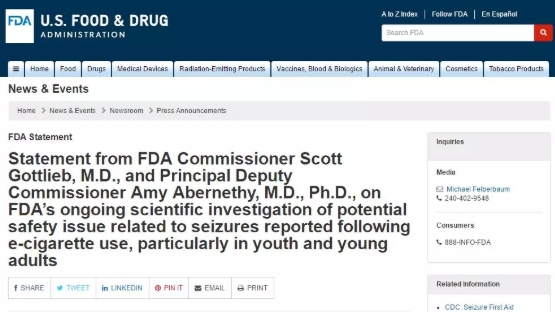
In a statement, the FDA said that from 2010 to early 2019, it had identified 35 cases of seizures, particularly among young e-cigarette users. Since June 2019, the number of reported cases has increased slightly, drawing close attention from the FDA.
The FDA stressed that there is still no evidence establishing a clear link between e-cigarette use and seizures, and that more cases are needed to support the investigation. It also noted that seizures may be a side effect of nicotine poisoning. In the statement, FDA Commissioner Dr. Scott Gottlieb and Principal Deputy Commissioner Dr. Amy Abernethy said, “Nicotine is a substance that poses health risks, especially to the developing brains of young people. Even for adults, e-cigarettes are not harmless.”
Seizures with no clear pattern
There appears to be no clear pattern behind these seizure cases: some people experienced a seizure after first exposure to e-cigarette products, while others developed symptoms only after using the products for some time. Among these reported cases, some patients had a prior diagnosis of epilepsy, while others had used other substances such as cannabis or amphetamines before the seizure occurred.
The FDA did not identify any specific e-cigarette brand as being linked to seizures. It urged people to report any relevant information through its “Safety Reporting Portal,” including the brand used by the affected person, where it was purchased, whether it was DIY-modified, whether it was used with other substances, the symptoms, and the timing of the event.
Gottlieb and Abernethy said, “Patterns of e-cigarette use also vary. Some users may intentionally or unintentionally inhale more nicotine than usual,” adding that e-liquids “contain varying levels of nicotine concentration, and some e-cigarette designs and technologies may enable consumers to receive high levels of nicotine very quickly.”
A study in February examined the rise in nicotine concentrations in e-cigarette products in recent years, suggesting that the success of Juul Labs, one of the most advanced e-cigarette companies, sparked a wave of imitation as many companies sought the best way to raise nicotine concentrations in e-cigarettes.

Dr. Robert Jackler, founder of Stanford Research Into the Impact of Tobacco Advertising, previously told CNN, “It certainly helps adult smokers who are addicted to cigarettes, but it also has enormous appeal to adolescents who have never been exposed to nicotine.”
“Nicotine salts” can deliver high nicotine concentrations. Experts say e-liquid manufacturers produce high-strength nicotine products that reach the brain more quickly by combining nicotine, a naturally bitter alkaloid, with organic acids to reduce nicotine’s inherent harshness.
Juul maintains that its products are intended to create alternatives to cigarettes and help existing adult smokers switch. At the same time, Juul has also stated that it has taken measures to curb underage use.
Pods used in mini vape products like Juul contain e-liquid in standardized doses, but other e-liquids may be sold in larger containers, which represents a much greater risk of poisoning. Jackler added that some e-liquid bottles lack child-resistant caps, and the nicotine content in a single bottle can be enough to kill a kindergarten-aged child.
The FDA has not stopped taking action

The statement said the FDA is also investigating other possible health risks associated with e-cigarettes, including tracheal cancer.
E-cigarette products have surged in popularity among young people. In November, the FDA revealed that since the previous year, the number of high school and middle school students using e-cigarette products had increased by nearly 80% and 50%, respectively. Experts worry that e-cigarettes may put children’s developing brains at risk, and that early nicotine use may lower the barrier to future use of other drugs. #p#Page Title#e#
In recent months, the FDA has taken a series of measures in an attempt to cool the rapid spread of e-cigarettes among teenagers, including warnings and penalties for illegal sellers that market e-cigarette products to children. The agency has also intensified its investigations into e-cigarette companies to determine whether they are selling products illegally or outside FDA policy.
In January this year, the FDA held a public hearing to consider how medical treatment might help children quit nicotine-containing e-cigarettes and other products. Relevant medical institutions and organizations are currently considering how to address the continuing rise in youth e-cigarette use.
Has the FDA said vaping may cause seizures?
After releasing reports that vaping may potentially cause seizures, the FDA warned the public about this possible new risk and called on people to provide more undisclosed cases and information to the agency.
In a statement, the FDA said that from 2010 to early 2019, it had identified 35 cases of seizures, particularly among young e-cigarette users. Since June 2019, the number of reported cases has increased slightly, drawing close attention from the FDA.
The FDA stressed that there is still no evidence establishing a clear link between e-cigarette use and seizures, and that more cases are needed to support the investigation. It also noted that seizures may be a side effect of nicotine poisoning. In the statement, FDA Commissioner Dr. Scott Gottlieb and Principal Deputy Commissioner Dr. Amy Abernethy said, “Nicotine is a substance that poses health risks, especially to the developing brains of young people. Even for adults, e-cigarettes are not harmless.”
Seizures with no clear pattern
There appears to be no clear pattern behind these seizure cases: some people experienced a seizure after first exposure to e-cigarette products, while others developed symptoms only after using the products for some time. Among these reported cases, some patients had a prior diagnosis of epilepsy, while others had used other substances such as cannabis or amphetamines before the seizure occurred.
The FDA did not identify any specific e-cigarette brand as being linked to seizures. It urged people to report any relevant information through its “Safety Reporting Portal,” including the brand used by the affected person, where it was purchased, whether it was DIY-modified, whether it was used with other substances, the symptoms, and the timing of the event.
Gottlieb and Abernethy said, “Patterns of e-cigarette use also vary. Some users may intentionally or unintentionally inhale more nicotine than usual,” adding that e-liquids “contain varying levels of nicotine concentration, and some e-cigarette designs and technologies may enable consumers to receive high levels of nicotine very quickly.”
A study in February examined the rise in nicotine concentrations in e-cigarette products in recent years, suggesting that the success of Juul Labs, one of the most advanced e-cigarette companies, sparked a wave of imitation as many companies sought the best way to raise nicotine concentrations in e-cigarettes.
Dr. Robert Jackler, founder of Stanford Research Into the Impact of Tobacco Advertising, previously told CNN, “It certainly helps adult smokers who are addicted to cigarettes, but it also has enormous appeal to adolescents who have never been exposed to nicotine.”
“Nicotine salts” can deliver high nicotine concentrations. Experts say e-liquid manufacturers produce high-strength nicotine products that reach the brain more quickly by combining nicotine, a naturally bitter alkaloid, with organic acids to reduce nicotine’s inherent harshness.
Juul maintains that its products are intended to create alternatives to cigarettes and help existing adult smokers switch. At the same time, Juul has also stated that it has taken measures to curb underage use.
Pods used in mini vape products like Juul contain e-liquid in standardized doses, but other e-liquids may be sold in larger containers, which represents a much greater risk of poisoning. Jackler added that some e-liquid bottles lack child-resistant caps, and the nicotine content in a single bottle can be enough to kill a kindergarten-aged child.
The FDA has not stopped taking action
The statement said the FDA is also investigating other possible health risks associated with e-cigarettes, including tracheal cancer.
E-cigarette products have surged in popularity among young people. In November, the FDA revealed that since the previous year, the number of high school and middle school students using e-cigarette products had increased by nearly 80% and 50%, respectively. Experts worry that e-cigarettes may put children’s developing brains at risk, and that early nicotine use may lower the barrier to future use of other drugs. #p#Page Title#e#
In recent months, the FDA has taken a series of measures in an attempt to cool the rapid spread of e-cigarettes among teenagers, including warnings and penalties for illegal sellers that market e-cigarette products to children. The agency has also intensified its investigations into e-cigarette companies to determine whether they are selling products illegally or outside FDA policy.
In January this year, the FDA held a public hearing to consider how medical treatment might help children quit nicotine-containing e-cigarettes and other products. Relevant medical institutions and organizations are currently considering how to address the continuing rise in youth e-cigarette use.


