Strong Outlook for U.S. E-Cigarette Companies as the Industry Faces Tax Pressure
Recently, U.S. vaping startup Juul Labs Inc. announced that it had completed $650 million in financing, with a target of $1.2 billion for this round. If that target is reached, Juul’s valuation will hit $15 billion. Public information shows that the compa
Recently, U.S. vaping startup Juul Labs Inc. ("Juul") announced that it has completed a $650 million financing round. The target size for this round is $1.2 billion; if that target is reached, Juul would be valued at $15 billion. Public information shows that the company’s major shareholders currently include well-known investment firms Tiger Global and Fidelity Investments.
Juul was originally an e-cigarette product launched by U.S. vaping company PAX Labs in June 2015. Using nicotine salts extracted from tobacco as its key ingredient (whereas most e-cigarettes typically use nicotine liquid), along with its distinctive rectangular design, compact size, and high-capacity pods, the product achieved tremendous success.
In July 2017, former PAX Labs executives James Monsees and Adam Bowen spun off Juul from PAX Labs as an independent company and became its executive directors. Juul CEO Tyler Goldman was also formerly CEO of PAX Labs.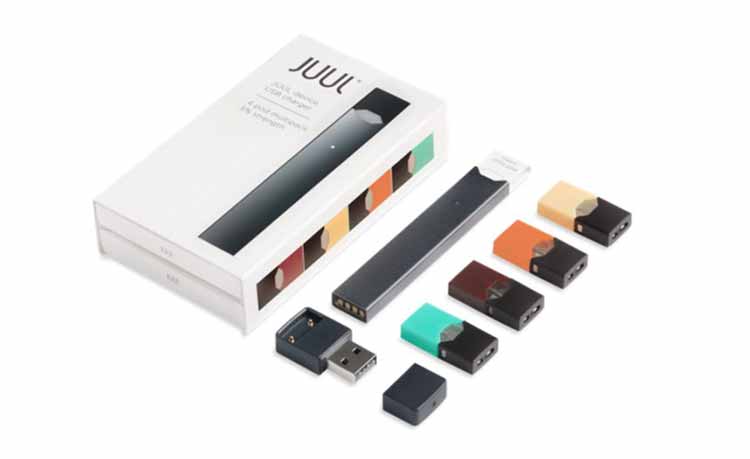 Juul plans to use the funding to expand internationally and broaden its distribution footprint. At present, outside the United States, Juul products are sold only in Israel.
According to data from international market research firm Nielsen, as of May this year Juul held a 68% share of the U.S. e-cigarette market. Meanwhile, the vaping market is rapidly eating into the traditional tobacco market. Over the past year, traditional cigarettes’ share of the tobacco market fell 4% year over year, while Juul’s share rose 3.5% year over year.
As a disruptor in the vaping industry, Juul has dealt a major blow to traditional tobacco giants. U.S. tobacco giant Philip Morris International Inc. ("Philip Morris") has seen its share price fall 23% so far this year, while competitors British American Tobacco and Japan Tobacco have seen their share prices decline 24% and 15%, respectively.
Nielsen said that although many tobacco giants have launched their own e-cigarette products, those offerings have gained traction more slowly. This year, after finding success in overseas markets such as Japan with its flagship heated tobacco product iQos, Philip Morris sought to sell the product in the U.S. market, but it has not yet received regulatory approval. Multiple pressures facing the vaping industry
Government agencies and the public have already become aware of the risks of e-cigarettes. Last month, San Francisco voters called for a ban on flavored nicotine products. Juul sells pods in flavors such as mango, cucumber, and crème brûlée. A pack containing four pods sells for $16, and these products are all made in the United States. Juul customers say they appreciate the brand’s stylish design: its pods resemble USB drives, and the vaping device discreetly heats pre-filled nicotine pods. According to analysis from Wells Fargo, sales of Juul pods and devices have increased more than eightfold over the past year. Regulators are now closely scrutinizing such products.
U.S. Food and Drug Administration (FDA) Commissioner Scott Gottlieb has described e-cigarettes as a public health crisis among young people. In April this year, Scott Gottlieb asked Juul to disclose documents related to its marketing strategy to determine whether the company had targeted teenagers in its promotions. In addition, the FDA asked Juul to provide research findings on the potential health issues associated with e-cigarettes.
Juul says its mission is to help addicted smokers quit by offering a safer alternative to tar-burning cigarettes. The company says customers must be at least 21 years old to purchase the product and that it does not market its products to teenagers. The company also said it has committed $30 million to combat underage use of e-cigarettes.
In addition, another potential blow to the vaping industry may come from U.S. President Trump. As part of the trade war with China, vaping devices have been included on a proposed list of Chinese products subject to an additional 25% tariff. Juul’s devices are manufactured in Shenzhen, China, and sell for $35. The Trump administration has not yet set an implementation date for the next round of tariffs, and the plan could still change. Juul declined to comment on issues such as tariffs.#p#Page Title#e#
However, for the vaping industry, tariffs may not pose too great a problem. Gregory Conley, president of the American Vaping Association, said: “Pods are where Juul makes its profit.”
Juul was originally an e-cigarette product launched by U.S. vaping company PAX Labs in June 2015. Using nicotine salts extracted from tobacco as its key ingredient (whereas most e-cigarettes typically use nicotine liquid), along with its distinctive rectangular design, compact size, and high-capacity pods, the product achieved tremendous success.
In July 2017, former PAX Labs executives James Monsees and Adam Bowen spun off Juul from PAX Labs as an independent company and became its executive directors. Juul CEO Tyler Goldman was also formerly CEO of PAX Labs.
Juul plans to use the funding to expand internationally and broaden its distribution footprint. At present, outside the United States, Juul products are sold only in Israel.According to data from international market research firm Nielsen, as of May this year Juul held a 68% share of the U.S. e-cigarette market. Meanwhile, the vaping market is rapidly eating into the traditional tobacco market. Over the past year, traditional cigarettes’ share of the tobacco market fell 4% year over year, while Juul’s share rose 3.5% year over year.
As a disruptor in the vaping industry, Juul has dealt a major blow to traditional tobacco giants. U.S. tobacco giant Philip Morris International Inc. ("Philip Morris") has seen its share price fall 23% so far this year, while competitors British American Tobacco and Japan Tobacco have seen their share prices decline 24% and 15%, respectively.
Nielsen said that although many tobacco giants have launched their own e-cigarette products, those offerings have gained traction more slowly. This year, after finding success in overseas markets such as Japan with its flagship heated tobacco product iQos, Philip Morris sought to sell the product in the U.S. market, but it has not yet received regulatory approval.
Multiple pressures facing the vaping industryGovernment agencies and the public have already become aware of the risks of e-cigarettes. Last month, San Francisco voters called for a ban on flavored nicotine products. Juul sells pods in flavors such as mango, cucumber, and crème brûlée. A pack containing four pods sells for $16, and these products are all made in the United States. Juul customers say they appreciate the brand’s stylish design: its pods resemble USB drives, and the vaping device discreetly heats pre-filled nicotine pods. According to analysis from Wells Fargo, sales of Juul pods and devices have increased more than eightfold over the past year. Regulators are now closely scrutinizing such products.
U.S. Food and Drug Administration (FDA) Commissioner Scott Gottlieb has described e-cigarettes as a public health crisis among young people. In April this year, Scott Gottlieb asked Juul to disclose documents related to its marketing strategy to determine whether the company had targeted teenagers in its promotions. In addition, the FDA asked Juul to provide research findings on the potential health issues associated with e-cigarettes.
Juul says its mission is to help addicted smokers quit by offering a safer alternative to tar-burning cigarettes. The company says customers must be at least 21 years old to purchase the product and that it does not market its products to teenagers. The company also said it has committed $30 million to combat underage use of e-cigarettes.
In addition, another potential blow to the vaping industry may come from U.S. President Trump. As part of the trade war with China, vaping devices have been included on a proposed list of Chinese products subject to an additional 25% tariff. Juul’s devices are manufactured in Shenzhen, China, and sell for $35. The Trump administration has not yet set an implementation date for the next round of tariffs, and the plan could still change. Juul declined to comment on issues such as tariffs.#p#Page Title#e#
However, for the vaping industry, tariffs may not pose too great a problem. Gregory Conley, president of the American Vaping Association, said: “Pods are where Juul makes its profit.”