Facts Speak for Themselves: Quitting Smoking Requires Getting Through Two Major Hurdles
Quitting smoking is extremely difficult. The Smoking Cessation Forum recently conducted two surveys on failed quit-smoking attempts. Based on the results above, it can be concluded that quitting successfully requires overcoming two major hurdles: withdraw
Quitting smoking is incredibly difficult!
Recently, the smoking cessation platform conducted two consecutive surveys on failed quit attempts:

Based on the survey results above, one conclusion stands out: to quit smoking successfully, people must get through two major hurdles—withdrawal symptoms and a scientific mindset. In the survey, 24% of respondents relapsed because they could not cope with withdrawal symptoms, while 29% were unable to overcome irritability and lacked a scientific understanding of smoking cessation.
Physical discomfort in the early stage of quitting is normal, so don’t panic
In the early stage of quitting, many people experience anxiety, irritability, poor appetite, trouble sleeping, and other physical discomfort. If they smoke a cigarette, the symptoms often ease a little. Because of this, many smokers begin to think about giving up on quitting. On average, smokers try to quit 6 to 9 times before they finally succeed, so relapse is very common.
In the early phase of smoking cessation, symptoms such as anxiety, depression, increased salivary gland secretion, difficulty concentrating, and sleep disturbances may indeed appear. Some people who quit may even gain weight. However, these are all normal responses to smoking cessation.

The severity of withdrawal symptoms varies from person to person
The severity of withdrawal symptoms varies from person to person and mainly depends on smoking history, the number of cigarettes smoked per day, and total years of smoking, all of which determine the level of nicotine dependence. Smokers with mild dependence often have little to no discomfort in the early stage of quitting. But for those with moderate to severe nicotine dependence—especially long-term smokers who consume more than 20 cigarettes a day and have smoked for 20 or 30 years—the brain has already developed a certain demand for dopamine. If they suddenly quit without proper intervention, withdrawal symptoms such as irritability, anxiety, and palpitations may occur.
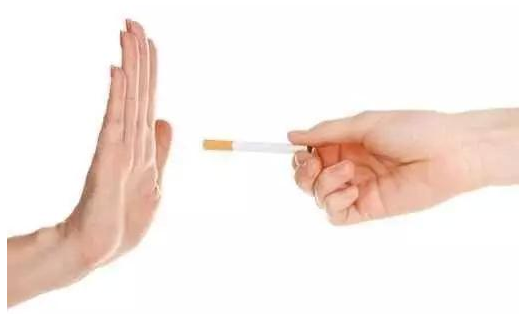
Tobacco dependence is reflected in both physical dependence and psychological dependence. Under normal circumstances, withdrawal symptoms can begin within hours after stopping smoking, are usually most intense during the first 14 days, and then gradually lessen until they disappear. Most withdrawal symptoms last for about one month, but for some people, cravings for smoking may continue for more than a year.
Quitting smoking cannot rely on willpower alone
Smoking, as a form of nicotine dependence, has been classified by the World Health Organization as a specific disease. So in a sense, quitting smoking is equivalent to treatment. However, quitting "cold turkey" based on willpower alone comes with a high relapse rate.
Past smoking cessation experiences have shown us that the success rate of relying solely on personal willpower is relatively low. Long-term smokers may need nicotine replacement products to get through the early withdrawal stage. Nicotine replacement therapy mainly works by providing nicotine to the body as a substitute, or partial substitute, for the nicotine previously obtained from tobacco. It not only helps reduce nicotine withdrawal symptoms during the quitting process, but also helps smokers avoid direct exposure to harmful substances in smoke, gradually reduce nicotine cravings, and ultimately quit smoking.
Recently, the smoking cessation platform conducted two consecutive surveys on failed quit attempts:
Based on the survey results above, one conclusion stands out: to quit smoking successfully, people must get through two major hurdles—withdrawal symptoms and a scientific mindset. In the survey, 24% of respondents relapsed because they could not cope with withdrawal symptoms, while 29% were unable to overcome irritability and lacked a scientific understanding of smoking cessation.
Physical discomfort in the early stage of quitting is normal, so don’t panic
In the early stage of quitting, many people experience anxiety, irritability, poor appetite, trouble sleeping, and other physical discomfort. If they smoke a cigarette, the symptoms often ease a little. Because of this, many smokers begin to think about giving up on quitting. On average, smokers try to quit 6 to 9 times before they finally succeed, so relapse is very common.
In the early phase of smoking cessation, symptoms such as anxiety, depression, increased salivary gland secretion, difficulty concentrating, and sleep disturbances may indeed appear. Some people who quit may even gain weight. However, these are all normal responses to smoking cessation.
The severity of withdrawal symptoms varies from person to person
The severity of withdrawal symptoms varies from person to person and mainly depends on smoking history, the number of cigarettes smoked per day, and total years of smoking, all of which determine the level of nicotine dependence. Smokers with mild dependence often have little to no discomfort in the early stage of quitting. But for those with moderate to severe nicotine dependence—especially long-term smokers who consume more than 20 cigarettes a day and have smoked for 20 or 30 years—the brain has already developed a certain demand for dopamine. If they suddenly quit without proper intervention, withdrawal symptoms such as irritability, anxiety, and palpitations may occur.
Tobacco dependence is reflected in both physical dependence and psychological dependence. Under normal circumstances, withdrawal symptoms can begin within hours after stopping smoking, are usually most intense during the first 14 days, and then gradually lessen until they disappear. Most withdrawal symptoms last for about one month, but for some people, cravings for smoking may continue for more than a year.
Quitting smoking cannot rely on willpower alone
Smoking, as a form of nicotine dependence, has been classified by the World Health Organization as a specific disease. So in a sense, quitting smoking is equivalent to treatment. However, quitting "cold turkey" based on willpower alone comes with a high relapse rate.
Past smoking cessation experiences have shown us that the success rate of relying solely on personal willpower is relatively low. Long-term smokers may need nicotine replacement products to get through the early withdrawal stage. Nicotine replacement therapy mainly works by providing nicotine to the body as a substitute, or partial substitute, for the nicotine previously obtained from tobacco. It not only helps reduce nicotine withdrawal symptoms during the quitting process, but also helps smokers avoid direct exposure to harmful substances in smoke, gradually reduce nicotine cravings, and ultimately quit smoking.