JUUL Captures Half of the E-Cigarette Market
JUUL e-cigarettes have become increasingly popular, and many copycat products look like JUUL but are not genuine JUUL devices. Because many imitators focus mainly on profit, these knockoff products have spread among young people and are widely used in sch
JUUL e-cigarettes are becoming increasingly popular, with many counterfeit e-cigarettes resembling JUUL but not being actual JUUL products, as they primarily focus on profits and are widely used among youth and in schools.
This year, total e-cigarette sales in the U.S. have reached approximately $2.3 billion, a 77% increase year-on-year.
As a relatively "newcomer" in the e-cigarette market, JUUL has dominated the industry in just three years.
Wells Fargo analyst Bonnie Herzog found that, based on Nielsen data, JUUL sold $1.29 billion worth of vape kits and nicotine pods in the 12 months ending August 11, accounting for more than half of the total category value of $2.31 billion.
With popular flavors like caramel pudding and mango, JUUL has significantly boosted the e-cigarette market, prompting Herzog to raise the annual sales forecast for the e-cigarette market from a previous estimate of $5.5 billion to $6.6 billion. Of course, other competitors, including Altria's MarkTen, have also contributed to the simultaneous growth of the e-cigarette market.
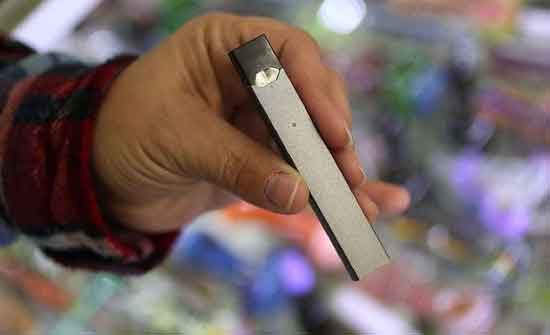 JUUL's products were incubated at the Silicon Valley company "PAX Labs," and they are now sold at major gas stations and e-cigarette shops across the U.S. Their biggest highlight is their globally patented PAX nicotine salt e-liquid, which has a high degree of flavor restoration, making the throat hit almost indistinguishable from that of real cigarettes. Upon launch, it quickly became the best portable e-cigarette in terms of portability and flavor, and its cool, user-friendly design and high aesthetic appeal, resembling a USB drive, have won over countless fans.
According to Nielsen data, JUUL's sales have surged by 728% recently. Herzog noted that its market share has risen from 70.5% last month to around 72% by mid-August. During the same period, the overall e-cigarette category grew by 97% to $1.96 billion.
As a new player with over 70% market share in the U.S., this company, which was founded just three years ago, recently completed a new round of financing a month ago.
According to reports from Reuters, JUUL previously announced a target financing amount of $1.2 billion for this round and has now secured $650 million in funding, with a valuation exceeding $15 billion, making it the sixth highest-valued startup in the U.S., successfully joining the ranks of "super unicorns" like Uber, Airbnb, and Lyft.
JUUL plans to use the influx of cash to enter international markets. The pen-style vaporizer, which is JUUL's flagship product, is currently only available in Israel, and the company hopes to expand its distribution channels with the new funding. According to publicly disclosed information, JUUL's shareholders include Tiger Global Management and Fidelity Investments.
This year, total e-cigarette sales in the U.S. have reached approximately $2.3 billion, a 77% increase year-on-year.
As a relatively "newcomer" in the e-cigarette market, JUUL has dominated the industry in just three years.
Wells Fargo analyst Bonnie Herzog found that, based on Nielsen data, JUUL sold $1.29 billion worth of vape kits and nicotine pods in the 12 months ending August 11, accounting for more than half of the total category value of $2.31 billion.
With popular flavors like caramel pudding and mango, JUUL has significantly boosted the e-cigarette market, prompting Herzog to raise the annual sales forecast for the e-cigarette market from a previous estimate of $5.5 billion to $6.6 billion. Of course, other competitors, including Altria's MarkTen, have also contributed to the simultaneous growth of the e-cigarette market.
JUUL's products were incubated at the Silicon Valley company "PAX Labs," and they are now sold at major gas stations and e-cigarette shops across the U.S. Their biggest highlight is their globally patented PAX nicotine salt e-liquid, which has a high degree of flavor restoration, making the throat hit almost indistinguishable from that of real cigarettes. Upon launch, it quickly became the best portable e-cigarette in terms of portability and flavor, and its cool, user-friendly design and high aesthetic appeal, resembling a USB drive, have won over countless fans.According to Nielsen data, JUUL's sales have surged by 728% recently. Herzog noted that its market share has risen from 70.5% last month to around 72% by mid-August. During the same period, the overall e-cigarette category grew by 97% to $1.96 billion.
As a new player with over 70% market share in the U.S., this company, which was founded just three years ago, recently completed a new round of financing a month ago.
According to reports from Reuters, JUUL previously announced a target financing amount of $1.2 billion for this round and has now secured $650 million in funding, with a valuation exceeding $15 billion, making it the sixth highest-valued startup in the U.S., successfully joining the ranks of "super unicorns" like Uber, Airbnb, and Lyft.
JUUL plans to use the influx of cash to enter international markets. The pen-style vaporizer, which is JUUL's flagship product, is currently only available in Israel, and the company hopes to expand its distribution channels with the new funding. According to publicly disclosed information, JUUL's shareholders include Tiger Global Management and Fidelity Investments.