
Why Is Tobacco Control So Difficult in China?
With the flick of a lighter, a cigarette comes to life; a breath through the lungs brings intoxication while taking away health. Cigarettes remain both a premium consumer product and a social lubricant. China’s tobacco industry leads the world in multiple
A flick of the lighter brings it to life in a moment of glow and fade; a trip through the lungs brings intoxication and takes away health. It is the cigarette: the aristocrat of consumer goods and the glue of social courtesy.
China’s tobacco industry ranks first in 8 categories worldwide
According to statistics, China’s total tobacco wholesale sales revenue in 2014 reached 1.24804 trillion yuan, equivalent to three times Myanmar’s GDP that same year; 50.9904 million cartons were sold, enough to circle the Earth 114 times if lined up end to end.
U.S. magazine BusinessWeek pointed out that in 2014, 43 out of every 100 cigarettes worldwide were produced by China National Tobacco Corporation. The tobacco industry gave China 8 world No. 1 rankings: first in tobacco planting area, first in cigarette sales, first in number of smokers, and more…
Lack of awareness of the harm is the most deadly part
Smokers have insufficient awareness of smoking bans. The Financial Times reported on March 25 that China has more than 300 million smokers, and most of them light up whenever and wherever their cravings strike. More than 1 million people die each year from smoking-related diseases. The Chinese government estimates that by 2030, this number will double, and may even triple. That would mean smoking-related deaths in China would exceed those from AIDS, tuberculosis, traffic accidents, and suicide.

Foreign netizens: Chinese people’s smoking habits are truly terrible
Why is tobacco control so difficult?
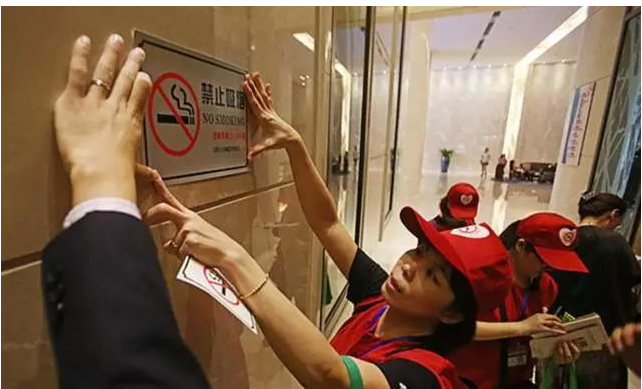
The tobacco industry is the biggest obstacle to smoking bans. China is the world’s largest producer and consumer of tobacco, and tobacco sales revenue from the state-owned monopoly China National Tobacco Corporation accounts for about 7% of government tax revenue. Given this, it is understandable that some people are skeptical about how seriously the Chinese government is taking its comprehensive ban on smoking in indoor public places starting May 1 this year.
Voice of America reported on March 24: the tobacco industry has always been seen as the greatest resistance to tobacco control and smoking bans, and China is no exception. China Tobacco generates 500 trillion yuan in annual profits and taxes, accounting for more than 8% of the country’s total fiscal revenue. The tobacco industry has become a financial pillar for local governments in some regions, including Yunnan Province, and in these areas tobacco control and smoking bans are regarded as nearly impossible tasks.
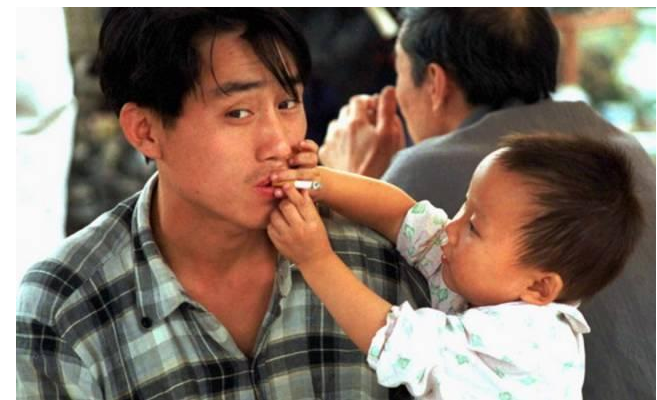
1. Smokers: cigarettes may torture my heart, liver, and lungs, but I treat them like a first love.
According to incomplete statistics, the number of smokers in China has reached 316 million. Getting such a massive group to give up the habit is no easy task. In addition, as China develops rapidly and life becomes more stressful, many people choose cigarettes to relieve pressure and ease their worries. A popular saying goes: life is disappointing eight or nine times out of ten, but one cigarette solves everything. On top of that, in a relationship-driven society, cigarettes and alcohol often come first in social interactions. So even if someone wants to quit, they still feel they need to carry cigarettes with them. As a result, lighting up “in spite of oneself” has become normal.
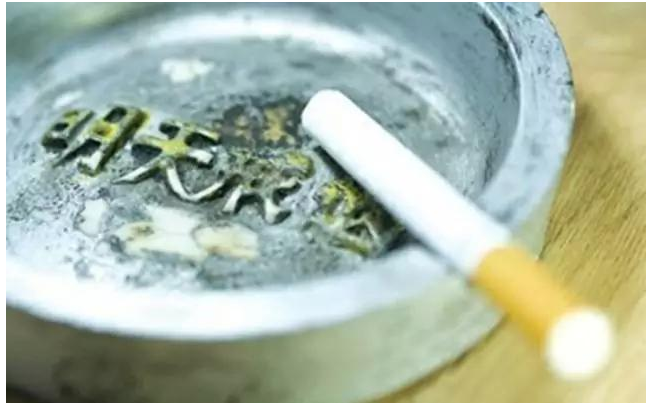
2. Cigarette sellers: endless hedging and excuses, all in the name of profit, profit, profit.
Tobacco companies stubbornly oppose graphic warning labels on packaging, treating the tiny-print “Smoking is harmful to your health” as trivial. At the same time, they seize every opportunity to run “corporate culture” advertising, as if legal restrictions could not restrain their ambition. During negotiations over the Framework Convention on Tobacco Control, an official from the State Tobacco Monopoly Administration once made the shocking claim that “tobacco control is tantamount to betraying the nation.” That saying about money turning people into monsters seems fitting enough. The blurred line between government regulator and tobacco company allows the two to “advance together,” causing the already limited rationale for smoking bans to vanish into endless rationalizations.
The state: fail to control tobacco and the public pays with its health; control tobacco and public finances take a heavy hit.
In 2014, China’s tobacco industry generated more than 1 trillion yuan in taxes and profits, up about 10% year on year; the industry contributed a total of 911.03 billion yuan to public finances for the year, including 45 billion yuan in special taxes for the central treasury alone. In early 2009, the Ministry of Finance and the State Taxation Administration jointly issued the Notice on Adjusting the Consumption Tax Policy on Tobacco Products, raising the ad valorem consumption tax rate on Class A cigarettes to 50% and on Class B cigarettes to 36%. But at the same time, some Class A cigarettes were reclassified as Class B, effectively making cigarettes more affordable for lower-income smokers. This showed only limited sincerity in tobacco control.
In China, can taxation really control tobacco use?
In any case, taxation remains the most effective tobacco control measure worldwide at present. According to data released by the World Health Organization, every 10% increase in tobacco prices raises the number of adult smokers who quit by 3.7%. #p#Page Break Title#e#
But this figure does not seem to hold true in China. On May 8, 2015 (Document No. 128 of the State Tobacco Administration), the wholesale price of cigarettes nationwide was raised by 6%, yet the result was that high-end, specialty, new, and low-end cigarette categories all basically maintained “higher volume with stable prices.” Such a token price increase, compared with the rapidly shrinking value of the renminbi, was basically ineffective. After all, Chinese smokers, it seems, are not short of money.
China’s tobacco industry ranks first in 8 categories worldwide
According to statistics, China’s total tobacco wholesale sales revenue in 2014 reached 1.24804 trillion yuan, equivalent to three times Myanmar’s GDP that same year; 50.9904 million cartons were sold, enough to circle the Earth 114 times if lined up end to end.
U.S. magazine BusinessWeek pointed out that in 2014, 43 out of every 100 cigarettes worldwide were produced by China National Tobacco Corporation. The tobacco industry gave China 8 world No. 1 rankings: first in tobacco planting area, first in cigarette sales, first in number of smokers, and more…
Lack of awareness of the harm is the most deadly part
Smokers have insufficient awareness of smoking bans. The Financial Times reported on March 25 that China has more than 300 million smokers, and most of them light up whenever and wherever their cravings strike. More than 1 million people die each year from smoking-related diseases. The Chinese government estimates that by 2030, this number will double, and may even triple. That would mean smoking-related deaths in China would exceed those from AIDS, tuberculosis, traffic accidents, and suicide.
Foreign netizens: Chinese people’s smoking habits are truly terrible
Why is tobacco control so difficult?
The tobacco industry is the biggest obstacle to smoking bans. China is the world’s largest producer and consumer of tobacco, and tobacco sales revenue from the state-owned monopoly China National Tobacco Corporation accounts for about 7% of government tax revenue. Given this, it is understandable that some people are skeptical about how seriously the Chinese government is taking its comprehensive ban on smoking in indoor public places starting May 1 this year.
Voice of America reported on March 24: the tobacco industry has always been seen as the greatest resistance to tobacco control and smoking bans, and China is no exception. China Tobacco generates 500 trillion yuan in annual profits and taxes, accounting for more than 8% of the country’s total fiscal revenue. The tobacco industry has become a financial pillar for local governments in some regions, including Yunnan Province, and in these areas tobacco control and smoking bans are regarded as nearly impossible tasks.
1. Smokers: cigarettes may torture my heart, liver, and lungs, but I treat them like a first love.
According to incomplete statistics, the number of smokers in China has reached 316 million. Getting such a massive group to give up the habit is no easy task. In addition, as China develops rapidly and life becomes more stressful, many people choose cigarettes to relieve pressure and ease their worries. A popular saying goes: life is disappointing eight or nine times out of ten, but one cigarette solves everything. On top of that, in a relationship-driven society, cigarettes and alcohol often come first in social interactions. So even if someone wants to quit, they still feel they need to carry cigarettes with them. As a result, lighting up “in spite of oneself” has become normal.
2. Cigarette sellers: endless hedging and excuses, all in the name of profit, profit, profit.
Tobacco companies stubbornly oppose graphic warning labels on packaging, treating the tiny-print “Smoking is harmful to your health” as trivial. At the same time, they seize every opportunity to run “corporate culture” advertising, as if legal restrictions could not restrain their ambition. During negotiations over the Framework Convention on Tobacco Control, an official from the State Tobacco Monopoly Administration once made the shocking claim that “tobacco control is tantamount to betraying the nation.” That saying about money turning people into monsters seems fitting enough. The blurred line between government regulator and tobacco company allows the two to “advance together,” causing the already limited rationale for smoking bans to vanish into endless rationalizations.
The state: fail to control tobacco and the public pays with its health; control tobacco and public finances take a heavy hit.
In 2014, China’s tobacco industry generated more than 1 trillion yuan in taxes and profits, up about 10% year on year; the industry contributed a total of 911.03 billion yuan to public finances for the year, including 45 billion yuan in special taxes for the central treasury alone. In early 2009, the Ministry of Finance and the State Taxation Administration jointly issued the Notice on Adjusting the Consumption Tax Policy on Tobacco Products, raising the ad valorem consumption tax rate on Class A cigarettes to 50% and on Class B cigarettes to 36%. But at the same time, some Class A cigarettes were reclassified as Class B, effectively making cigarettes more affordable for lower-income smokers. This showed only limited sincerity in tobacco control.
In China, can taxation really control tobacco use?
In any case, taxation remains the most effective tobacco control measure worldwide at present. According to data released by the World Health Organization, every 10% increase in tobacco prices raises the number of adult smokers who quit by 3.7%. #p#Page Break Title#e#
But this figure does not seem to hold true in China. On May 8, 2015 (Document No. 128 of the State Tobacco Administration), the wholesale price of cigarettes nationwide was raised by 6%, yet the result was that high-end, specialty, new, and low-end cigarette categories all basically maintained “higher volume with stable prices.” Such a token price increase, compared with the rapidly shrinking value of the renminbi, was basically ineffective. After all, Chinese smokers, it seems, are not short of money.


