
China’s HelloCig Electronic Technology Receives FDA Detention Warning
The US Food and Drug Administration (FDA) last week issued a warning letter to China-based HelloCig Electronic Technology, stating that the company sold two e-liquids containing drugs used for erectile dysfunction, involving violations of the Federal Food
The U.S. Food and Drug Administration (FDA) issued a warning letter last week to HelloCig Electronic Technology, a company based in China, stating that it sold two types of e-liquids containing erectile dysfunction drugs, which constitutes a violation of the Federal Food, Drug, and Cosmetic Act. FDA officials stated that the active ingredients in the e-liquids (tadalafil and sildenafil) have vasodilatory effects, and excessive use can dangerously lower blood pressure. Currently, the health risks associated with inhaling these prescription drugs have not been effectively assessed, making this practice illegal.
According to the Daily Mail, on October 11, the FDA sent a warning letter to HelloCig, demanding a halt to the sale of two e-liquids containing therapeutic erectile dysfunction drugs.
Officials stated that no testing had been conducted on these e-liquids, and they had not received any approval, making their sale illegal.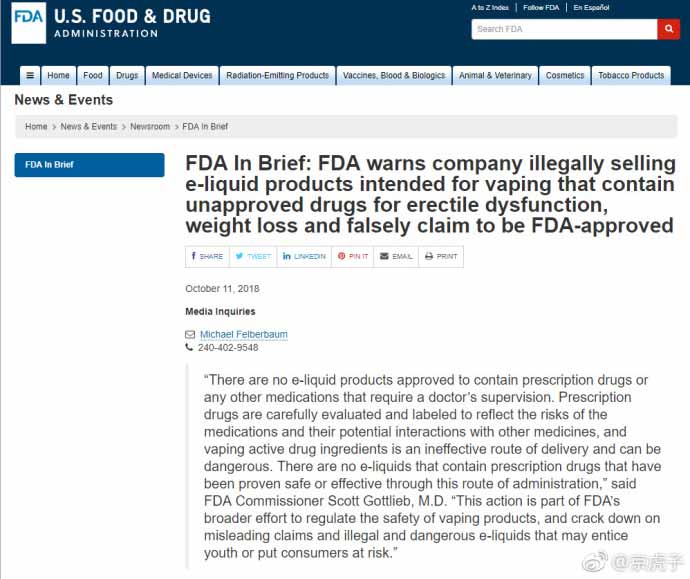
The tadalafil and sildenafil contained in the e-liquids can lower blood pressure, posing risks for heart disease patients.
Dr. Premal Patel, a urologist at the University of Miami, explained that erectile dysfunction may indicate future heart problems. The blood vessels in our body supply blood to both the heart and the penis; thus, vascular dysfunction leading to insufficient blood flow to the penis may also result in inadequate blood supply to the heart in the future. As a urologist, assessing a patient's heart health is part of the diagnostic process, especially since those taking erectile dysfunction medications may experience side effects. Additionally, men with erectile dysfunction often take medications for heart disease, so adding these components to e-liquids, especially without declaration, could lead to overdosing.
Erectile dysfunction medications can improve blood flow to the penis by dilating blood vessels. In the U.S., they are also used to treat pulmonary arterial hypertension. However, these drugs are designed as oral medications, and inhalation through vaporization remains an unknown territory. At the beginning of this century, a pharmaceutical company in New Jersey produced a nasal spray for treating erectile dysfunction, which, if successful, would have been the first erectile dysfunction medication acting on the central nervous system; however, it did not pass early trials. Fifteen years later, oral medications remain the only recognized form of these drugs. Patel stated that using e-cigarettes allows users to quickly intake high concentrations of substances, and we do not know what effects these medications will have when inhaled, which is concerning.
Can e-cigarettes also supplement vitamins? Experts say it may further increase lung cancer risk.
E-cigarettes have made significant efforts to shape their "health image," with some companies adding nutritional elements to e-cigarettes, claiming to include vitamin B12 that can be absorbed through the oral mucosa, suggesting that vaping can be healthy and nutritious. However, Dr. Charles Mueller, a nutrition professor at New York University, debunked this myth: most nutrients are fat or water-soluble, so vitamins need to be absorbed through the gastrointestinal tract with fats and water. You might get some passive absorption in the lungs, but you won't absorb any fat or water-soluble vitamins. Our stomachs and intestines are for nutrient and moisture absorption, while the lungs are for air exchange; these two functions should not be confused to avoid unnecessary trouble.
The U.S. military is developing a nutrient-rich skin patch to help soldiers maintain health in combat,
but the Department of Defense estimates it may not be ready until 2025. Therefore, it is unlikely that an ordinary electronics company could launch an effective product nearly a decade ahead of the U.S. military.
To ensure vitamin intake, e-cigarettes often contain far more than the recommended amounts of vitamins. Ironically, a Harvard study found that male smokers taking high doses of vitamin B had three times the risk of lung cancer compared to those not taking vitamin B. Similar "effects" have been found regarding excessive intake of vitamin E supplements and lung cancer. Additionally, smokers also need to deal with the smoke produced by flavoring compounds added to dissolve these vitamins. The FDA declares war on e-cigarettes: either change or face market withdrawal and even seizure.
Recently, FDA Commissioner Scott Gottlieb declared war on e-cigarettes, launching raids on the headquarters of these companies to obtain information regarding the sale of e-cigarette products to children. This method, which claims to help smokers quit, uses enticing flavored e-liquids like cinnamon and cotton candy to attract more users, especially teenagers. The FDA also warned that if the youth vaping epidemic is not curbed, it will force these products off the market. However, adding "Viagra" to e-liquids is a problem they have not encountered before, and some products even contain commercially available weight loss drugs, which could have even more fatal consequences, necessitating preventive measures.
Gottlieb stated that prescription drugs undergo safety assessments and are labeled to reflect the risks and potential interactions with other medications, and no e-liquid products have been approved to contain prescription drugs or any other medications requiring medical supervision. The FDA has requested that the company respond within 15 business days, detailing how it intends to address the agency's concerns; failure to correct violations may lead to further actions, such as seizure or injunction. This action is part of the FDA's efforts to regulate the safety of e-cigarette products, aiming to control product safety, combat misleading advertising, and prevent enticing young people or exposing consumers to high-risk illegal hazardous e-liquids.
According to the Daily Mail, on October 11, the FDA sent a warning letter to HelloCig, demanding a halt to the sale of two e-liquids containing therapeutic erectile dysfunction drugs.
Officials stated that no testing had been conducted on these e-liquids, and they had not received any approval, making their sale illegal.
The tadalafil and sildenafil contained in the e-liquids can lower blood pressure, posing risks for heart disease patients.
Dr. Premal Patel, a urologist at the University of Miami, explained that erectile dysfunction may indicate future heart problems. The blood vessels in our body supply blood to both the heart and the penis; thus, vascular dysfunction leading to insufficient blood flow to the penis may also result in inadequate blood supply to the heart in the future. As a urologist, assessing a patient's heart health is part of the diagnostic process, especially since those taking erectile dysfunction medications may experience side effects. Additionally, men with erectile dysfunction often take medications for heart disease, so adding these components to e-liquids, especially without declaration, could lead to overdosing.
Erectile dysfunction medications can improve blood flow to the penis by dilating blood vessels. In the U.S., they are also used to treat pulmonary arterial hypertension. However, these drugs are designed as oral medications, and inhalation through vaporization remains an unknown territory. At the beginning of this century, a pharmaceutical company in New Jersey produced a nasal spray for treating erectile dysfunction, which, if successful, would have been the first erectile dysfunction medication acting on the central nervous system; however, it did not pass early trials. Fifteen years later, oral medications remain the only recognized form of these drugs. Patel stated that using e-cigarettes allows users to quickly intake high concentrations of substances, and we do not know what effects these medications will have when inhaled, which is concerning.
Can e-cigarettes also supplement vitamins? Experts say it may further increase lung cancer risk.
E-cigarettes have made significant efforts to shape their "health image," with some companies adding nutritional elements to e-cigarettes, claiming to include vitamin B12 that can be absorbed through the oral mucosa, suggesting that vaping can be healthy and nutritious. However, Dr. Charles Mueller, a nutrition professor at New York University, debunked this myth: most nutrients are fat or water-soluble, so vitamins need to be absorbed through the gastrointestinal tract with fats and water. You might get some passive absorption in the lungs, but you won't absorb any fat or water-soluble vitamins. Our stomachs and intestines are for nutrient and moisture absorption, while the lungs are for air exchange; these two functions should not be confused to avoid unnecessary trouble.
The U.S. military is developing a nutrient-rich skin patch to help soldiers maintain health in combat,
but the Department of Defense estimates it may not be ready until 2025. Therefore, it is unlikely that an ordinary electronics company could launch an effective product nearly a decade ahead of the U.S. military.
To ensure vitamin intake, e-cigarettes often contain far more than the recommended amounts of vitamins. Ironically, a Harvard study found that male smokers taking high doses of vitamin B had three times the risk of lung cancer compared to those not taking vitamin B. Similar "effects" have been found regarding excessive intake of vitamin E supplements and lung cancer. Additionally, smokers also need to deal with the smoke produced by flavoring compounds added to dissolve these vitamins.
The FDA declares war on e-cigarettes: either change or face market withdrawal and even seizure.Recently, FDA Commissioner Scott Gottlieb declared war on e-cigarettes, launching raids on the headquarters of these companies to obtain information regarding the sale of e-cigarette products to children. This method, which claims to help smokers quit, uses enticing flavored e-liquids like cinnamon and cotton candy to attract more users, especially teenagers. The FDA also warned that if the youth vaping epidemic is not curbed, it will force these products off the market. However, adding "Viagra" to e-liquids is a problem they have not encountered before, and some products even contain commercially available weight loss drugs, which could have even more fatal consequences, necessitating preventive measures.
Gottlieb stated that prescription drugs undergo safety assessments and are labeled to reflect the risks and potential interactions with other medications, and no e-liquid products have been approved to contain prescription drugs or any other medications requiring medical supervision. The FDA has requested that the company respond within 15 business days, detailing how it intends to address the agency's concerns; failure to correct violations may lead to further actions, such as seizure or injunction. This action is part of the FDA's efforts to regulate the safety of e-cigarette products, aiming to control product safety, combat misleading advertising, and prevent enticing young people or exposing consumers to high-risk illegal hazardous e-liquids.


