
Disposable E-Cigarette OEM Manufacturer Contacts and the Challenge From Small Workshop Factories
Contact information for disposable e-cigarette OEM manufacturers and challenges from small workshop factories. Two years ago, the domestic e-cigarette industry attracted many companies to join with the OEM model and high profits. In an interview with Southern Metropolis Daily, Zhao Bo, vice president of Desenik, recalled: "Just from Walmart's single sales channel, the annual sales exceeded 100 million yuan." However, currently, with the tightening of regulations by the FDA in the United States, Chinese companies have begun to seek cooperation beyond just channels. Hu Xiaoshuai, general manager of E-Cigarette Online, revealed to Southern Metropolis Daily: "More and more companies are trying to collaborate with local professional institutions in the U.S. to produce e-cigarettes to avoid policy risks."
In terms of profit models, S MO K CEO Ouyang Junwei told Southern Metropolis Daily: "In addition to selling products, more and more manufacturers are trying diversified methods such as 'hardware + services.'" However, the market's acceptance remains uncertain.

Decline of the OEM model
Southern Metropolis Daily: It is understood that the overseas e-cigarette market reached a considerable scale around 2011. However, with the tightening of regulations by the FDA, the overseas market has gradually shrunk in the past two years. From the perspective of profit models, how has the overseas e-cigarette market changed?
Zhao Bo: Data can explain the problem. From the participants' perspective, the period from 2008 to 2010 was the market cultivation period, with no more than 10 companies in the e-cigarette industry. By around 2012, it reached over a hundred, not including foreign trade companies, mainly focusing on OEM. By last year, due to restrictions from the FDA and other regulations, localized e-liquid companies have emerged in some foreign countries and cities, while many domestic manufacturers have exited the industry.
From a profit perspective, the gross profit from purely doing OEM orders has now dropped to 15%. A few years ago, it could be as high as 80%.
Overall, most companies in the industry are facing insufficient orders. More and more companies are starting to shrink or transform and increase diversified profit models. Although OEM remains the main profit model, they have begun to attempt to establish and sell their own brands while testing the domestic market both online and offline.
Ouyang Junwei: The industry is still in a relatively early stage, and the entry threshold is quite low, with not much technical barrier. In the past, it was mainly OEM, but as profit margins have decreased, they have started to build brands, which will create some added value.
Hu Xiaoshuai: In this changing environment, from the perspective of user experience, more original products will emerge. From an industrial perspective, the division of labor is becoming more refined. For example, in the past, one manufacturer was responsible for the entire industry chain. Now, many offline channel merchants have emerged, specifically helping these e-cigarette companies with channel promotion. From our third-party judgment, manufacturers with strong resource integration and R&D capabilities will have a larger survival space in the future.
Rooting in overseas channels
Southern Metropolis Daily: What adjustments have been made when selecting partners overseas?
Zhao Bo: We started cooperating with Walmart in 2010, initially, they approached us. The model is very simple; they rely on us for supply. When the market is good, the local recognition is very high. Just relying on Walmart as a single channel can achieve annual sales of several hundred million. However, in the past two years, with changes in the market and foreign policies, the sales of these channels have also begun to decline.
From the perspective of the entire domestic environment, China is transforming from an e-cigarette base that includes e-liquids, devices, and technology into a processing base that only does devices, with a decrease in technical content.
Hu Xiaoshuai: In this situation, some large domestic manufacturers are actively seeking overseas partners, not just for channel cooperation. The latest change is to produce or develop e-cigarettes with local professional institutions and manufacturers, especially in the e-liquid segment, thus avoiding policy risks and lowering entry barriers. Moreover, from the perspective of consumer acceptance, there is a better impression of local brands.
Ouyang Junwei: In foreign channels, there are mainly two forms: distribution and direct sales. Offline distribution has about 20 distributors and over 600 secondary distributors, with retail stores reaching over 8,000 when the market is good. The U.S. market accounts for 60%-70% of our business. Online direct sales mainly involve establishing partnerships with some websites. In the future, we hope to create some image stores abroad, mainly for customer experience and brand culture.
Exploring smoking cessation data
Southern Metropolis Daily: Besides hardware, is there other profit space in this industry?
Ouyang Junwei: In addition to the traditional product sales model, some leading companies in the industry are also moving towards big data. For example, they are launching e-cigarettes with Bluetooth that can connect to mobile apps to collect and classify personal health data, ultimately forming reports and suggestions to feedback to consumers, or there may be some charging possibilities. Although smart hardware is abundant, I believe whether it becomes a useless product depends on its practicality. Besides health data, e-cigarettes can also be controlled, such as setting a limit for the day, and if it exceeds, it will automatically remind the user, managing health. The potential space is still quite large.
Hu Xiaoshuai: China is a major e-cigarette manufacturing country, with 90% of products for export. In the entire industry, there are currently no companies listed relying on e-cigarettes. However, some companies have previously submitted applications for listing on NASDAQ in the U.S. This could be more favorable for the entire industry. However, for entrepreneurs, the entry threshold is also getting higher.
E-cigarette statistics
E-cigarettes are electronic products that mimic cigarettes. In 2003, China invented e-cigarettes, and in 2004, they were industrialized and put on the market, rapidly rising in Europe and the United States in recent years, with international tobacco giants entering the e-cigarette market and investing heavily. China's e-cigarette industry has also developed rapidly, with most e-cigarette products or their accessories produced in China. Public data shows that in 2013, China's e-cigarette sales reached about 1.5 billion yuan. However, due to the unclear nature of e-cigarettes, safety incidents occur from time to time, and the situation of disorderly competition, entrepreneurial companies in the e-cigarette industry still tread carefully.
The World Health Organization's survey shows that 39 countries (accounting for 31% of the world's population) have completely banned advertising, promotion, and sponsorship of e-cigarettes; 30 countries (35%) prohibit the use of e-cigarettes in enclosed public places; 19 countries (5%) require review before market launch; 9 countries (4%) require sales licenses; and 29 countries (8%) have policies regarding the sale of e-cigarettes to minors. In places with regulations, the minimum purchase age ranges from 18 to 21 years.
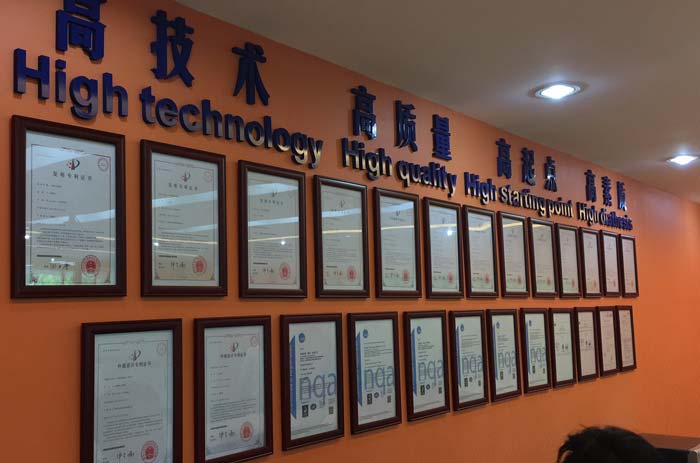
The disposable e-cigarette market is expected to experience geometric growth this year, with more and more capital entering the disposable e-cigarette track. To get a piece of the disposable e-cigarette market, you must find a strong disposable e-cigarette OEM manufacturer. Our company has the largest dust-free production workshop in the country, with 8 years of experience in e-cigarette OEM and 3 years in disposable e-cigarette OEM. Friends who need to work together can contact the hotline: 17682343645. Small batch mainstream small cigarette agency and testing can also contact WeChat: vapeos;


