Future Development Trends of E-Cigarette Batteries
Tesla plans to manufacture 500,000 electric vehicles annually by 2018. Since each vehicle requires thousands of lithium batteries, this means Tesla alone will need a huge share of today’s global lithium-ion battery supply. That is why Tesla has already bu
Tesla plans to build 500,000 electric cars a year through 2018 Since each car requires the use of thousands of lithium-ion batteries, this means that Tesla alone will need a large supply of today's lithium-ion batteries globally.
It's really simple, the relationship is in the battery. Now our most commonly used rechargeable lithium-ion battery is ‘18650’ battery. It has a diameter of 18mm and a length of 65mm, so it is called ‘18650’, and the 0 here represents a cylindrical battery. It is widely used in laptops, digital cameras, flashlights and many other digital appliances, and has been the battery used in traditional e-cigarettes for many years. Of course, it is also used in Tesla cars! Tesla uses nearly 7,000 ‘18650’ cells in his electric cars. This is a huge battery pack, first made from 69 ‘18650’ cells connected in parallel to make a battery ‘group’, then 9 cells ‘group’ connected to make a battery ‘plate’, and finally 11 cells ‘plate’ connected again to make a battery ‘plate’, and finally 11 cells ‘plate’ connected again to make a battery ‘plate’. rsquo; connected again to make a huge car battery (69 x 9 x 11 = 6831 batteries). I'm not sure how much they paid to source the Panasonic batteries, but if we take the average online price of a decent quality 18650 lithium battery, it would take about $50,000 to purchase this car battery. No wonder Tesla cars sell for a lot of money. Tesla certainly knows that if they want to be more competitive, they need to build cheaper, and better performing electric cars. That's why they built the GigaFactory. There were rumors that they would be switching to ‘20700’ lithium batteries, but Elon Musk Elon · Musk apparently did some final research calculations and removed the one ‘0’ at the end of the original ‘21700’ model number, and announced ‘2170 ’ (21mm×70mm) battery will become the new standard battery model, also become a new classification standard. The ‘2170’ battery capacity can be 35% more compared to the original, and the volume is 10% larger than the ‘18650’. Tesla is using more advanced technology to achieve a larger battery capacity using fewer batteries, so they do not need to care about whether the battery volume is larger, because they need fewer batteries to get the same power output. Will Tesla get rid of his supply chain after building batteries? No, they probably won't. If we dig a little deeper we'll find that ‘21700’ batteries are already booming in the marketplace, with Samsung already using them in electric bikes and supplying ‘21700’ packs for BMW, Mercedes-Benz, and Porsche's electric cars.LG has also announced that it has a role to play in Fisker Fisker Automotive's all-natural electric supercar Emotion EV using ‘21700’, and they have also partnered with Audi, Chrysler, Ford, GM, Hyundai, Nissan, Renault, Smart, Volkswagen, and Volvo to supply them with lithium batteries. Is the trend for lithium batteries bigger or smaller? But if these batteries are bigger and heavier, how will they be used in today's laptops and flashlights? We can see that Apple's MacBook's extreme portability design will not use smaller batteries per se, and even though they changed the shape of the battery to make the battery into a sheet structure, they still used the concept of minimizing the structure to get more space for the battery to place a larger battery. So the trend for portable devices is to get smaller and smaller, but batteries may not get smaller and smaller as portable technology evolves. So will e-cigarettes also follow the traditional rules of technology and get smaller and smaller? I think too small a device is not practical, most use ‘18650’ regulator box at least once a day to replace the battery, if the power consumption is greater, may also need a double, triple or even quadruple power configuration. We've seen that e-cigarettes have historically been an industry that adapts to technology because of their standard size, high power and low price demands using ‘18650’ batteries. If ‘20700’ or ‘26650’ batteries are used, there is bound to be some trade-off between price, performance, size and availability. #p#Page Break #e#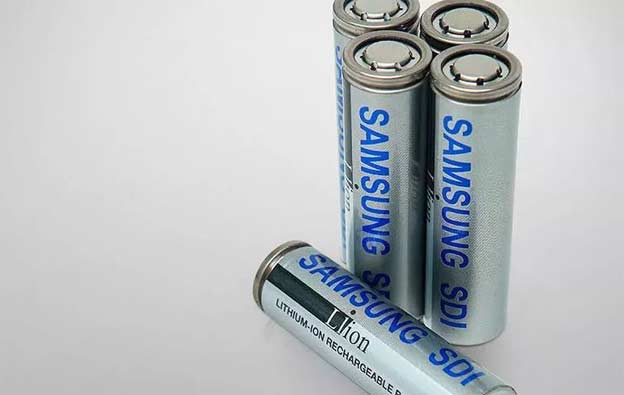 Haven't we seen other sizes of devices?
Maybe, ‘21700’ batteries are just slightly larger, but with more power and longer range. But to be used universally, it must need to be mass-produced by manufacturers to increase availability and reduce costs. We have seen the e-cigarette industry has launched forward-thinking products, such as: Sigelei GW regulator box, which can accommodate two ‘21700’, ‘20700’ or ‘18650’ batteries. iJOY also launched the iJOY CAPO 100W starter kit, which also supports ‘21700’ batteries, and iJOY is giving away an iJOY 21700 3750mAh battery in the kit.
Will ‘21700’ become the new standard?
I think so. Many leading battery manufacturers are already producing ‘21700’ batteries and are considering increasing production. We should see more devices with ‘21700’ batteries soon, depending of course on availability, price factors, and whether e-cigarette manufacturers realize the potential for ‘21700’ backward compatibility with ‘18650’ and the trade-offs in performance, range, and size. Perhaps we will soon return to the era when single-electric devices were popular.
Haven't we seen other sizes of devices?
Maybe, ‘21700’ batteries are just slightly larger, but with more power and longer range. But to be used universally, it must need to be mass-produced by manufacturers to increase availability and reduce costs. We have seen the e-cigarette industry has launched forward-thinking products, such as: Sigelei GW regulator box, which can accommodate two ‘21700’, ‘20700’ or ‘18650’ batteries. iJOY also launched the iJOY CAPO 100W starter kit, which also supports ‘21700’ batteries, and iJOY is giving away an iJOY 21700 3750mAh battery in the kit.
Will ‘21700’ become the new standard?
I think so. Many leading battery manufacturers are already producing ‘21700’ batteries and are considering increasing production. We should see more devices with ‘21700’ batteries soon, depending of course on availability, price factors, and whether e-cigarette manufacturers realize the potential for ‘21700’ backward compatibility with ‘18650’ and the trade-offs in performance, range, and size. Perhaps we will soon return to the era when single-electric devices were popular.