
The current state of China’s vaping industry: product homogeneity, channel dominance, and branding d
As the domestic market heats up, entrepreneurs have spotted the growth trend in closed-system vaping and entered the market one after another. For Chinese vaping companies, the first challenge is product homogeneity. Because the domestic vaping supply cha
As the domestic market heats up, entrepreneurs have seen the trend of "small vapes" exploding and have rushed to enter the market. For domestic e-cigarette companies, the first challenge they face is product homogeneity.
Due to the well-developed e-cigarette supply chain cultivated by foreign markets, and the relatively recent emergence of domestic small vape startups, many newly established brands are produced through OEM manufacturing. Those with more experience and technology may adopt a semi-OEM model, participating in the product design process; while those lacking technology and experience often use a direct ODM model, simply using the molds provided by the OEM factories.
"This has led to many products on the market looking very similar." Product homogeneity, where is the breakthrough for e-cigarettes?
Liu Jihui, founder of Jingyan e-cigarettes, believes that the current round of technological breakthroughs in small vapes mainly lies in the e-liquid, while the atomizer part has not yet achieved a technological breakthrough, and the atomization efficiency and stability are still not high enough. Jingyan was founded at the end of 2016, and for the next two years, it focused on the technical research and development of atomizers. Although there have not yet been major breakthroughs, Liu Jihui believes that once atomization technology achieves breakthroughs, it will be possible to create products with generational advantages.

In terms of sales channels, several interviewed entrepreneurs and investors agree that e-cigarettes are a fast-moving consumer goods business, similar to Gillette razors, where the sale of one hardware can lead to continuous repurchase of consumables.
"The logic of fast-moving consumer goods is 'marketing + channels,' but e-cigarettes cannot be widely advertised due to policy restrictions, so currently, the focus is on aggressively expanding channels and capturing market share," said Lin Dakun, vice president of Sanxing Capital.
Several entrepreneurs expressed similar views, revealing that this year they will prioritize channel development as the top priority for 2019, especially in expanding offline channels.
Hao Xiaomeng, founder of VPO Atomization Technology, has a different view. He believes that the decision cost for consumers when first encountering offline channels is too high for cartridge-based e-cigarettes priced at 200-300 yuan each, and that cartridge-based e-cigarettes do not meet the social scenarios of "sharing" among consumers.
VPO's solution is to promote disposable small vapes priced at 30-40 yuan each, which lowers the consumer's decision-making cost and is more suitable for educating the market. Additionally, disposable small vapes have a combined device and pod, which can be discarded after use, making them more similar to traditional cigarettes and better suited for social scenarios among smokers.

Lin Dakun and Zhu Yaxuan, founder of Shanlan e-cigarettes, both stated that while channel competition is currently key, ultimately, brand strength will determine the winner in the long run.
"If it’s just about channel expansion and selling products, it’s not very meaningful; ultimately, you need to occupy the consumer's mind and create brand influence to earn brand premiums. For fast-moving consumer goods, the deepest moat is still the brand," Lin Dakun said.
The development logic of consumer goods differs from that of the internet industry; even if there is no single winner, Lin Dakun predicts that the leading brands will eventually capture 30%-40% of the market share. Therefore, building brand strength early on is crucial.
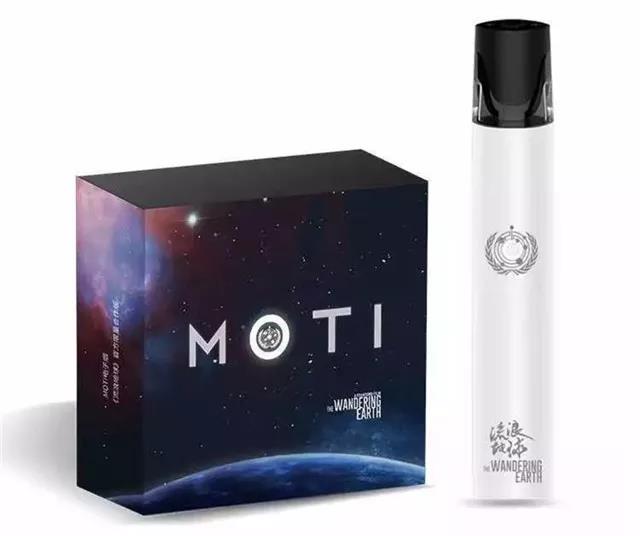
Taking MOTI as an example, during the New Year, they launched a customized e-cigarette in collaboration with the producers of the movie "The Wandering Earth." CMO Zhou Jie stated that they also partnered with the Shenzhen Marco Polo team in the CBA league for a season-long collaboration. Zhu Yaxuan mentioned that Shanlan will also invest in marketing this year.
In contrast, "internet celebrities" entering the e-cigarette market come with built-in marketing and channel resources.
After helping with a launch event to "drive sales," it was recently reported that Luo Yonghao personally went to Shenzhen to find an e-cigarette OEM, seemingly wanting to dive into the e-cigarette business himself. Some media optimistically estimate that with Luo Yonghao's internet celebrity aura, selling tens of thousands of units may not be a problem. This would be a huge marketing advantage for e-cigarette brands that cannot afford large-scale advertising.
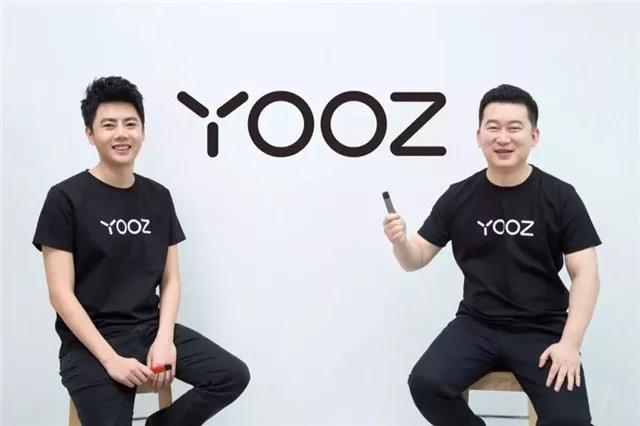
Former Tongdao Daxu founder Cai Yuedong sold 5 million units of YOOZ on the first day of sales, directly demonstrating the significant impact of internet celebrity effects on brand promotion. Cai Yuedong stated that during his entrepreneurial period, he met many KOLs and MCN organizations, so YOOZ does not lack online exposure and sales channels.
Overall, the e-cigarette industry is currently in a phase where brands are difficult to build in a short time, but continuous investment is still needed. Products currently struggle to form significant advantages. However, both Shanlan and Jingyan prioritize product capability, while channel development remains a common focus in the e-cigarette industry. Each company has different strategies and resource advantages, and the e-cigarette market is still in a very early educational phase.
However, the competition for offline channels will become a focal point this year, especially in some chain retail formats, such as convenience stores, small supermarkets, bars, KTVs, internet cafes, billiard halls, and other scene channels, which will also be important expansion directions.
Among the channels mentioned, chain retail channels will require a higher capital threshold due to entry fees; while entering social scene channels and the gift market will require connections with resourceful agents, as these two channels need strong networking resources.
Overall, the domestic e-cigarette market, aside from the supply chain, is still in a desertification stage regarding branding and channels, requiring each brand to gradually establish a channel network to capture consumer mindshare. Many investors interviewed expressed hope that the companies they invest in will primarily use their funding for channel expansion and brand building.
Due to the well-developed e-cigarette supply chain cultivated by foreign markets, and the relatively recent emergence of domestic small vape startups, many newly established brands are produced through OEM manufacturing. Those with more experience and technology may adopt a semi-OEM model, participating in the product design process; while those lacking technology and experience often use a direct ODM model, simply using the molds provided by the OEM factories.
"This has led to many products on the market looking very similar." Product homogeneity, where is the breakthrough for e-cigarettes?
Liu Jihui, founder of Jingyan e-cigarettes, believes that the current round of technological breakthroughs in small vapes mainly lies in the e-liquid, while the atomizer part has not yet achieved a technological breakthrough, and the atomization efficiency and stability are still not high enough. Jingyan was founded at the end of 2016, and for the next two years, it focused on the technical research and development of atomizers. Although there have not yet been major breakthroughs, Liu Jihui believes that once atomization technology achieves breakthroughs, it will be possible to create products with generational advantages.
In terms of sales channels, several interviewed entrepreneurs and investors agree that e-cigarettes are a fast-moving consumer goods business, similar to Gillette razors, where the sale of one hardware can lead to continuous repurchase of consumables.
"The logic of fast-moving consumer goods is 'marketing + channels,' but e-cigarettes cannot be widely advertised due to policy restrictions, so currently, the focus is on aggressively expanding channels and capturing market share," said Lin Dakun, vice president of Sanxing Capital.
Several entrepreneurs expressed similar views, revealing that this year they will prioritize channel development as the top priority for 2019, especially in expanding offline channels.
Hao Xiaomeng, founder of VPO Atomization Technology, has a different view. He believes that the decision cost for consumers when first encountering offline channels is too high for cartridge-based e-cigarettes priced at 200-300 yuan each, and that cartridge-based e-cigarettes do not meet the social scenarios of "sharing" among consumers.
VPO's solution is to promote disposable small vapes priced at 30-40 yuan each, which lowers the consumer's decision-making cost and is more suitable for educating the market. Additionally, disposable small vapes have a combined device and pod, which can be discarded after use, making them more similar to traditional cigarettes and better suited for social scenarios among smokers.
Lin Dakun and Zhu Yaxuan, founder of Shanlan e-cigarettes, both stated that while channel competition is currently key, ultimately, brand strength will determine the winner in the long run.
"If it’s just about channel expansion and selling products, it’s not very meaningful; ultimately, you need to occupy the consumer's mind and create brand influence to earn brand premiums. For fast-moving consumer goods, the deepest moat is still the brand," Lin Dakun said.
The development logic of consumer goods differs from that of the internet industry; even if there is no single winner, Lin Dakun predicts that the leading brands will eventually capture 30%-40% of the market share. Therefore, building brand strength early on is crucial.
Taking MOTI as an example, during the New Year, they launched a customized e-cigarette in collaboration with the producers of the movie "The Wandering Earth." CMO Zhou Jie stated that they also partnered with the Shenzhen Marco Polo team in the CBA league for a season-long collaboration. Zhu Yaxuan mentioned that Shanlan will also invest in marketing this year.
In contrast, "internet celebrities" entering the e-cigarette market come with built-in marketing and channel resources.
After helping with a launch event to "drive sales," it was recently reported that Luo Yonghao personally went to Shenzhen to find an e-cigarette OEM, seemingly wanting to dive into the e-cigarette business himself. Some media optimistically estimate that with Luo Yonghao's internet celebrity aura, selling tens of thousands of units may not be a problem. This would be a huge marketing advantage for e-cigarette brands that cannot afford large-scale advertising.
Former Tongdao Daxu founder Cai Yuedong sold 5 million units of YOOZ on the first day of sales, directly demonstrating the significant impact of internet celebrity effects on brand promotion. Cai Yuedong stated that during his entrepreneurial period, he met many KOLs and MCN organizations, so YOOZ does not lack online exposure and sales channels.
Overall, the e-cigarette industry is currently in a phase where brands are difficult to build in a short time, but continuous investment is still needed. Products currently struggle to form significant advantages. However, both Shanlan and Jingyan prioritize product capability, while channel development remains a common focus in the e-cigarette industry. Each company has different strategies and resource advantages, and the e-cigarette market is still in a very early educational phase.
However, the competition for offline channels will become a focal point this year, especially in some chain retail formats, such as convenience stores, small supermarkets, bars, KTVs, internet cafes, billiard halls, and other scene channels, which will also be important expansion directions.
Among the channels mentioned, chain retail channels will require a higher capital threshold due to entry fees; while entering social scene channels and the gift market will require connections with resourceful agents, as these two channels need strong networking resources.
Overall, the domestic e-cigarette market, aside from the supply chain, is still in a desertification stage regarding branding and channels, requiring each brand to gradually establish a channel network to capture consumer mindshare. Many investors interviewed expressed hope that the companies they invest in will primarily use their funding for channel expansion and brand building.


