
Luo Yonghao sells vaping devices, shifting from smartphones to vaping
On the last day of 2018, a wholly owned subsidiary of China National Tobacco Corporation filed for listing on the Hong Kong Stock Exchange, sending shockwaves through vaping entrepreneurs looking ahead to 2019. Just five days after YOOZ began spot sales,
On the last day of 2018, a wholly owned subsidiary of China National Tobacco Corporation submitted its listing application to the Hong Kong Stock Exchange. It landed like a thunderclap, leaving vaping entrepreneurs looking toward 2019 both stirred and ambitious.
Five days before YOOZ began spot sales, Kuairu Technology held a launch event in Beijing. Unexpectedly, Luo Yonghao unveiled a vaping device called “flow Fulu.” At the time, Luo was still the founder of Smartisan Technology and an investor in Kuairu Technology, while the founder of the Fulu brand was Zhu Xiaomu, former product director at Smartisan and employee No. 001. The news caused a huge stir.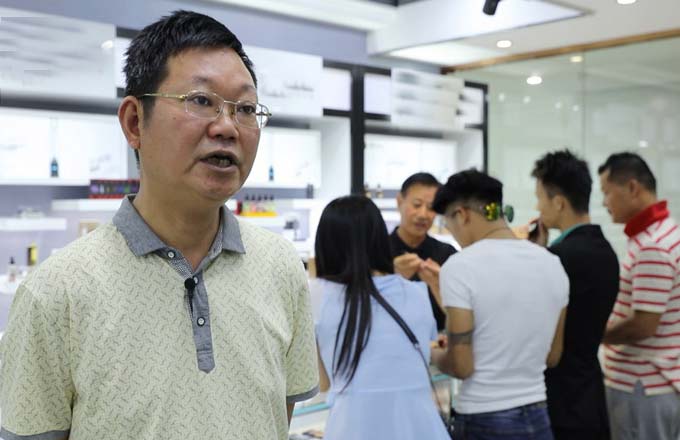 What truly ignited the first wave of the vaping industry in 2019, however, was the mounting speculation surrounding Luo Yonghao entering the vaping business.
Born in Jilin Province, Luo Yonghao once dealt in used cars and even resold smuggled vehicles;
Under financial pressure, he worked at an English training school, and when applying to New Oriental, he only passed the evaluation on his third trial lecture;
He founded Bullog.cn and also started a training school, though neither turned out as hoped;
He later began giving speaking tours across China and published the inspirational autobiography My Struggle. In 2011, he was selected as a Baidu News Person of the Year, truly beginning his path as an internet celebrity;
In 2012, he founded Smartisan Technology. After repeated quality crises and rumors of broken capital chains, the company weathered six turbulent years before reaching the end in the winter of 2018, when it was effectively sold off and shut down.
In January 2019, some Smartisan employees gradually transferred their contracts to ByteDance, the parent company of Toutiao. At that point, news about Luo Yonghao seemed to fade considerably.
Then in February, reports emerged that Luo had once again stepped down as the legal representative of one of his companies. According to Qichacha data, Beijing Kuairu Technology Co., Ltd. (legal representative: Jiang Yifan), the operating company behind Chatbao, was 100% owned by Chengdu Kuairu Technology Co., Ltd. (legal representative: Zhang Ji). Chengdu Kuairu was in turn controlled by Tianjin Yunshang Manbu Partnership and Tianjin Yunshang Changyou Technology Partnership. In February 2019, Luo successively withdrew as a shareholder from both controlling entities, and their actual controller became Wang Wei.
Since the vaping industry began frequently reporting financing and investment news in 2018, vaping has increasingly been seen as a promising business and a market worth hundreds of billions. Meanwhile, Luo was publicly backing a new brand launched by former employees. Did this mean he was truly determined to give up smartphones and devote himself to the vaping industry?
There were more clues on Weibo: some users even claimed to have “confirmed” information, and others posted a photo of Luo Yonghao with Wang Mingfan, CEO of Boton Group. Whether he was seeking contract manufacturing from Boton remains unclear, but it is true that he visited the Boton Group.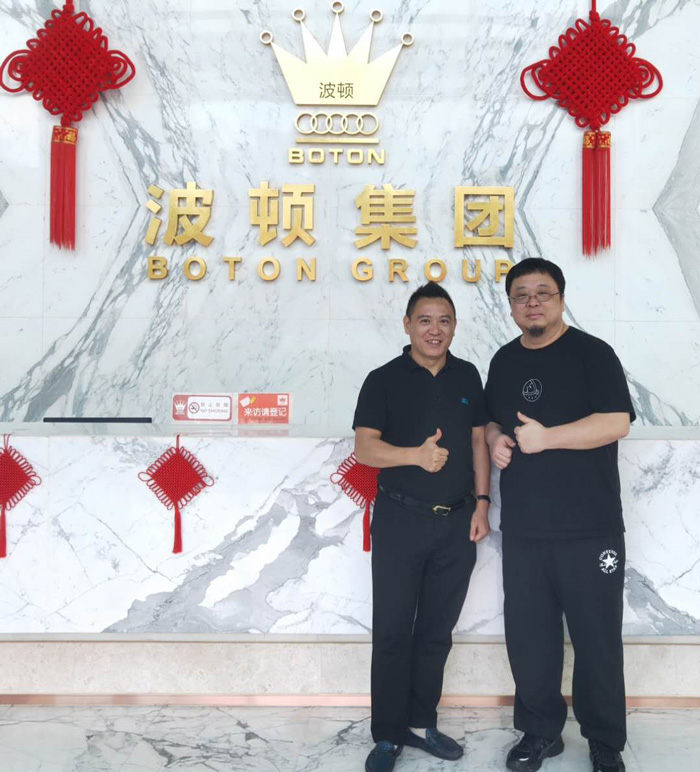 Boton Group is one of China’s earliest companies engaged in the production and operation of flavors and fragrances, and one of the largest by investment scale. It is also part of a Hong Kong-listed corporate system, underscoring its considerable strength.
A prominent section on Boton’s official website lists the company’s business scope, including tobacco flavors and electronic atomizers; there is no mention of smartphone accessories.
Tobacco flavors are one of the essential materials used in cartridges, one of the three key elements of vaping products. Nearly all cartridge flavors on the market contain flavorings, making them one of the most important factors affecting the vaping experience.
So Smartisan fans really may need to prepare themselves for the possibility that Lao Luo will personally make vaping devices.
According to relevant data, China has 350 million smokers, accounting for one-third of the world total. Amid the global trend of tobacco control, vaping devices emerged as an alternative to traditional cigarettes.
According to analysis by China Business Journal, the number of vaping consumers in China will rise to 55 million by 2021, and the vaping market is entering a peak period.
In 2014, China’s vaping product output was about 594 million units, up 108.42% year over year. By the end of 2018, output had reached 2.2 billion units, and it was expected to hit 3.622 billion units by 2020.
Some analysts say the global vaping market could reach US$48 billion by 2023, while China’s vaping market could reach RMB 112 billion within five years.
Faced with such a vast market, vaping was bound to usher in another boom. Vaping devices and smartphones are both high-frequency electronic consumer products and share many similarities.
Moreover, Luo Yonghao’s experience in smartphones surely gave him extensive supply-chain resources and talent related to hardware manufacturing. Shifting into vaping devices would be a familiar move with clear advantages.
In addition, Luo has a strong internet celebrity effect, and many of his followers are active internet users who readily embrace new things. If he were to personally dive into the business and hold a launch event, his sales-driving power would likely reach the hundreds of thousands. #p#Page Title#e#
Beyond that, Luo’s personal influence should not be underestimated. If he were to rally the venture capital circle, many backers could gather around him.
For this reason, some capital may pursue Luo Yonghao’s vaping project. At present, the vaping market has not yet entered a true brand war; competition is still more about supply-chain integration, which plays right to Luo’s strengths. At the same time, his ability to drive sales could accelerate monetization.
Luo may well recover in the vaping industry some of the pride he lost in smartphones. Perhaps that is similar to why Jia Yueting, like a cornered beast, remains obsessed with making cars. But one thing is certain: Luo’s situation is much better than Jia’s. At least he does not have to leave his homeland behind, nor bear the stigma of being blacklisted for dishonesty.
From smartphones to vaping devices: is this a case of ideals losing to reality, of setting aside sentiment and traveling light, or of a middle-aged fresh start in hopes of turning the game around? Whatever the answer, we are all eager to see the outcome.
Five days before YOOZ began spot sales, Kuairu Technology held a launch event in Beijing. Unexpectedly, Luo Yonghao unveiled a vaping device called “flow Fulu.” At the time, Luo was still the founder of Smartisan Technology and an investor in Kuairu Technology, while the founder of the Fulu brand was Zhu Xiaomu, former product director at Smartisan and employee No. 001. The news caused a huge stir.
What truly ignited the first wave of the vaping industry in 2019, however, was the mounting speculation surrounding Luo Yonghao entering the vaping business.Born in Jilin Province, Luo Yonghao once dealt in used cars and even resold smuggled vehicles;
Under financial pressure, he worked at an English training school, and when applying to New Oriental, he only passed the evaluation on his third trial lecture;
He founded Bullog.cn and also started a training school, though neither turned out as hoped;
He later began giving speaking tours across China and published the inspirational autobiography My Struggle. In 2011, he was selected as a Baidu News Person of the Year, truly beginning his path as an internet celebrity;
In 2012, he founded Smartisan Technology. After repeated quality crises and rumors of broken capital chains, the company weathered six turbulent years before reaching the end in the winter of 2018, when it was effectively sold off and shut down.
In January 2019, some Smartisan employees gradually transferred their contracts to ByteDance, the parent company of Toutiao. At that point, news about Luo Yonghao seemed to fade considerably.
Then in February, reports emerged that Luo had once again stepped down as the legal representative of one of his companies. According to Qichacha data, Beijing Kuairu Technology Co., Ltd. (legal representative: Jiang Yifan), the operating company behind Chatbao, was 100% owned by Chengdu Kuairu Technology Co., Ltd. (legal representative: Zhang Ji). Chengdu Kuairu was in turn controlled by Tianjin Yunshang Manbu Partnership and Tianjin Yunshang Changyou Technology Partnership. In February 2019, Luo successively withdrew as a shareholder from both controlling entities, and their actual controller became Wang Wei.
Since the vaping industry began frequently reporting financing and investment news in 2018, vaping has increasingly been seen as a promising business and a market worth hundreds of billions. Meanwhile, Luo was publicly backing a new brand launched by former employees. Did this mean he was truly determined to give up smartphones and devote himself to the vaping industry?
There were more clues on Weibo: some users even claimed to have “confirmed” information, and others posted a photo of Luo Yonghao with Wang Mingfan, CEO of Boton Group. Whether he was seeking contract manufacturing from Boton remains unclear, but it is true that he visited the Boton Group.
Boton Group is one of China’s earliest companies engaged in the production and operation of flavors and fragrances, and one of the largest by investment scale. It is also part of a Hong Kong-listed corporate system, underscoring its considerable strength.A prominent section on Boton’s official website lists the company’s business scope, including tobacco flavors and electronic atomizers; there is no mention of smartphone accessories.
Tobacco flavors are one of the essential materials used in cartridges, one of the three key elements of vaping products. Nearly all cartridge flavors on the market contain flavorings, making them one of the most important factors affecting the vaping experience.
So Smartisan fans really may need to prepare themselves for the possibility that Lao Luo will personally make vaping devices.
According to relevant data, China has 350 million smokers, accounting for one-third of the world total. Amid the global trend of tobacco control, vaping devices emerged as an alternative to traditional cigarettes.
According to analysis by China Business Journal, the number of vaping consumers in China will rise to 55 million by 2021, and the vaping market is entering a peak period.
In 2014, China’s vaping product output was about 594 million units, up 108.42% year over year. By the end of 2018, output had reached 2.2 billion units, and it was expected to hit 3.622 billion units by 2020.
Some analysts say the global vaping market could reach US$48 billion by 2023, while China’s vaping market could reach RMB 112 billion within five years.
Faced with such a vast market, vaping was bound to usher in another boom. Vaping devices and smartphones are both high-frequency electronic consumer products and share many similarities.
Moreover, Luo Yonghao’s experience in smartphones surely gave him extensive supply-chain resources and talent related to hardware manufacturing. Shifting into vaping devices would be a familiar move with clear advantages.
In addition, Luo has a strong internet celebrity effect, and many of his followers are active internet users who readily embrace new things. If he were to personally dive into the business and hold a launch event, his sales-driving power would likely reach the hundreds of thousands. #p#Page Title#e#
Beyond that, Luo’s personal influence should not be underestimated. If he were to rally the venture capital circle, many backers could gather around him.
For this reason, some capital may pursue Luo Yonghao’s vaping project. At present, the vaping market has not yet entered a true brand war; competition is still more about supply-chain integration, which plays right to Luo’s strengths. At the same time, his ability to drive sales could accelerate monetization.
Luo may well recover in the vaping industry some of the pride he lost in smartphones. Perhaps that is similar to why Jia Yueting, like a cornered beast, remains obsessed with making cars. But one thing is certain: Luo’s situation is much better than Jia’s. At least he does not have to leave his homeland behind, nor bear the stigma of being blacklisted for dishonesty.
From smartphones to vaping devices: is this a case of ideals losing to reality, of setting aside sentiment and traveling light, or of a middle-aged fresh start in hopes of turning the game around? Whatever the answer, we are all eager to see the outcome.


