The Economics of Cigarettes: One Pack a Day Contributes 1.2 Trillion to the Nation
God said let there be light, and there was light. God said, to make everyone happy, there were cigarettes.
Besides sex and drugs, cigarettes are the simplest way to stimulate the brain to secrete dopamine (the source of human happiness). They are cheap, and cheap nicotine is equal for everyone; efficient, as it takes only 7 seconds from entry to stimulating the brain to secrete dopamine; and convenient, as you can buy them just 100 meters away. Nothing brings happiness easier than cigarettes. According to the latest statistics, the number of smokers in China has exceeded 350 million, accounting for 27% of the national population, ranking first in the world.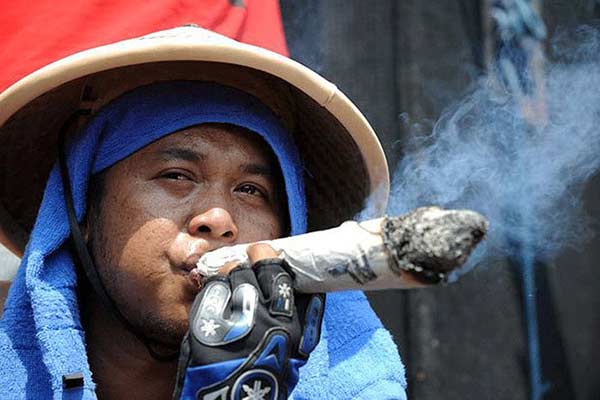 During the long-term smoking process, many smokers gradually form a set of unique and rich smoking culture that is worth summarizing and analyzing under the influence of nicotine and tar.
Everyone knows that smoking is harmful, yet smokers still bravely smoke.
The National Center for Disease Control and Prevention has released information showing that cigarette combustion produces over 7,000 types of smoke.
The nicotine, tar, amines, phenols, alkanes, polycyclic aromatic hydrocarbons, heavy metals, and radioactive substances contained may lead to cancer in the mouth, throat, lungs, liver, pancreas, and other areas. In addition, long-term smoking significantly increases the probability of various diseases such as tuberculosis, diabetes, and stroke, and can even cause DNA damage.
Although filters reduce the harshness of smoke, they do not reduce harm, and psychologically allow smokers to inhale more smoke, exacerbating the damage.
A smoker from Wuhan started smoking at 14, smoking two packs a day. By 40, he had to amputate his left leg due to vascular blockage. After being discharged, he continued to smoke, ultimately leading to the amputation of his right leg. Local vascular surgeons admit that they have to amputate limbs for dozens of veteran smokers each year. The hand holding the cigarette trembles slightly.
Despite the extreme dangers of smoking, smokers continue to persist. The World Health Organization estimates that every year, 1.8 million Chinese smokers die from smoking, and smokers' average lifespan is shortened by a full 15 years compared to non-smokers.
As the aging population issue becomes increasingly serious, one retired elder corresponds to less than three working individuals. The self-sacrificing smokers save at least 1.2 trillion for the country and their families each year, leading the way in reducing social burdens.
Many smokers analyze the harms of cigarettes seriously and switch to e-cigarettes to satisfy their nicotine cravings. However, nicotine can damage the endothelial lining of blood vessels, induce angina and myocardial infarction, and is carcinogenic, with a high potential for addiction. Trusting e-cigarettes, smokers unknowingly consume more nicotine.
Some say smokers are "fools," but many smokers refute this disdain with their actions, fully demonstrating their romanticism towards nicotine and their persistent pursuit of tar.
Smokers do not smoke for the sake of their bosses or company leaders, nor for rewards; they do not care about personal gains and actively spend their money on cigarettes, with no thought of personal profit.
A pack of cigarettes costs 15 yuan, totaling 5,475 yuan a year. Smoking for 30 years could buy a Mondeo Martin, yet many smokers still take the subway and ride Mobikes, respectfully donating their money. Besides insisting on smoking their "fair share" of cigarettes, smokers also remember to share cigarettes, spending their own money to develop more smokers.
In 2015, the government raised tobacco taxes to control smoking, and 20 cities subsequently enacted regulations banning smoking in public places. However, in 2017, cigarette sales in China still grew by 0.8%, and the Tobacco Monopoly Bureau predicts that sales will continue to rise in 2018.
Smokers not only spend money but also bear the stigma. Currently, 19 cities in China, including Beijing, Shanghai, Guangzhou, Shenzhen, have banned smoking in public places, and humble smokers are driven into smoking corners to inhale nicotine.
At work, smoking is akin to being in a prison. After work, it is even more inconvenient for family and girlfriends; many straight men find it hard to kiss girls due to the smell of smoke, and at home, dogs only dare to hide in the bedroom with air purifiers while smoking, trying not to let their parents notice.
During the long-term smoking process, many smokers gradually form a set of unique and rich smoking culture that is worth summarizing and analyzing under the influence of nicotine and tar.
Everyone knows that smoking is harmful, yet smokers still bravely smoke.
The National Center for Disease Control and Prevention has released information showing that cigarette combustion produces over 7,000 types of smoke.
The nicotine, tar, amines, phenols, alkanes, polycyclic aromatic hydrocarbons, heavy metals, and radioactive substances contained may lead to cancer in the mouth, throat, lungs, liver, pancreas, and other areas. In addition, long-term smoking significantly increases the probability of various diseases such as tuberculosis, diabetes, and stroke, and can even cause DNA damage.
Although filters reduce the harshness of smoke, they do not reduce harm, and psychologically allow smokers to inhale more smoke, exacerbating the damage.
A smoker from Wuhan started smoking at 14, smoking two packs a day. By 40, he had to amputate his left leg due to vascular blockage. After being discharged, he continued to smoke, ultimately leading to the amputation of his right leg. Local vascular surgeons admit that they have to amputate limbs for dozens of veteran smokers each year. The hand holding the cigarette trembles slightly.
Despite the extreme dangers of smoking, smokers continue to persist. The World Health Organization estimates that every year, 1.8 million Chinese smokers die from smoking, and smokers' average lifespan is shortened by a full 15 years compared to non-smokers.
As the aging population issue becomes increasingly serious, one retired elder corresponds to less than three working individuals. The self-sacrificing smokers save at least 1.2 trillion for the country and their families each year, leading the way in reducing social burdens.
Many smokers analyze the harms of cigarettes seriously and switch to e-cigarettes to satisfy their nicotine cravings. However, nicotine can damage the endothelial lining of blood vessels, induce angina and myocardial infarction, and is carcinogenic, with a high potential for addiction. Trusting e-cigarettes, smokers unknowingly consume more nicotine.
Some say smokers are "fools," but many smokers refute this disdain with their actions, fully demonstrating their romanticism towards nicotine and their persistent pursuit of tar.
Smokers do not smoke for the sake of their bosses or company leaders, nor for rewards; they do not care about personal gains and actively spend their money on cigarettes, with no thought of personal profit.
A pack of cigarettes costs 15 yuan, totaling 5,475 yuan a year. Smoking for 30 years could buy a Mondeo Martin, yet many smokers still take the subway and ride Mobikes, respectfully donating their money. Besides insisting on smoking their "fair share" of cigarettes, smokers also remember to share cigarettes, spending their own money to develop more smokers.
In 2015, the government raised tobacco taxes to control smoking, and 20 cities subsequently enacted regulations banning smoking in public places. However, in 2017, cigarette sales in China still grew by 0.8%, and the Tobacco Monopoly Bureau predicts that sales will continue to rise in 2018.
Smokers not only spend money but also bear the stigma. Currently, 19 cities in China, including Beijing, Shanghai, Guangzhou, Shenzhen, have banned smoking in public places, and humble smokers are driven into smoking corners to inhale nicotine.
At work, smoking is akin to being in a prison. After work, it is even more inconvenient for family and girlfriends; many straight men find it hard to kiss girls due to the smell of smoke, and at home, dogs only dare to hide in the bedroom with air purifiers while smoking, trying not to let their parents notice.
 The value of self-sacrifice is significant.
In China, tobacco tax revenue accounts for 59% of cigarette prices, meaning that for every yuan spent by smokers, 0.59 yuan goes to taxes. In addition to taxes, tobacco companies also pay a large portion of their profits to the government. All in all, smokers generate 1 trillion yuan in tax revenue for the country each year, accounting for 6% of the national fiscal revenue, enough to support the entire People's Liberation Army, and generating hundreds of billions for provinces like Yunnan and Guizhou each year, supporting the GDP of mountainous areas.
Moreover, smokers create over 30 million jobs in tobacco planting, processing, retail, and advertising. They also stimulate the growth of related fields such as teeth whitening, lighter production, and fire safety. This effectively guarantees social employment and boosts domestic demand.
In terms of not seeking fame or profit, many smokers are very thorough.
In January this year, a smoker boldly lit a cigarette on train G393 from Beijing to Harbin West, triggering an alarm. According to the "Railway Safety Management Regulations," he was fined 500 yuan. A smoker in Jinan, after drinking, drove a short distance to buy cigarettes, was caught by the police, and made local media headlines, exemplifying the spirit of nicotine romanticism.
Not seeking fame or profit is the life creed of smokers, proving that they are completely different from Western smokers who indulge in self-satisfaction with tobacco, elevating smoking to a highly selfless spiritual realm.
Smoking a cigarette is not difficult; the challenge is to persist in smoking for a lifetime, remaining consistent.
Smokers do not rely on momentary impulses or fleeting enthusiasm but on perseverance. At every stage of life, they never lower their passion for smoking.
In school, underage smokers are unwavering in their commitment to smoking. In classrooms, internet cafes, and at school gates, even picking up cigarette butts in the restroom and being labeled as a negative example by the principal cannot shake the sense of honor that smoking brings.
The value of self-sacrifice is significant.
In China, tobacco tax revenue accounts for 59% of cigarette prices, meaning that for every yuan spent by smokers, 0.59 yuan goes to taxes. In addition to taxes, tobacco companies also pay a large portion of their profits to the government. All in all, smokers generate 1 trillion yuan in tax revenue for the country each year, accounting for 6% of the national fiscal revenue, enough to support the entire People's Liberation Army, and generating hundreds of billions for provinces like Yunnan and Guizhou each year, supporting the GDP of mountainous areas.
Moreover, smokers create over 30 million jobs in tobacco planting, processing, retail, and advertising. They also stimulate the growth of related fields such as teeth whitening, lighter production, and fire safety. This effectively guarantees social employment and boosts domestic demand.
In terms of not seeking fame or profit, many smokers are very thorough.
In January this year, a smoker boldly lit a cigarette on train G393 from Beijing to Harbin West, triggering an alarm. According to the "Railway Safety Management Regulations," he was fined 500 yuan. A smoker in Jinan, after drinking, drove a short distance to buy cigarettes, was caught by the police, and made local media headlines, exemplifying the spirit of nicotine romanticism.
Not seeking fame or profit is the life creed of smokers, proving that they are completely different from Western smokers who indulge in self-satisfaction with tobacco, elevating smoking to a highly selfless spiritual realm.
Smoking a cigarette is not difficult; the challenge is to persist in smoking for a lifetime, remaining consistent.
Smokers do not rely on momentary impulses or fleeting enthusiasm but on perseverance. At every stage of life, they never lower their passion for smoking.
In school, underage smokers are unwavering in their commitment to smoking. In classrooms, internet cafes, and at school gates, even picking up cigarette butts in the restroom and being labeled as a negative example by the principal cannot shake the sense of honor that smoking brings.
Upon entering society, smokers continue to persist. They smoke to celebrate work successes, to cope with project failures, to celebrate weddings, to mark the birth of children, and even when sick with a cough, they still smoke, lighting up first when visiting graves on Qingming Festival.
To ensure they can smoke without hesitation for a lifetime, smokers continuously innovate.
Smokers promote new forms of smoking, such as burst beads and slim cigarettes. Some have invented "Chenpi" burst bead cigarettes, claiming to "smoke healthily," happily inhaling nicotine and tar into their lungs. Others insert sandalwood toothpicks into cigarettes, producing more harmful polycyclic aromatic hydrocarbons and nitrogen oxides when burned, creating an ancient charm between their lips and teeth.
It is unknown which nameless smoker innovatively invented the "post-coital cigarette," claiming to be a rare remedy for sustaining dopamine after "climax"...
Some smokers are influenced by new media, saying, "I smoke, drink, and get tattoos, but I'm a good girl," leading girls into the sea of nicotine.
There are also smokers attempting to quit, with 9.1% of smokers leaving the ranks. Most demonstrate their loyalty to the spirit of smoking through their actions. The higher the education level, the more determined they are to smoke. Among those who have never attempted to quit, the proportion of master's degree holders is the highest, with 38.9% of master's degree smokers never considering giving up smoking, reflecting that highly educated individuals have long seen through the fact that "smoking cannot be quit." On the path of persistent smoking, smokers remain consistent. They do not go through the motions but fully dedicate their limited lives to the infinite sea of tobacco, truly offering the light and heat of their lives.
Various stories illustrate that smokers smoke selflessly, without seeking fame or profit, and remain consistent, rather than being half-hearted or conditional.
Although most smokers do not create earth-shattering heroic feats in their lives, they selflessly contribute every bit of heat and light from their cigarette butts to society, impacting healthcare, elderly care, finance, social security, and social stability...
Contributing to society, realizing self-worth, and composing a magnificent and glorious life chapter.(This article is purely satirical. For your health and that of your family, please stay away from tobacco.)#p#分页标题#e#