What Is the Difference Between OEM and Private Label in E-Cigarettes?
Pod vape products surged worldwide in 2018, and in 2019 the vaping industry attracted strong interest from venture capital. As more investors entered the sector, many people began looking for the fastest way to join the industry and monetize quickly. E-ci
In 2018, small e-cigarettes became popular worldwide, and in 2019, the e-cigarette industry attracted numerous venture capital investments, with more and more big players investing in e-cigarettes. How can one quickly enter the e-cigarette industry and start making profits? E-cigarette OEM might be the fastest way. But what about e-cigarette private labeling? What are the differences between the e-cigarette OEM model and the private label model?
Who is OEM? Who is "the brand"?
The original OEM referred to original equipment manufacturers, companies that specialize in producing original equipment (not parts or components) and collaborate with original equipment companies that excel in market development, product research and development, and brand marketing. They undertake the original manufacturer's production tasks at low manufacturing costs while strictly adhering to the original manufacturer's production guidelines and specifications, forming a business model.
After more than 20 years of development, the meaning of OEM has been greatly enriched. OEM now refers not only to original equipment manufacturers but also to the business model of "originally producing the entire product by oneself, and later outsourcing the production of the corresponding product to relevant factories"; at this point, it no longer distinguishes between equipment, consumer goods, or other products.
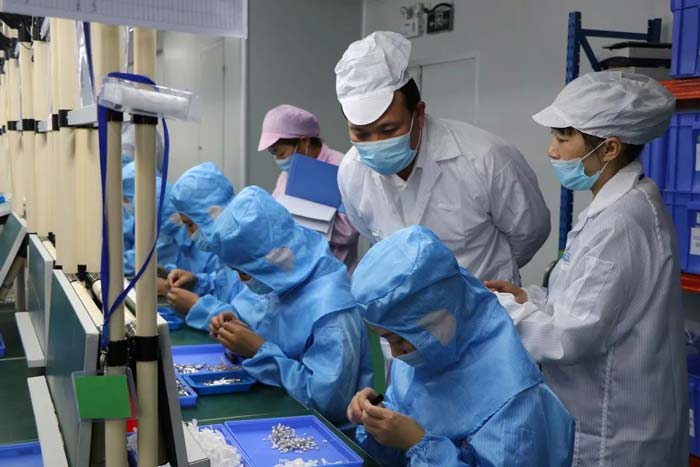 Note: The term OEM is often misused (to deceive those who do not understand) and misapplied (using a big term for a small application). In reality, when encountering someone who claims their product is OEM, they may not have ever produced a product, do not know how products are made, and are unaware of where quality issues may arise—all of which stem from the manufacturer's process. Some even claim that personal customized products are "OEM"; for those who are rigorous, it may seem like they are running a large business, and their own factory cannot keep up, so they must outsource production.
Who labels whose brand?
Private label production and sales is also a common business model today.
Companies with strong marketing capabilities can completely lack knowledge of products and their manufacturing processes; they only need to provide funds to find manufacturers who understand products and production, inviting them to collaborate. For example, Xiaomi is a "brand," although it initially started as a new "brand."
Note: Private labeling recognizes both money and brand. Having a big brand client gives the manufacturer a business endorsement. When a lesser-known brand client comes along, the manufacturer is open for business, negotiating based on money. When Xiaomi was initially developing products, the founder acted as CPO, negotiating procurement cooperation and supply chain coordination with funds in hand. Want to label? You need money to be flexible—the amount of money determines the range of flexibility.
Similarities and differences between OEM and private labeling
Similarities
In both models, the "brand" collaborates with the "factory"; the "brand" is responsible for sales at the market terminal\/application end, while the "factory" is responsible for production. In both models, both parties must ensure that their business scopes do not conflict or overlap.
Differences
In the OEM model, the "brand" understands manufacturing better than the "factory"; the "brand"'s technical personnel can even deduce how the "factory" has failed to follow the manufacturing process based on observed quality issues and can hold the "factory" accountable for responsibility, compensation, and corrective actions. In OEM, the "brand" owns the product's IP; if quality issues arise due to design, the "brand" bears the responsibility, while if they arise from the production process, the "factory" is responsible.
In the private label model, the "brand" does not have a product and has never produced one; it relies on the "factory"'s products to transform. When quality issues arise, the "brand" is generally unable to analyze or research them and must rely on the "factory"'s capabilities and experience, with all quality issues attributed to the "factory". Additionally, in this model, the product's IP belongs to the "factory"; if the new "brand" lacks financial backing, it is generally difficult to influence or mobilize the "factory"'s cooperation.
 Intersection
In both models, the "brand" must undergo market entry certification in the name of the "brand" before launching products.
Factories that started with the OEM model typically cannot directly label products for clients (lacking product IP), but they may have the capability to develop a new product for clients in an ODM model, allowing clients to label it.
In the private label model, although the "factory" has ready-made mature products and may even own its own IP, it may not be well-known. In this case, when clients label, they generally make differentiated modifications to align with the "brand"'s market image and positioning. The differentiated products then become new products.
Rigorous peers know that whether it is a brand new product or a product after engineering changes (referred to as design changes), it must undergo verification and validation by engineers (including quality engineers, process engineers, and R&D engineers). Verification is discussion and proof, while validation is testing and proof, specifically for the design change and its potential overall impact on the product.
Note: The design change validation part is the area where the procurement department and engineering (or design) department are most likely to have conflicts. This relates to corporate culture, the strength of engineers, and the top-level design of the enterprise across departments. If the top-level design across departments is not well-coordinated, or if various conflicting requirements are arranged, grassroots personnel will inevitably face friction. In the OEM and private label models, the situation is similar; whether the "factory" and "brand"'s corporate cultures match or align determines the success or failure of related product projects and the success of cooperation between enterprises.
How to procure in OEM & private labeling?
I have always believed that corporate procurement is a team effort, and professional procurement personnel serve as the window and representative.
In the OEM and private label procurement business models, team procurement is vividly reflected—regardless of which production outsourcing model a brand's product follows, if it is not managed by a team (R&D, quality, procurement, etc.), the product's operational success is highly questionable. Typically, OEM products have a "brand"'s professional procurement team tracking and managing them; private label products may not have this.
Professional procurement personnel play a role in organizing and coordinating within the team (not discussing leadership roles here, as leadership is demonstrated through actions; if internal members cannot organize meetings, communicate, and solve problems, and cannot coordinate internal members' time and pace, then there is no leadership role to speak of).
The development stage of the e-cigarette company and its strategy determine the empowerment of the procurement team in both procurement models. I cannot exhaustively describe the processes, but I will share thoughts and methods.
Note: The mutual understanding of the business model between the procurement and supply sides is crucial, just as in international trade, where everyone uses trade terms for clear and quick cooperation; a consensus on the OEM and private label business models can greatly enhance cooperation efficiency. Otherwise, either the "factory" is a learning-oriented enterprise, or the "brand" is a wealthy enterprise that operates in both black and white. At least one party must be professional or humble and eager to learn.
So, what are the differences between the e-cigarette OEM model and the private label model? Have we unraveled it? The e-cigarette market is expected to experience geometric growth in 2019, and friends who want to make a fortune in the e-cigarette industry can exchange and learn together. You can contact WeChat: vapeos or call: 17682343645
Who is OEM? Who is "the brand"?
The original OEM referred to original equipment manufacturers, companies that specialize in producing original equipment (not parts or components) and collaborate with original equipment companies that excel in market development, product research and development, and brand marketing. They undertake the original manufacturer's production tasks at low manufacturing costs while strictly adhering to the original manufacturer's production guidelines and specifications, forming a business model.
After more than 20 years of development, the meaning of OEM has been greatly enriched. OEM now refers not only to original equipment manufacturers but also to the business model of "originally producing the entire product by oneself, and later outsourcing the production of the corresponding product to relevant factories"; at this point, it no longer distinguishes between equipment, consumer goods, or other products.
Note: The term OEM is often misused (to deceive those who do not understand) and misapplied (using a big term for a small application). In reality, when encountering someone who claims their product is OEM, they may not have ever produced a product, do not know how products are made, and are unaware of where quality issues may arise—all of which stem from the manufacturer's process. Some even claim that personal customized products are "OEM"; for those who are rigorous, it may seem like they are running a large business, and their own factory cannot keep up, so they must outsource production.Who labels whose brand?
Private label production and sales is also a common business model today.
Companies with strong marketing capabilities can completely lack knowledge of products and their manufacturing processes; they only need to provide funds to find manufacturers who understand products and production, inviting them to collaborate. For example, Xiaomi is a "brand," although it initially started as a new "brand."
Note: Private labeling recognizes both money and brand. Having a big brand client gives the manufacturer a business endorsement. When a lesser-known brand client comes along, the manufacturer is open for business, negotiating based on money. When Xiaomi was initially developing products, the founder acted as CPO, negotiating procurement cooperation and supply chain coordination with funds in hand. Want to label? You need money to be flexible—the amount of money determines the range of flexibility.
Similarities and differences between OEM and private labeling
Similarities
In both models, the "brand" collaborates with the "factory"; the "brand" is responsible for sales at the market terminal\/application end, while the "factory" is responsible for production. In both models, both parties must ensure that their business scopes do not conflict or overlap.
Differences
In the OEM model, the "brand" understands manufacturing better than the "factory"; the "brand"'s technical personnel can even deduce how the "factory" has failed to follow the manufacturing process based on observed quality issues and can hold the "factory" accountable for responsibility, compensation, and corrective actions. In OEM, the "brand" owns the product's IP; if quality issues arise due to design, the "brand" bears the responsibility, while if they arise from the production process, the "factory" is responsible.
In the private label model, the "brand" does not have a product and has never produced one; it relies on the "factory"'s products to transform. When quality issues arise, the "brand" is generally unable to analyze or research them and must rely on the "factory"'s capabilities and experience, with all quality issues attributed to the "factory". Additionally, in this model, the product's IP belongs to the "factory"; if the new "brand" lacks financial backing, it is generally difficult to influence or mobilize the "factory"'s cooperation.
IntersectionIn both models, the "brand" must undergo market entry certification in the name of the "brand" before launching products.
Factories that started with the OEM model typically cannot directly label products for clients (lacking product IP), but they may have the capability to develop a new product for clients in an ODM model, allowing clients to label it.
In the private label model, although the "factory" has ready-made mature products and may even own its own IP, it may not be well-known. In this case, when clients label, they generally make differentiated modifications to align with the "brand"'s market image and positioning. The differentiated products then become new products.
Rigorous peers know that whether it is a brand new product or a product after engineering changes (referred to as design changes), it must undergo verification and validation by engineers (including quality engineers, process engineers, and R&D engineers). Verification is discussion and proof, while validation is testing and proof, specifically for the design change and its potential overall impact on the product.
Note: The design change validation part is the area where the procurement department and engineering (or design) department are most likely to have conflicts. This relates to corporate culture, the strength of engineers, and the top-level design of the enterprise across departments. If the top-level design across departments is not well-coordinated, or if various conflicting requirements are arranged, grassroots personnel will inevitably face friction. In the OEM and private label models, the situation is similar; whether the "factory" and "brand"'s corporate cultures match or align determines the success or failure of related product projects and the success of cooperation between enterprises.
How to procure in OEM & private labeling?
I have always believed that corporate procurement is a team effort, and professional procurement personnel serve as the window and representative.
In the OEM and private label procurement business models, team procurement is vividly reflected—regardless of which production outsourcing model a brand's product follows, if it is not managed by a team (R&D, quality, procurement, etc.), the product's operational success is highly questionable. Typically, OEM products have a "brand"'s professional procurement team tracking and managing them; private label products may not have this.
Professional procurement personnel play a role in organizing and coordinating within the team (not discussing leadership roles here, as leadership is demonstrated through actions; if internal members cannot organize meetings, communicate, and solve problems, and cannot coordinate internal members' time and pace, then there is no leadership role to speak of).
The development stage of the e-cigarette company and its strategy determine the empowerment of the procurement team in both procurement models. I cannot exhaustively describe the processes, but I will share thoughts and methods.
Note: The mutual understanding of the business model between the procurement and supply sides is crucial, just as in international trade, where everyone uses trade terms for clear and quick cooperation; a consensus on the OEM and private label business models can greatly enhance cooperation efficiency. Otherwise, either the "factory" is a learning-oriented enterprise, or the "brand" is a wealthy enterprise that operates in both black and white. At least one party must be professional or humble and eager to learn.
So, what are the differences between the e-cigarette OEM model and the private label model? Have we unraveled it? The e-cigarette market is expected to experience geometric growth in 2019, and friends who want to make a fortune in the e-cigarette industry can exchange and learn together. You can contact WeChat: vapeos or call: 17682343645