2013 German tobacco exhibition: e-cigarettes take the spotlight
China vaping news: E-cigarettes, which were still relatively unknown a few years ago, are now attracting more and more attention. At this tobacco products exhibition in Dortmund, Germany, there were estimated to be more than 40 e-cigarette manufacturers, accounting for the highest proportion ever among the 390-plus exhibitors. That is truly surprising. E-cigarettes are developing rapidly with unstoppable momentum.
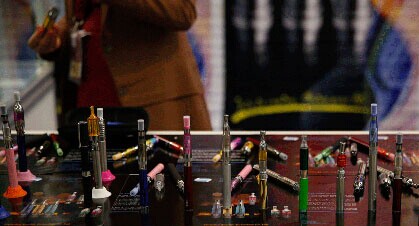
More than 30 e-cigarette companies from Shenzhen, China, appeared at the exhibition together, demonstrating Shenzhen’s leadership and advantages in e-cigarette manufacturing. As a major production base for e-cigarettes, Shenzhen has more than 100 e-cigarette companies. Because e-cigarettes have not been widely accepted in the Chinese market, most of these companies are mainly engaged in export business, especially to the U.S. and European markets, where acceptance of e-cigarettes is relatively high. The participation of so many manufacturers also shows how much attention they are paying to the European market, as well as the intense competition among them.
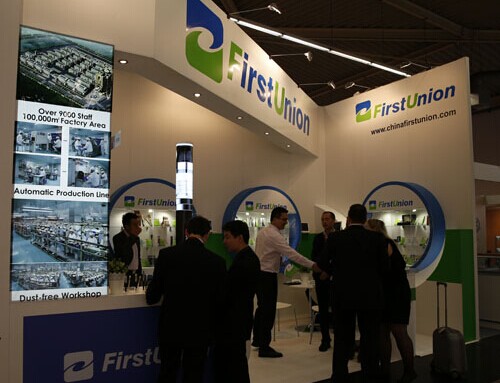
At present, China’s largest e-cigarette company is Shenzhen’s Heaven Gifts Group, which we also saw at the exhibition. Founded in 2004, the company has more than 8,000 employees, a factory area of 100,000 square meters, and a strong R&D team with more than 200 engineers. Its product lines include electronic cigarettes, electronic cigars, and electronic pipes. Its products are exported to more than 50 countries including the United States, the United Kingdom, Japan, Russia, Germany, and France, and it supplies products for more than 300 e-cigarette brands worldwide. Regarding product manufacturing, the company stated that product safety is the top priority, so it is very cautious in its selection of e-liquid and batteries, and it established a dust-free workshop in 2012. Its main purpose in attending this exhibition was corporate promotion and product display.
Another Shenzhen company, FirstUnion Group, brought e-cigarette products featuring its exclusively designed 360-degree rotatable mouthpiece. In addition, the patterns on the e-cigarette tube can be customized by customers themselves. Many products today incorporate consumers’ own ideas into the design, allowing them to enjoy the fun of DIY while also meeting the needs of a segment of the market. Companies from Shenzhen also included specialists in producing e-liquid, e-cigarette batteries, heating wire, and other components, because many overseas e-cigarette companies import parts from China and then assemble the products themselves—and the vast majority of those parts come from China.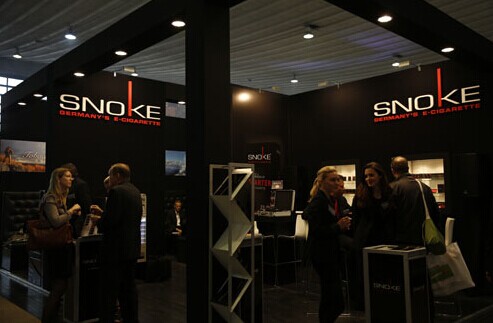
Snok, a local German company, also manufactures its products in Germany. German products are known for their excellent quality, so when discussing the company’s competitive advantages, its sales manager believes that “Made in Germany” is the greatest one. As people become increasingly concerned about health, high-quality products are bound to win over more consumers. The U.S. e-cigarette market has doubled in the past two years, and although the German market has not yet developed as quickly, that is the trend. Snok is very optimistic about the future German market as well as the international market.
Overall, the e-cigarette market is currently booming, and in the coming years it may enter a phase of explosive growth. It seems as if overnight, e-cigarette companies have sprung up all over the world like mushrooms after rain. Meanwhile, the world’s four major tobacco giants—Philip Morris International, British American Tobacco, Japan Tobacco, and Imperial Tobacco—have all entered the e-cigarette business. Does this mean that e-cigarettes have become a product category that cannot be ignored in the future development of the tobacco industry? As the birthplace of e-cigarette products and the manufacturing base for nearly the entire global e-cigarette business, China has still not produced a truly strong domestic e-cigarette brand. At present, it mainly serves as an OEM producer for overseas e-cigarette companies. This may be related to the monopoly structure of China’s tobacco market, but more importantly, e-cigarette products are easy to imitate. As a result, product quality varies greatly, and the e-cigarette market remains in a state of disorderly competition, with some low-quality products disrupting the entire market order. E-cigarettes are still an emerging product, and regulations and oversight in various countries are not yet fully developed. Once formal regulatory policies are introduced, the industry will inevitably be reshuffled. In the end, only those companies with strong technical capabilities will be able to achieve sustained development.