
Vaping device distributor: Selling 5 million in two months — how I expanded into lower-tier cities
Today we bring you another article in the vaping device distributor series, focusing on provincial and municipal distributors. We’ll look at how they understand vaping devices and how they develop local sales operations, hoping to provide useful reference
Today, I will bring you a series of articles about e-cigarette distributors, commonly known as provincial and city distributors. Let's see how they understand e-cigarettes and how they conduct sales in their local areas, hoping to provide a reference for other aspiring distributors and interested users.
Today, we will focus on the development of a city-level distributor in a third or fourth-tier city and his understanding of how to effectively sell e-cigarettes in lower-tier cities.
Liu Yajun is a city-level distributor for a certain e-cigarette brand in Hohhot, Inner Mongolia. Previously, he was involved in local WeChat public accounts and was among the first to access information about new media and new brands, giving him an advantage in information acquisition. He founded Chuangmeng Qinglang Company locally and entered the e-cigarette industry in June this year, starting from Hohhot and achieving over 5 million in sales in just two months.
The following is his self-narrated article, with some edits.
When it comes to e-cigarettes, people might think of trendy products favored by young people, and they might also assume that the main consumer group is in first and second-tier cities. However, this is not necessarily accurate. In Inner Mongolia, a region with a small population and underdeveloped logistics, where major brands do not see much potential, our team has delivered impressive results in the e-cigarette industry.
The team entered the e-cigarette industry in June 2019, starting from Hohhot, a third or fourth-tier city, achieving over 5 million in sales in just two months. Without a KA team, we personally laid out points in supermarkets; without store design, we handled the store design and product display ourselves; without sales staff, we took the lead on the front lines.
The closer we are to consumers, the closer we are to the market and our confidence. Our layout is meticulous, deeply cultivating offline terminal stores and leveraging personal relationships in third and fourth-tier cities to establish a micro-marketing network for online sales.
Team Composition and Background
The team was created during the population dividend period of the mobile internet. From self-media + smart Wi-Fi resource channel models to online gaming and universal distribution models, and then to marketing planning, we have always been engaged in the internet industry, constantly seeking a second project for team survival. Before the e-cigarette boom, the team had already formed a group to enter the e-cigarette industry.
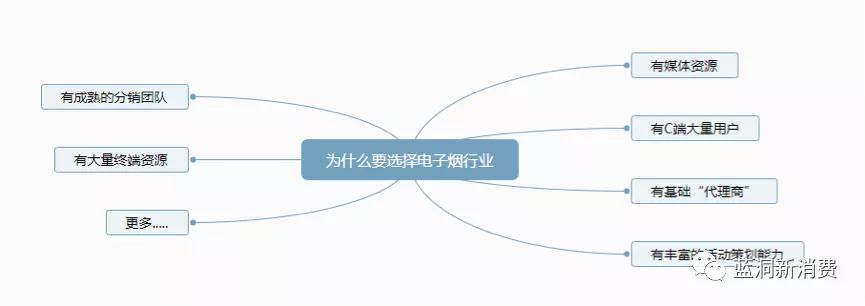
The team consists of four core members who initially did not understand e-cigarettes. After exploration, they gradually recognized that e-cigarettes would become a mass-market product, a product for fragmented smoking. We believe e-cigarettes have greater potential.
Determination to Choose the E-Cigarette Industry and Market Assessment
The overall environment of the domestic e-cigarette market is becoming urgent, but it has not hindered capital investment in e-cigarettes. Price wars, cross-industry cooperation, and fancy marketing... Those who pay attention to the industry are well aware of these matters.
There are profits and growth, and more importantly, it connects all the resources of the team, which is colloquially known as self-landing.
Some say that selling e-cigarettes in third and fourth-tier cities is a dead end! Because cities with an average salary of 2000-3000 yuan cannot afford e-cigarettes!
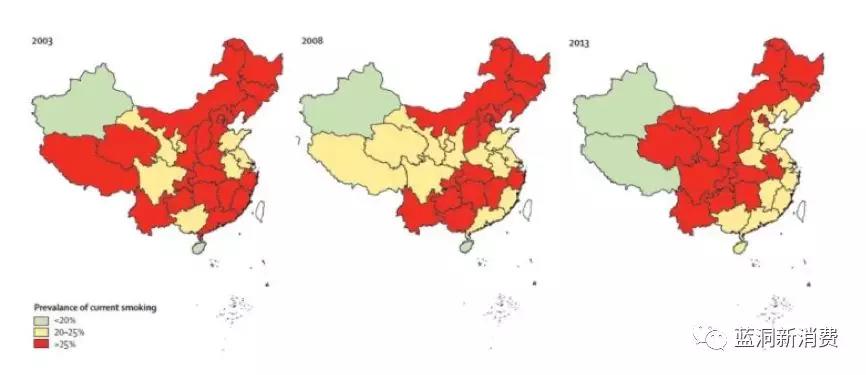
The red areas in the image represent smoking rates above 25%, yellow areas represent 20%-25%, and green areas represent smoking rates below 20%.
The region with the lowest smoking rate in the country is the Xinjiang Uygur Autonomous Region, maintaining a rate of 14.7%-16.2%. The highest smoking rates are in Inner Mongolia and Guizhou, with the former reaching 35.9% in 2003 and the latter 34.6% in 2013, not to mention the current situation.
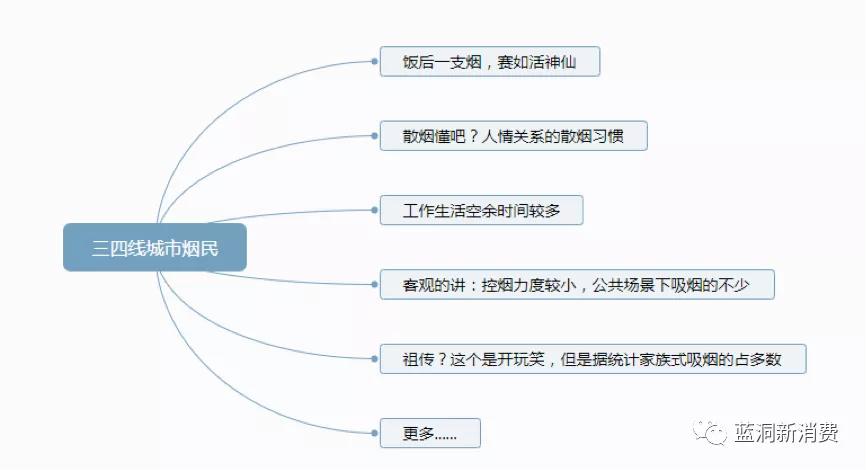
The team began conducting market research in two areas:
1. Brands currently entering third and fourth-tier markets
2. The most active distributors and terminals
Distributors and terminals can be roughly divided into: first-generation e-cigarette stores, 3C digital stores, trendy product stores, etc.
These places have obvious issues such as price chaos, poor brand promotion, and user reception, but these problems are exactly what we can solve. The core reason for their ability to sell certain brands is profit, which is also the confusion faced by local provincial distributors. When a certain brand enters, it severely harms the existing brands, leading to decreased sales, increasing product backlog, and ultimately price chaos.
The essence of this problem is that users in third and fourth-tier cities do not have enough brand awareness.
All manufacturers are caught up in their own hype, battling in first and second-tier cities with dense populations. So far, no one has conducted extensive qualitative and quantitative research on the awareness of third and fourth-tier cities. What does this demographic need? Do they need images of beautiful women smoking? Or endorsements from celebrities?
E-cigarettes, by nature, are products with social attributes. Given this attribute, we should leverage their true social capabilities and dissemination.
Choosing a Brand
Initially, when entering this industry, we considered both agency brands and our own brand. However, considering national policies, tobacco industry standards, food testing, and product user experience, we chose to represent a well-known brand. In third and fourth-tier cities, brand awareness of e-cigarettes is not strong; any brand we represent becomes a brand.
During the selection process, it is more important to analyze whether each brand has a story to tell, using methods that resonate with the people in third and fourth-tier cities, which is also the advantage of our entire team.
The combination of technology and consumption can give rise to new consumer categories and brands, and the emergence of new brands often means the need to cultivate new consumption channels and habits. For the new products themselves, it opens up incremental markets. Since we are opening up new incremental markets, we choose to lay out new consumer categories across various offline consumption scenarios, making our products easily accessible for consumers to purchase via QR codes. Our team aims to penetrate the market because we believe that penetration is the most challenging aspect.
In fact, in our region, after our research, we found that:
Consumers do not care how much investment a brand has received
Consumers do not care how much sales a brand has
Consumers care more about which product is more suitable for them
Operational Situation and Future Plans
When the market faces awareness issues and there is no manufacturer support, how do we promote and market?
1. Create momentum, using promotional activities as an online ignition point and specialty stores as redemption points, online promotion, and offline traffic generation. For example, during the Qixi Festival, terminal stores sold hundreds of sets daily.
2. Execute, collaborating with terminals to conduct activities, directing online traffic to partner stores for mutual benefit.
We have made three major layouts in Hohhot:
1. Deeply cultivate supermarket convenience store sales channels
In one month, we have covered over 500 convenience stores, with very impressive sales. Compared to first and second-tier cities, third and fourth-tier cities have a stronger purchasing habit in supermarkets.
2. Open specialty stores to enhance user experience and service, changing user perceptions and gradually converting them into consumers.
In one month, we have opened 5 specialty stores. Compared to first and second-tier cities, third and fourth-tier cities are smaller, with convenient transportation to stores, making it easier to drive sales.
3. Weave a network of online marketing
Compared to first and second-tier cities, third and fourth-tier cities have closer personal relationships. As the saying goes: "In first-tier cities, people are busy doing things; in third and fourth-tier cities, people are busy building relationships," which is more conducive to interpersonal sales and dissemination, laying a solid foundation for better repurchases in the future.
We are currently planning to quickly establish a model market before replicating it, aiming to cover 3-4 third and fourth-tier cities by the end of the year.
Views on the Overall E-Cigarette Industry
E-cigarettes have entered a deep-water zone, and the offline battle is crucial. The offline sales revenue of e-cigarette brands will become a core and decisive indicator of their status in the e-cigarette industry. Therefore, the execution capability of the team is particularly critical and is a decisive factor for offline expansion. The four partners of the team come from backgrounds in senior self-media, KA channel sales elites, senior designers, and corporate strategic planners. This combination empowers the team and may also be a natural advantage for rapid expansion and success.
From large clouds, big vapor, IQOS to today's e-cigarettes, third and fourth-tier cities will eventually become the battleground for giants. Instead of encouraging distributors to open stores to assist in brand promotion, manufacturers should pay more attention to the low brand awareness in third and fourth-tier cities.
Today, we will focus on the development of a city-level distributor in a third or fourth-tier city and his understanding of how to effectively sell e-cigarettes in lower-tier cities.
Liu Yajun is a city-level distributor for a certain e-cigarette brand in Hohhot, Inner Mongolia. Previously, he was involved in local WeChat public accounts and was among the first to access information about new media and new brands, giving him an advantage in information acquisition. He founded Chuangmeng Qinglang Company locally and entered the e-cigarette industry in June this year, starting from Hohhot and achieving over 5 million in sales in just two months.
The following is his self-narrated article, with some edits.
When it comes to e-cigarettes, people might think of trendy products favored by young people, and they might also assume that the main consumer group is in first and second-tier cities. However, this is not necessarily accurate. In Inner Mongolia, a region with a small population and underdeveloped logistics, where major brands do not see much potential, our team has delivered impressive results in the e-cigarette industry.
The team entered the e-cigarette industry in June 2019, starting from Hohhot, a third or fourth-tier city, achieving over 5 million in sales in just two months. Without a KA team, we personally laid out points in supermarkets; without store design, we handled the store design and product display ourselves; without sales staff, we took the lead on the front lines.
The closer we are to consumers, the closer we are to the market and our confidence. Our layout is meticulous, deeply cultivating offline terminal stores and leveraging personal relationships in third and fourth-tier cities to establish a micro-marketing network for online sales.
Team Composition and Background
The team was created during the population dividend period of the mobile internet. From self-media + smart Wi-Fi resource channel models to online gaming and universal distribution models, and then to marketing planning, we have always been engaged in the internet industry, constantly seeking a second project for team survival. Before the e-cigarette boom, the team had already formed a group to enter the e-cigarette industry.
The team consists of four core members who initially did not understand e-cigarettes. After exploration, they gradually recognized that e-cigarettes would become a mass-market product, a product for fragmented smoking. We believe e-cigarettes have greater potential.
Determination to Choose the E-Cigarette Industry and Market Assessment
The overall environment of the domestic e-cigarette market is becoming urgent, but it has not hindered capital investment in e-cigarettes. Price wars, cross-industry cooperation, and fancy marketing... Those who pay attention to the industry are well aware of these matters.
There are profits and growth, and more importantly, it connects all the resources of the team, which is colloquially known as self-landing.
Some say that selling e-cigarettes in third and fourth-tier cities is a dead end! Because cities with an average salary of 2000-3000 yuan cannot afford e-cigarettes!
The red areas in the image represent smoking rates above 25%, yellow areas represent 20%-25%, and green areas represent smoking rates below 20%.
The region with the lowest smoking rate in the country is the Xinjiang Uygur Autonomous Region, maintaining a rate of 14.7%-16.2%. The highest smoking rates are in Inner Mongolia and Guizhou, with the former reaching 35.9% in 2003 and the latter 34.6% in 2013, not to mention the current situation.
The team began conducting market research in two areas:
1. Brands currently entering third and fourth-tier markets
2. The most active distributors and terminals
Distributors and terminals can be roughly divided into: first-generation e-cigarette stores, 3C digital stores, trendy product stores, etc.
These places have obvious issues such as price chaos, poor brand promotion, and user reception, but these problems are exactly what we can solve. The core reason for their ability to sell certain brands is profit, which is also the confusion faced by local provincial distributors. When a certain brand enters, it severely harms the existing brands, leading to decreased sales, increasing product backlog, and ultimately price chaos.
The essence of this problem is that users in third and fourth-tier cities do not have enough brand awareness.
All manufacturers are caught up in their own hype, battling in first and second-tier cities with dense populations. So far, no one has conducted extensive qualitative and quantitative research on the awareness of third and fourth-tier cities. What does this demographic need? Do they need images of beautiful women smoking? Or endorsements from celebrities?
E-cigarettes, by nature, are products with social attributes. Given this attribute, we should leverage their true social capabilities and dissemination.
Choosing a Brand
Initially, when entering this industry, we considered both agency brands and our own brand. However, considering national policies, tobacco industry standards, food testing, and product user experience, we chose to represent a well-known brand. In third and fourth-tier cities, brand awareness of e-cigarettes is not strong; any brand we represent becomes a brand.
During the selection process, it is more important to analyze whether each brand has a story to tell, using methods that resonate with the people in third and fourth-tier cities, which is also the advantage of our entire team.
The combination of technology and consumption can give rise to new consumer categories and brands, and the emergence of new brands often means the need to cultivate new consumption channels and habits. For the new products themselves, it opens up incremental markets. Since we are opening up new incremental markets, we choose to lay out new consumer categories across various offline consumption scenarios, making our products easily accessible for consumers to purchase via QR codes. Our team aims to penetrate the market because we believe that penetration is the most challenging aspect.
In fact, in our region, after our research, we found that:
Consumers do not care how much investment a brand has received
Consumers do not care how much sales a brand has
Consumers care more about which product is more suitable for them
Operational Situation and Future Plans
When the market faces awareness issues and there is no manufacturer support, how do we promote and market?
1. Create momentum, using promotional activities as an online ignition point and specialty stores as redemption points, online promotion, and offline traffic generation. For example, during the Qixi Festival, terminal stores sold hundreds of sets daily.
2. Execute, collaborating with terminals to conduct activities, directing online traffic to partner stores for mutual benefit.
We have made three major layouts in Hohhot:
1. Deeply cultivate supermarket convenience store sales channels
In one month, we have covered over 500 convenience stores, with very impressive sales. Compared to first and second-tier cities, third and fourth-tier cities have a stronger purchasing habit in supermarkets.
2. Open specialty stores to enhance user experience and service, changing user perceptions and gradually converting them into consumers.
In one month, we have opened 5 specialty stores. Compared to first and second-tier cities, third and fourth-tier cities are smaller, with convenient transportation to stores, making it easier to drive sales.
3. Weave a network of online marketing
Compared to first and second-tier cities, third and fourth-tier cities have closer personal relationships. As the saying goes: "In first-tier cities, people are busy doing things; in third and fourth-tier cities, people are busy building relationships," which is more conducive to interpersonal sales and dissemination, laying a solid foundation for better repurchases in the future.
We are currently planning to quickly establish a model market before replicating it, aiming to cover 3-4 third and fourth-tier cities by the end of the year.
Views on the Overall E-Cigarette Industry
E-cigarettes have entered a deep-water zone, and the offline battle is crucial. The offline sales revenue of e-cigarette brands will become a core and decisive indicator of their status in the e-cigarette industry. Therefore, the execution capability of the team is particularly critical and is a decisive factor for offline expansion. The four partners of the team come from backgrounds in senior self-media, KA channel sales elites, senior designers, and corporate strategic planners. This combination empowers the team and may also be a natural advantage for rapid expansion and success.
From large clouds, big vapor, IQOS to today's e-cigarettes, third and fourth-tier cities will eventually become the battleground for giants. Instead of encouraging distributors to open stores to assist in brand promotion, manufacturers should pay more attention to the low brand awareness in third and fourth-tier cities.


