
Is Becoming a Vaping Distributor Profitable? Are the Margins High?
Is becoming a vaping distributor profitable? Are the margins high? Almost overnight, vaping has become not only a new consumer trend but also a major industry opportunity. Numerous companies and investors have rushed into the market, and new vaping brands
Do e-cigarette agents make money? Are e-cigarette agents profitable? It seems that overnight, e-cigarettes have not only become a new trend among consumers, but also become a new trend in the industry. A large number of companies and the investors behind them have entered the market, and new e-cigarette brands have sprung up like mushrooms to help Quit smoking, reduce the harm caused by 0 tar by 95%, have no harm from second-hand smoke, and can be addicted to regular smoking is very tempting.
However, it is undeniable that this fast-growing industry is still in a state of barbaric growth. The lack of corresponding policies, regulations and industry standards makes e-cigarettes seem to be a place outside the law in a gray shadow. Although there are many research conclusions on e-cigarettes in the medical community at home and abroad, the conclusions are far apart. The immortals are still fighting, and ordinary people are even more difficult to distinguish between good and evil.
Why did e-cigarettes become popular overnight? Even though the entire industry is facing huge legal and moral risks, why are there so many people and a lot of money pouring in? Are e-cigarettes really healthy? Capital darling on the wind outlet
Even in this cold winter of the capital market, e-cigarettes are still hot and have become one of the hottest venture capital fields at the moment.
Starting from the second half of 2018, emerging e-cigarette brands have been dizzying. Flow Fulu, Weld Whale, YOOZ Pomelo, LINX Lingxi, MOTI Magic Flute, TRYMIX Anyway, GOIN Guyun, and APOC According to incomplete statistics, more than a dozen e-cigarette companies in China have received financing, with a total financing amount of hundreds of millions of yuan. There are many venture capitalists who have taken a fancy to this track and have already entered, including many front-line investment institutions such as Zhenge Fund, Dynamic Capital, Source Capital, and IDG Capital.
The first round of entry has a lot of online celebrity entrepreneurs with their own traffic. For example, Flow Fulu is an e-cigarette brand founded by Zhu Xiaomu, the No.2 figure of Hammer Technology, and has also been encouraged by Luo Yonghao's platform. There are also rumors in the market that Luo Yonghao will personally enter the bureau and is looking for a foundry.
For another example, YOOZ grapefruit is an e-cigarette brand jointly launched by Cai Yuedong, founder of the same uncle who is known as the first constellation self-media, and He Chang, founder of the Internet celebrity restaurant brand Huang Taiji. Cai Yuedong initially only sold in the circle of friends and achieved his first spot sales of nearly 5 million yuan without resorting to other e-commerce channels.
The founding team of LINX Lingxi brought together a number of leading self-media people. It is said that these leading self-media companies have reached an audience of 350 million. According to Zhang Jinyuan, one of them, Lingxi has obtained two rounds of financing, and these two rounds of financing were finalized on the same day. Due to the tight time, the financing agreement was even written on a napkin, which shows the high enthusiasm of the capital side.
In addition to the primary capital market, in the secondary capital market, e-cigarette concept stocks are also in the carnival. Shunhao shares (002565.SZ) have more than tripled since the beginning of the year. A research report released by Guotai Junan shows that the operating income of the e-cigarette businesses of McWeir, Yingqu Technology, and Avipos increased significantly from 2014 to 2017.
Of course, the ambitions of entrepreneurs and investors do not rise on the ground. The e-cigarette industry, which has always been small and silent, has suddenly entered the spotlight, largely due to the large-scale acquisition of Altria Group (Philip Morris International, the parent company of Marlboro). In December 2018, JUUL, the most popular e-cigarette brand in the United States, was acquired by Altria for US$12.8 billion, and the company's valuation reached US$38 billion. This is legendary for a three-year-old company, comparable to Uber, Ant Financial, etc. Global super unicorns.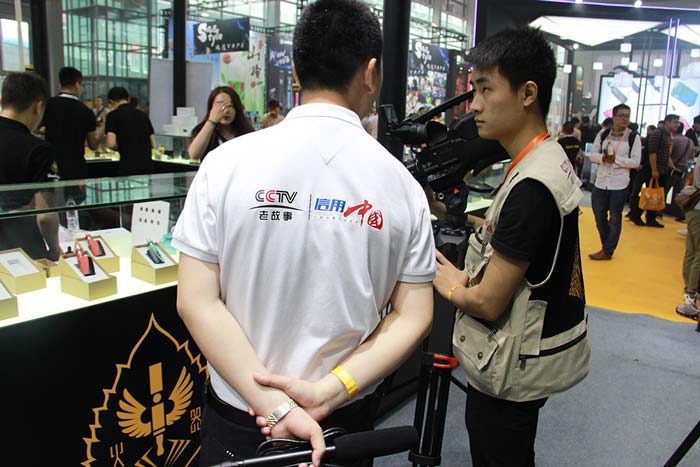 Large market, fast growth, high repurchase rate, no burning money, and fast profits. From a purely commercial perspective, e-cigarettes are a perfect business. It is no wonder that entrepreneurs and investors in China regard it as a dream track.
However, doubts about JUUL are also very loud. JUUL is very popular among American teenagers due to its fashionable appearance, novel taste, easy to hide, and seemingly less harmful to health. Data from authoritative research institutions also show that JUUL has pushed up the proportion of non-smokers smoking e-cigarettes.
For smokers, e-cigarettes seem to be the lesser of two evils, but for teenagers and non-smokers, e-cigarettes are still very harmful.# p#pagination title #e#
Are e-cigarette agents profitable?
The market has a large threshold, low profits and amazing
“The entry threshold for the e-cigarette industry is actually not high. It is a business with a very light model. Since the industrial chain is already complete and can be fully OEM produced, a new brand can be created by arranging and combining different solutions provided by various parts suppliers. Half a year is enough for an investment of millions.& rdquo; A person in charge of an investment institution who declined to be named told China Economic Weekly.
The investor said that low barriers and serious homogenization mean that the most important thing in this business is brand building capabilities and marketing capabilities. Therefore, those Internet celebrities, KOL, and self-media people with the ability to bring goods are favored by investors.
Data released by the China Business Industry Research Institute shows that China's e-cigarette output in 2017 was approximately 1.6 billion, and is expected to exceed 2.2 billion in 2018. At present, the e-cigarette market has formed a complete industrial chain in China. The e-cigarettes produced in China have accounted for 90% of the world's share, and the largest production base is Shenzhen. The number of enterprises exceeds 500, but 80% are small enterprises with less than 50 people.
In August 2018, the United States imposed a 25% tariff on US$16 billion of China goods. Other machinery on the list included e-cigarette equipment. This has also prompted these e-cigarette manufacturers, who were originally doing export businesses, to turn more attention to the domestic market.
According to the reporter's understanding, foreign brands of e-cigarettes from the United States, Japan, the United Kingdom and other countries all start at more than 1,000 yuan. The main channel is luxuriously decorated specialty stores in shopping malls, but they have many fans in China and are also popular products for overseas purchasing. Most of this wave of newly created domestic brands are promoted and sold through Internet channels. The price ranges from two to three hundred yuan to six to seven hundred yuan. Small brands can even buy it for 100 yuan, and the price of a cigarette bomb is only tens of yuan.
“China's e-cigarette market is about to explode. Come and join quickly and realize your dream of reaching a million yuan a year.& rdquo; This is an agency advertisement posted by a WeChat store selling e-cigarettes in the circle of friends. It is said that as an e-cigarette agent, the gross profit can basically be maintained at around 50%. The reporter also consulted an industry insider, who said that even if e-cigarette dispensers cost a few hundred yuan, the profit margin can reach 50%-60%, or even 80%. Cigarette bombs can also achieve a gross profit margin of 20%-30%, but the sales volume of cigarettes and bombs is very large and the overall profit is quite considerable. rdquo; He said.
Data released by China Industrial Research Institute shows that 30% of traditional smokers in the UK have turned to e-cigarettes, and the penetration rate of e-cigarettes in the United States has also reached 13%, while the penetration rate of e-cigarettes in China is only 1%. However, the overall number of smokers in China is huge, reaching 350 million. Even if only 5%-10% of traditional cigarette consumers will convert into e-cigarette consumers in the future, it still means that it is an extremely huge market.
Although this industry with a sense of original sin is full of money, it also faces huge moral and legal risks. Some companies also choose not to take these potentially hot gold coins. In mid-February this year, due to the crazy news that Xiaomi's eco-chain company would enter the field of e-cigarettes, Xiaomi Company announced through its official Weibo that Xiaomi would not make e-cigarettes. This matter is purely a rumor.
Are e-cigarettes really harmless and non-addictive?
At this year's CCTV 315 party, a series of issues about e-cigarettes were also exposed. CCTV reporters randomly purchased eight e-cigarette liquids from the market and sent them to a laboratory certified by Johns Hopkins University and the Global Tobacco Control Institute in the United States. Inspection results show that electronic smoke contains dozens or even hundreds of times more formaldehyde than the maximum allowable concentration in indoor air, as well as large amounts of propylene glycol and glycerol. Vaporized propylene glycol and glycerol have a strong irritating effect on the respiratory tract.
Experts interviewed also said that more and more studies have confirmed that e-cigarettes can also release harmful substances, threatening the health of smokers and passive smokers to a certain extent. It is not that there is no second-hand smoke, but it is also addictive.
Mr. Shi from Beijing claims to be an e-cigarette player. He prefers this name to an e-smoker because it is not cool or trendy. According to him, there are two common types of e-cigarettes currently: one is the heated non-combustible type, represented by Japan's IQOS (owned by Altria Group). Its cigarette cartridge is a specialty tobacco, so it is very similar to the feeling of smoking real cigarettes; The other is the electronic atomizing type, represented by JUUL (acquired by Altria Group) in the United States. The cigarette cartridge is in the form of tobacco oil, which has a lighter taste and is more popular among young people and non-smokers.# p#pagination title #e#
In China, cigarette bomb-type e-cigarettes are controlled with reference to cigarettes. Therefore, currently domestic e-cigarette entrepreneurial projects mainly focus on electronic atomizing products.
In fact, the world's first e-cigarette was born in my country. It was invented as early as 2003 by a China pharmacist named Han Li. He also later founded the Ruyan brand, which focuses on smoking cessation and became a very popular gift for a time. It created sales of 1 billion yuan between 2005 and 2006 alone, and then successfully listed in Hong Kong in 2008.
However, Ruyan was later named by CCTV for falsifying the smoking cessation effect, and the media subsequently exposed a series of problems. After that, everything really turned into smoke.
In fact, as early as 2012, the World Health Organization clearly pointed out that e-cigarettes are not a means to quit smoking. They are harmful to public health. Control must be strengthened and sales to minors are strictly prohibited. Regulatory vacuum: E-cigarettes become illegal products?
In the United States and many Asian countries, e-cigarettes are listed as tobacco products; in Europe, Japan and other places, e-cigarettes are managed as medical products. However, in China, e-cigarettes, an emerging product, are still in an environment of barbaric growth, rough development, and lack of supervision. Most domestic e-cigarette companies are mainly technology companies, and their business scope is mainly electronic products. This entry threshold is much lower than that of tobacco products and pharmaceutical products.
Our country has implemented a complete ban on smoking in all indoor public places and workplaces, public transportation and other possible outdoor public places eight years ago. However, since e-cigarettes are a new thing in recent years, they are currently not within the scope of smoking bans. Because of this, many smokers have bought e-cigarettes to relieve their addiction.
At present, only Hangzhou, Nanning, Shenzhen, Zhangjiakou, Qinhuangdao and other places have officially blacklisted e-cigarettes for tobacco control. In most cities such as Beijing and Shanghai, the control of e-cigarettes is still in the research stage.
Whether e-cigarettes can help quit smoking is actually not conclusive in the academic community. The biggest problem with e-cigarettes does not stop there. What deserves more attention is the temptation they cause to young people and even minors. Many experts worry that e-cigarettes will cultivate a new generation of nicotine addicts, that is, they are not traditional smokers, but will become new e-smokers because of their curiosity about e-cigarettes and their pursuit of trends.
Although last year, the State Administration for Market Regulation and the State Tobacco Monopoly Administration issued a special notice prohibiting the sale of e-cigarettes to minors. However, unlike cigarettes, which have a monopoly form, many e-cigarettes are sold through social media, WeChat, and e-commerce platforms. Whether the purchase method of this online platform is purchased by minors is very difficult to review. The policy of big prospects for the e-cigarette market is the biggest hidden danger. If the government can introduce policies to regulate this industry, I believe that e-cigarette agencies or retailers are good businesses.
However, it is undeniable that this fast-growing industry is still in a state of barbaric growth. The lack of corresponding policies, regulations and industry standards makes e-cigarettes seem to be a place outside the law in a gray shadow. Although there are many research conclusions on e-cigarettes in the medical community at home and abroad, the conclusions are far apart. The immortals are still fighting, and ordinary people are even more difficult to distinguish between good and evil.
Why did e-cigarettes become popular overnight? Even though the entire industry is facing huge legal and moral risks, why are there so many people and a lot of money pouring in? Are e-cigarettes really healthy?
Capital darling on the wind outletEven in this cold winter of the capital market, e-cigarettes are still hot and have become one of the hottest venture capital fields at the moment.
Starting from the second half of 2018, emerging e-cigarette brands have been dizzying. Flow Fulu, Weld Whale, YOOZ Pomelo, LINX Lingxi, MOTI Magic Flute, TRYMIX Anyway, GOIN Guyun, and APOC According to incomplete statistics, more than a dozen e-cigarette companies in China have received financing, with a total financing amount of hundreds of millions of yuan. There are many venture capitalists who have taken a fancy to this track and have already entered, including many front-line investment institutions such as Zhenge Fund, Dynamic Capital, Source Capital, and IDG Capital.
The first round of entry has a lot of online celebrity entrepreneurs with their own traffic. For example, Flow Fulu is an e-cigarette brand founded by Zhu Xiaomu, the No.2 figure of Hammer Technology, and has also been encouraged by Luo Yonghao's platform. There are also rumors in the market that Luo Yonghao will personally enter the bureau and is looking for a foundry.
For another example, YOOZ grapefruit is an e-cigarette brand jointly launched by Cai Yuedong, founder of the same uncle who is known as the first constellation self-media, and He Chang, founder of the Internet celebrity restaurant brand Huang Taiji. Cai Yuedong initially only sold in the circle of friends and achieved his first spot sales of nearly 5 million yuan without resorting to other e-commerce channels.
The founding team of LINX Lingxi brought together a number of leading self-media people. It is said that these leading self-media companies have reached an audience of 350 million. According to Zhang Jinyuan, one of them, Lingxi has obtained two rounds of financing, and these two rounds of financing were finalized on the same day. Due to the tight time, the financing agreement was even written on a napkin, which shows the high enthusiasm of the capital side.
In addition to the primary capital market, in the secondary capital market, e-cigarette concept stocks are also in the carnival. Shunhao shares (002565.SZ) have more than tripled since the beginning of the year. A research report released by Guotai Junan shows that the operating income of the e-cigarette businesses of McWeir, Yingqu Technology, and Avipos increased significantly from 2014 to 2017.
Of course, the ambitions of entrepreneurs and investors do not rise on the ground. The e-cigarette industry, which has always been small and silent, has suddenly entered the spotlight, largely due to the large-scale acquisition of Altria Group (Philip Morris International, the parent company of Marlboro). In December 2018, JUUL, the most popular e-cigarette brand in the United States, was acquired by Altria for US$12.8 billion, and the company's valuation reached US$38 billion. This is legendary for a three-year-old company, comparable to Uber, Ant Financial, etc. Global super unicorns.
Large market, fast growth, high repurchase rate, no burning money, and fast profits. From a purely commercial perspective, e-cigarettes are a perfect business. It is no wonder that entrepreneurs and investors in China regard it as a dream track.However, doubts about JUUL are also very loud. JUUL is very popular among American teenagers due to its fashionable appearance, novel taste, easy to hide, and seemingly less harmful to health. Data from authoritative research institutions also show that JUUL has pushed up the proportion of non-smokers smoking e-cigarettes.
For smokers, e-cigarettes seem to be the lesser of two evils, but for teenagers and non-smokers, e-cigarettes are still very harmful.# p#pagination title #e#
Are e-cigarette agents profitable?
The market has a large threshold, low profits and amazing
“The entry threshold for the e-cigarette industry is actually not high. It is a business with a very light model. Since the industrial chain is already complete and can be fully OEM produced, a new brand can be created by arranging and combining different solutions provided by various parts suppliers. Half a year is enough for an investment of millions.& rdquo; A person in charge of an investment institution who declined to be named told China Economic Weekly.
The investor said that low barriers and serious homogenization mean that the most important thing in this business is brand building capabilities and marketing capabilities. Therefore, those Internet celebrities, KOL, and self-media people with the ability to bring goods are favored by investors.
Data released by the China Business Industry Research Institute shows that China's e-cigarette output in 2017 was approximately 1.6 billion, and is expected to exceed 2.2 billion in 2018. At present, the e-cigarette market has formed a complete industrial chain in China. The e-cigarettes produced in China have accounted for 90% of the world's share, and the largest production base is Shenzhen. The number of enterprises exceeds 500, but 80% are small enterprises with less than 50 people.
In August 2018, the United States imposed a 25% tariff on US$16 billion of China goods. Other machinery on the list included e-cigarette equipment. This has also prompted these e-cigarette manufacturers, who were originally doing export businesses, to turn more attention to the domestic market.
According to the reporter's understanding, foreign brands of e-cigarettes from the United States, Japan, the United Kingdom and other countries all start at more than 1,000 yuan. The main channel is luxuriously decorated specialty stores in shopping malls, but they have many fans in China and are also popular products for overseas purchasing. Most of this wave of newly created domestic brands are promoted and sold through Internet channels. The price ranges from two to three hundred yuan to six to seven hundred yuan. Small brands can even buy it for 100 yuan, and the price of a cigarette bomb is only tens of yuan.
“China's e-cigarette market is about to explode. Come and join quickly and realize your dream of reaching a million yuan a year.& rdquo; This is an agency advertisement posted by a WeChat store selling e-cigarettes in the circle of friends. It is said that as an e-cigarette agent, the gross profit can basically be maintained at around 50%. The reporter also consulted an industry insider, who said that even if e-cigarette dispensers cost a few hundred yuan, the profit margin can reach 50%-60%, or even 80%. Cigarette bombs can also achieve a gross profit margin of 20%-30%, but the sales volume of cigarettes and bombs is very large and the overall profit is quite considerable. rdquo; He said.
Data released by China Industrial Research Institute shows that 30% of traditional smokers in the UK have turned to e-cigarettes, and the penetration rate of e-cigarettes in the United States has also reached 13%, while the penetration rate of e-cigarettes in China is only 1%. However, the overall number of smokers in China is huge, reaching 350 million. Even if only 5%-10% of traditional cigarette consumers will convert into e-cigarette consumers in the future, it still means that it is an extremely huge market.
Although this industry with a sense of original sin is full of money, it also faces huge moral and legal risks. Some companies also choose not to take these potentially hot gold coins. In mid-February this year, due to the crazy news that Xiaomi's eco-chain company would enter the field of e-cigarettes, Xiaomi Company announced through its official Weibo that Xiaomi would not make e-cigarettes. This matter is purely a rumor.
Are e-cigarettes really harmless and non-addictive?
At this year's CCTV 315 party, a series of issues about e-cigarettes were also exposed. CCTV reporters randomly purchased eight e-cigarette liquids from the market and sent them to a laboratory certified by Johns Hopkins University and the Global Tobacco Control Institute in the United States. Inspection results show that electronic smoke contains dozens or even hundreds of times more formaldehyde than the maximum allowable concentration in indoor air, as well as large amounts of propylene glycol and glycerol. Vaporized propylene glycol and glycerol have a strong irritating effect on the respiratory tract.
Experts interviewed also said that more and more studies have confirmed that e-cigarettes can also release harmful substances, threatening the health of smokers and passive smokers to a certain extent. It is not that there is no second-hand smoke, but it is also addictive.
Mr. Shi from Beijing claims to be an e-cigarette player. He prefers this name to an e-smoker because it is not cool or trendy. According to him, there are two common types of e-cigarettes currently: one is the heated non-combustible type, represented by Japan's IQOS (owned by Altria Group). Its cigarette cartridge is a specialty tobacco, so it is very similar to the feeling of smoking real cigarettes; The other is the electronic atomizing type, represented by JUUL (acquired by Altria Group) in the United States. The cigarette cartridge is in the form of tobacco oil, which has a lighter taste and is more popular among young people and non-smokers.# p#pagination title #e#
In China, cigarette bomb-type e-cigarettes are controlled with reference to cigarettes. Therefore, currently domestic e-cigarette entrepreneurial projects mainly focus on electronic atomizing products.
In fact, the world's first e-cigarette was born in my country. It was invented as early as 2003 by a China pharmacist named Han Li. He also later founded the Ruyan brand, which focuses on smoking cessation and became a very popular gift for a time. It created sales of 1 billion yuan between 2005 and 2006 alone, and then successfully listed in Hong Kong in 2008.
However, Ruyan was later named by CCTV for falsifying the smoking cessation effect, and the media subsequently exposed a series of problems. After that, everything really turned into smoke.
In fact, as early as 2012, the World Health Organization clearly pointed out that e-cigarettes are not a means to quit smoking. They are harmful to public health. Control must be strengthened and sales to minors are strictly prohibited.
Regulatory vacuum: E-cigarettes become illegal products?In the United States and many Asian countries, e-cigarettes are listed as tobacco products; in Europe, Japan and other places, e-cigarettes are managed as medical products. However, in China, e-cigarettes, an emerging product, are still in an environment of barbaric growth, rough development, and lack of supervision. Most domestic e-cigarette companies are mainly technology companies, and their business scope is mainly electronic products. This entry threshold is much lower than that of tobacco products and pharmaceutical products.
Our country has implemented a complete ban on smoking in all indoor public places and workplaces, public transportation and other possible outdoor public places eight years ago. However, since e-cigarettes are a new thing in recent years, they are currently not within the scope of smoking bans. Because of this, many smokers have bought e-cigarettes to relieve their addiction.
At present, only Hangzhou, Nanning, Shenzhen, Zhangjiakou, Qinhuangdao and other places have officially blacklisted e-cigarettes for tobacco control. In most cities such as Beijing and Shanghai, the control of e-cigarettes is still in the research stage.
Whether e-cigarettes can help quit smoking is actually not conclusive in the academic community. The biggest problem with e-cigarettes does not stop there. What deserves more attention is the temptation they cause to young people and even minors. Many experts worry that e-cigarettes will cultivate a new generation of nicotine addicts, that is, they are not traditional smokers, but will become new e-smokers because of their curiosity about e-cigarettes and their pursuit of trends.
Although last year, the State Administration for Market Regulation and the State Tobacco Monopoly Administration issued a special notice prohibiting the sale of e-cigarettes to minors. However, unlike cigarettes, which have a monopoly form, many e-cigarettes are sold through social media, WeChat, and e-commerce platforms. Whether the purchase method of this online platform is purchased by minors is very difficult to review. The policy of big prospects for the e-cigarette market is the biggest hidden danger. If the government can introduce policies to regulate this industry, I believe that e-cigarette agencies or retailers are good businesses.


