
An In-Depth Analysis of the Vaping Packaging Industry
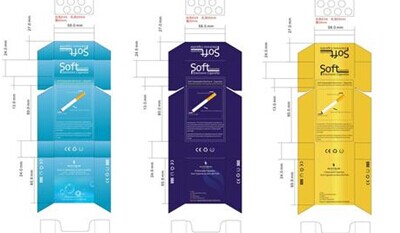
Introduction: The packaging industry is a shadow industry of consumer goods. Due to various reasons, related companies have been riding the wave since last year. Although the packaging industry has no technical barriers and low industry concentration, the demand in the industry is stable, especially with the rapid growth driven by the development of the internet.
The Chinese vaping news: The packaging industry is a shadow industry of consumer goods. Due to various reasons, related companies have been riding the wave since last year. Although the packaging industry has no technical barriers and low industry concentration, the demand in the industry is stable, especially with the rapid growth driven by the development of the internet.
The packaging industry is divided into paper packaging, metal packaging, plastic packaging, and glass packaging. Although the packaging industry has almost no technical barriers and low industry concentration, the demand in the industry has remained stable (niche), especially in recent years, as the importance of packaging for advertising and marketing has become more pronounced, leading to rapid growth in the paper packaging sector. Additionally, the trend of increasing concentration in the metal packaging industry is also quite evident. It is not difficult to foresee that some large packaging companies with customer resources, technology, and financial advantages will likely become oligopolies in the future, and mergers and acquisitions to continue increasing industry concentration are highly probable (the packaging industry has seen continuous mergers in recent years).
Particularly noteworthy are the paper packaging and metal packaging sub-industries. Among them, paper packaging has the widest range of applications, with a production value of nearly 500 billion in 2013 (accounting for 37% of the total packaging value), and a high growth rate, with a CAGR of 19% from 2006 to 2013. The competitive landscape is fragmented (over 4,000 companies, with the top 10 accounting for less than 10%, showing a significant gap compared to Europe and the United States); while metal packaging is widely used in the beverage and food sectors, with a production value of 128 billion in 2013, growing the fastest (CAGR of 21%), with over 1,700 companies, and the top 5 accounting for less than 20%.
The shadow of consumer goods
1. Industry background: The packaging industry has maintained a compound annual growth rate of about 15% over the past decade and is expected to continue in the future. Paper packaging accounts for about 40%; metal packaging accounts for about 20%; plastic packaging accounts for 30%, while glass and wood packaging occupy a very small proportion and are gradually shrinking, with a trend of being replaced by other packaging materials. Western Europe, the United States, and Asia-Pacific account for 30%, 20%, and 25% of the global packaging market, respectively. Japan, China, and India are the largest markets in the Asia-Pacific region, with China growing the fastest.
2. Industry structure: The growth of the consumer goods industry is the main driving force for the packaging industry. According to data, the compound annual growth rate of consumer goods in China over the past decade has been about 14%, while the packaging industry has seen a compound annual growth rate of about 15%, with both growth rates highly consistent. The logic is easy to understand; for every consumer good produced, a corresponding packaging product is generally needed, so it is important to remember that the packaging industry is essentially the shadow industry of consumer goods, which is a crucial conclusion when investing in specific targets.
3. Sub-industries:
① Paper packaging: The fastest growth rate. There are many large-scale enterprises in the industry, and competition is fierce, with an average gross profit margin of 14% and a net profit margin of 5.8%. Most paper packaging companies are domestic, with few foreign companies. Listed companies include Hexing Packaging and Meiyingsen.
Paper packaging is further divided into low-end and high-end packaging. Low-end products occupy 90% of the market share, mainly used for temporary storage (cartons, boxes), with intense market competition and no barriers, making it difficult to narrow the supply-demand gap, resulting in low gross and net profits.
It is essential to focus on mid-to-high-end products, mainly in the electronics and electrical packaging sector, which have characteristics such as 1. High requirements for transportation safety, strength, and moisture resistance; 2. Appearance of electronic products. Mid-to-high-end paper packaging can achieve a gross profit margin of 25%.
② Metal packaging: The slowest growth rate but the highest industry concentration, with significantly fewer large-scale enterprises compared to the paper packaging industry, and an average gross profit margin of 13.3%. It is mainly dominated by foreign capital, with major listed companies including Sleek, Orijin, and COFCO Packaging. Sleek can be used as a reference for the entire industry: China's high-speed production equipment for easy-open lids has relied on imports. Therefore, for nearly 20 years, it has been basically stable and concentrated among three American companies: STOLLE, DRT, and STI, with STOLLE leading in overall strength and market share within the industry.
③ Plastic packaging: Relatively fast growth, with the highest average gross profit margin of nearly 17%. From the perspective of developed countries, its concentration is lower than that of paper and metal packaging. This is mainly due to the industry's characteristics leading to strong product homogeneity, and because the sealing requirements are not high, there are no significant technical barriers, let alone differences in production and management, so there are basically no large companies in this industry. Major listed companies include Yongxin Co., Tongchan Lixing, Zijiang Enterprises, and Shenda Group. #p# Pagination Title #e#


