How Do Industry Leaders View the Vaping Industry?
How do industry leaders view the future of vaping? Major domestic companies remain optimistic, with greater focus on R&D, proprietary brands, capital integration, and market expansion.
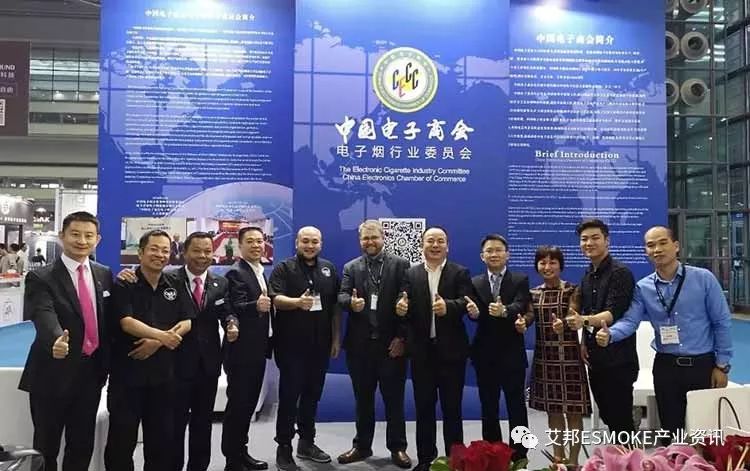
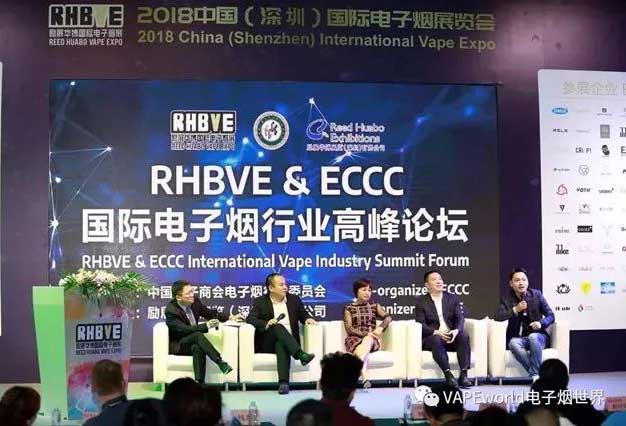
Industry leaders in the vaping sector have expressed confidence in the future development trends of electronic cigarettes, emphasizing the importance of enhancing research and development, building independent brands, capital integration, and market layout. On October 1st, at the 2018 China (Shenzhen) International Electronic Cigarette Exhibition, guided by the Electronic Cigarette Industry Committee of the China Electronic Commerce Association and organized by Reed Exhibitions (Shenzhen) Co., Ltd., over a hundred leading electronic cigarette brands showcased their new products. The event also featured a summit forum hosted by Lin Hanzhong, Vice President of the Electronic Cigarette Industry Committee, attracting participation from international electronic cigarette industry associations and friends from Germany, Canada, Indonesia, Malaysia, and the United States.
In 2018, the global electronic cigarette industry saw a trend of moderation, seeking progress while maintaining stability, particularly in the second half of the year as capital entered the market, leading to a new round of reshuffling. The year 2019 is expected to fully enter the "Quality Year," where the industry will focus on quality, innovative models, and technology-driven development. In terms of industry regulation, countries around the world have introduced corresponding guiding and permitting measures, with Germany, Canada, and Indonesia moving from complete bans to partial allowances and licensing, indicating a trend towards rigorous and open regulation.
During the summit forum, key guests including the President of the Canadian Electronic Cigarette Association, the Secretary-General of the Indonesian Association, Thomas from the German Electronic Cigarette Exhibition (Intersteam), and international influencers such as Michael Lee, Ou Junbiao, Huang Guihua, Liu Xiang, and Wang Xizhi discussed global electronic cigarette industry policies, market conditions, and development trends. Let's take a look at what industry leaders had to say.
Voices from Associations
Canadian Electronic Cigarette Association (ECTA)
President Daniel David: Legalization of electronic cigarettes in Canada has led to a surge in the market
At the conference, Daniel David introduced the regulatory policies, market status, and future recommendations for electronic cigarettes in Canada. He believes that the Canadian Tobacco Bill S-5 has been approved, allowing the sale of vaping products to individuals aged 18 and over, but restricting their advertising, including a ban on all lifestyle ads, sponsorships, and celebrity endorsements. The implementation of this policy marks the official legalization of the Canadian electronic cigarette market this year, allowing product labels to state, "For smokers, switching to electronic cigarettes is a relatively low-risk choice," which has led to a sharp increase in market sales.
In the Canadian market, there are currently 923 dedicated electronic cigarette stores, 107 convenience stores, 75 large e-liquid manufacturers, and 12 small to medium hardware manufacturers. Local e-liquids account for 85% of the market share, while international e-liquids account for 15%. This does not hinder the development of the local market, especially in Ontario, which represents 41% of the physical store industry, with the number of physical stores in Ontario increasing by 50% annually. Fruit-flavored, nicotine, and ice cream-flavored e-liquids occupy 95% of the Canadian market share.
 In future developments, the ECTA will focus on four aspects to regulate the Canadian electronic cigarette market, such as understanding and researching applicable industry standards, establishing nationally recognized industry standards, guiding members through compliance procedures, ensuring audit and review support, and cooperating with the Canadian government to ensure that laws are appropriately correct.
Indonesian Electronic Cigarette Association (APVI)
Secretary-General Edy: Legalization of electronic cigarettes in Indonesia leads to market regulation and future improvements
Edy highlighted the issuance of consumption tax and excise tax licenses for taxable merchants (NPPBKC) in Indonesia, with electronic cigarette tariffs officially imposed since July 1st and the Indonesian government issuing its first electronic cigarette business license on July 18th, marking the official legalization of the electronic cigarette market in Indonesia. In Indonesia, the annual sales volume of physical stores is 3.5 trillion rupiah, with annual e-liquid sales of 3-4 million bottles. In 2017, the number of users was 900,000, with 650,000 active users. Edy believes that future development should focus on regulatory management in areas such as tariffs, market guidance education, e-liquid capacity, local market protection, certification standards, product warning labels, minimum nicotine levels, advertising, product classification, and simplification of production processes.
International influencer Michael Lee: What kind of electronic cigarettes do users in Europe and America need?
Thomas from the German Berlin Electronic Cigarette Exhibition (Intersteam) and international influencer Michael Lee discussed the current status of the European and American markets, user preferences, and future product directions. Most users prefer products with a sense of technology, modern fashion, and futuristic design, with high performance and compact electronic cigarette products being the most appealing and attractive to users.
#p#分页标题#e#
Voices from Enterprises
Ou Junbiao, Chairman of Guangdong Sigrey Electronic Technology Co., Ltd.: Cooperation with capital should be cautious and have boundaries
Ou Junbiao believes that 2018 is the quality year for the electronic cigarette market, with more companies focusing on brand and quality development in the first half of the year, while the second half is a stage for adjustment and layout. Many companies are focusing more on developing countries in the international market, particularly in emerging international fields, whether it be small devices, large devices, or heated non-combustion products. Everyone maintains an open and inclusive attitude, progressing together, with the market developing towards diversification. Companies strictly adhere to the electronic cigarette laws and regulations of various countries, maintaining a good growth momentum in export earnings. The combination of industry enterprises and capital can sometimes be a strong alliance, but one should not underestimate their own development strength. It is essential to focus on building independent brands and not to sell their brands or companies cheaply, especially their patented technologies. Cooperation with capital should be cautious and have boundaries. Regarding the current hot topic of "Are electronic cigarettes safe?", Ou Junbiao summarized his remarks as "That's not an issue"; the international acceptance of electronic cigarettes proves that the product is still widely accepted by users in various countries.
Huang Guihua, Chairman of Shenzhen Green Yunda Technology Co., Ltd.: Increasing R&D is the company's responsibility
Huang Guihua emphasized the importance of strengthening technological research and development based on her company's development history. She stated that the company started with stick-type products and has always focused on product R&D. Without sufficient preparation, the company will not easily venture into other product areas. In the second half of this year, the company independently developed a solid-state electronic cigarette that replaces e-liquid with aerosol paste, successfully launching the world's first solid-state electronic cigarette. This new type of electronic cigarette product differs from heated non-combustion products, as it does not use reconstituted tobacco leaves, tobacco leaves, cigarette paper, or tobacco-specific mechanical processing, and offers more optimized breakthroughs in flavor. Therefore, the development of new product forms will be approached with an open attitude, and the entry of capital will also be approached with caution, focusing on doing well in their own products before considering embracing capital.
Liu Xiang, Chairman of Shenzhen Bodi Technology Development Co., Ltd.: Enterprises need to focus on inclusivity
Liu Xiang stated that European and American countries have relatively well-developed electronic cigarette policy regulations, such as the classification management of the European TPD and the age restrictions imposed by the FDA in the United States, which clarify the boundaries of the electronic cigarette industry. The domestic electronic cigarette market is also continuously being standardized, so electronic cigarette companies need to have more attention and correct understanding. While the entry of capital is certainly a "good addition," it should also be suitable for each company's unique situation, and one cannot generalize.
 Wang Xizhi, Chairman of Aizhuo Group: Capital choices should be multi-layered
Wang Xizhi believes that the development of electronic cigarettes is based on the continuous innovation of technology by a group of predecessors, and industry insiders should cherish and protect this. Currently, large devices remain the mainstream products, and capital entry requires multi-layered participation. Professional matters should still be handled by industry insiders themselves, which can involve pure capital investment without participating in daily management and operations, or sales channel-oriented and technology innovation-oriented investments. It is essential to choose capital and resource partners that suit one's needs and not to overlook one's own requirements purely for the sake of capital. When addressing the issue of electronic cigarette safety, Wang Xizhi noted that carbonated beverages also pose risks to human health, and one cannot hastily define electronic cigarettes as harmful.
In 2018, the global electronic cigarette industry saw a trend of moderation, seeking progress while maintaining stability, particularly in the second half of the year as capital entered the market, leading to a new round of reshuffling. The year 2019 is expected to fully enter the "Quality Year," where the industry will focus on quality, innovative models, and technology-driven development. In terms of industry regulation, countries around the world have introduced corresponding guiding and permitting measures, with Germany, Canada, and Indonesia moving from complete bans to partial allowances and licensing, indicating a trend towards rigorous and open regulation.
During the summit forum, key guests including the President of the Canadian Electronic Cigarette Association, the Secretary-General of the Indonesian Association, Thomas from the German Electronic Cigarette Exhibition (Intersteam), and international influencers such as Michael Lee, Ou Junbiao, Huang Guihua, Liu Xiang, and Wang Xizhi discussed global electronic cigarette industry policies, market conditions, and development trends. Let's take a look at what industry leaders had to say.
Voices from Associations
Canadian Electronic Cigarette Association (ECTA)
President Daniel David: Legalization of electronic cigarettes in Canada has led to a surge in the market
At the conference, Daniel David introduced the regulatory policies, market status, and future recommendations for electronic cigarettes in Canada. He believes that the Canadian Tobacco Bill S-5 has been approved, allowing the sale of vaping products to individuals aged 18 and over, but restricting their advertising, including a ban on all lifestyle ads, sponsorships, and celebrity endorsements. The implementation of this policy marks the official legalization of the Canadian electronic cigarette market this year, allowing product labels to state, "For smokers, switching to electronic cigarettes is a relatively low-risk choice," which has led to a sharp increase in market sales.
In the Canadian market, there are currently 923 dedicated electronic cigarette stores, 107 convenience stores, 75 large e-liquid manufacturers, and 12 small to medium hardware manufacturers. Local e-liquids account for 85% of the market share, while international e-liquids account for 15%. This does not hinder the development of the local market, especially in Ontario, which represents 41% of the physical store industry, with the number of physical stores in Ontario increasing by 50% annually. Fruit-flavored, nicotine, and ice cream-flavored e-liquids occupy 95% of the Canadian market share.
In future developments, the ECTA will focus on four aspects to regulate the Canadian electronic cigarette market, such as understanding and researching applicable industry standards, establishing nationally recognized industry standards, guiding members through compliance procedures, ensuring audit and review support, and cooperating with the Canadian government to ensure that laws are appropriately correct.Indonesian Electronic Cigarette Association (APVI)
Secretary-General Edy: Legalization of electronic cigarettes in Indonesia leads to market regulation and future improvements
Edy highlighted the issuance of consumption tax and excise tax licenses for taxable merchants (NPPBKC) in Indonesia, with electronic cigarette tariffs officially imposed since July 1st and the Indonesian government issuing its first electronic cigarette business license on July 18th, marking the official legalization of the electronic cigarette market in Indonesia. In Indonesia, the annual sales volume of physical stores is 3.5 trillion rupiah, with annual e-liquid sales of 3-4 million bottles. In 2017, the number of users was 900,000, with 650,000 active users. Edy believes that future development should focus on regulatory management in areas such as tariffs, market guidance education, e-liquid capacity, local market protection, certification standards, product warning labels, minimum nicotine levels, advertising, product classification, and simplification of production processes.
International influencer Michael Lee: What kind of electronic cigarettes do users in Europe and America need?
Thomas from the German Berlin Electronic Cigarette Exhibition (Intersteam) and international influencer Michael Lee discussed the current status of the European and American markets, user preferences, and future product directions. Most users prefer products with a sense of technology, modern fashion, and futuristic design, with high performance and compact electronic cigarette products being the most appealing and attractive to users.
#p#分页标题#e#
Voices from Enterprises
Ou Junbiao, Chairman of Guangdong Sigrey Electronic Technology Co., Ltd.: Cooperation with capital should be cautious and have boundaries
Ou Junbiao believes that 2018 is the quality year for the electronic cigarette market, with more companies focusing on brand and quality development in the first half of the year, while the second half is a stage for adjustment and layout. Many companies are focusing more on developing countries in the international market, particularly in emerging international fields, whether it be small devices, large devices, or heated non-combustion products. Everyone maintains an open and inclusive attitude, progressing together, with the market developing towards diversification. Companies strictly adhere to the electronic cigarette laws and regulations of various countries, maintaining a good growth momentum in export earnings. The combination of industry enterprises and capital can sometimes be a strong alliance, but one should not underestimate their own development strength. It is essential to focus on building independent brands and not to sell their brands or companies cheaply, especially their patented technologies. Cooperation with capital should be cautious and have boundaries. Regarding the current hot topic of "Are electronic cigarettes safe?", Ou Junbiao summarized his remarks as "That's not an issue"; the international acceptance of electronic cigarettes proves that the product is still widely accepted by users in various countries.
Huang Guihua, Chairman of Shenzhen Green Yunda Technology Co., Ltd.: Increasing R&D is the company's responsibility
Huang Guihua emphasized the importance of strengthening technological research and development based on her company's development history. She stated that the company started with stick-type products and has always focused on product R&D. Without sufficient preparation, the company will not easily venture into other product areas. In the second half of this year, the company independently developed a solid-state electronic cigarette that replaces e-liquid with aerosol paste, successfully launching the world's first solid-state electronic cigarette. This new type of electronic cigarette product differs from heated non-combustion products, as it does not use reconstituted tobacco leaves, tobacco leaves, cigarette paper, or tobacco-specific mechanical processing, and offers more optimized breakthroughs in flavor. Therefore, the development of new product forms will be approached with an open attitude, and the entry of capital will also be approached with caution, focusing on doing well in their own products before considering embracing capital.
Liu Xiang, Chairman of Shenzhen Bodi Technology Development Co., Ltd.: Enterprises need to focus on inclusivity
Liu Xiang stated that European and American countries have relatively well-developed electronic cigarette policy regulations, such as the classification management of the European TPD and the age restrictions imposed by the FDA in the United States, which clarify the boundaries of the electronic cigarette industry. The domestic electronic cigarette market is also continuously being standardized, so electronic cigarette companies need to have more attention and correct understanding. While the entry of capital is certainly a "good addition," it should also be suitable for each company's unique situation, and one cannot generalize.
Wang Xizhi, Chairman of Aizhuo Group: Capital choices should be multi-layeredWang Xizhi believes that the development of electronic cigarettes is based on the continuous innovation of technology by a group of predecessors, and industry insiders should cherish and protect this. Currently, large devices remain the mainstream products, and capital entry requires multi-layered participation. Professional matters should still be handled by industry insiders themselves, which can involve pure capital investment without participating in daily management and operations, or sales channel-oriented and technology innovation-oriented investments. It is essential to choose capital and resource partners that suit one's needs and not to overlook one's own requirements purely for the sake of capital. When addressing the issue of electronic cigarette safety, Wang Xizhi noted that carbonated beverages also pose risks to human health, and one cannot hastily define electronic cigarettes as harmful.