
How Big Is the Vape Market, and What Is the Industry Outlook?
How big is the vape market, and what are the prospects for the vaping industry? A U.S. government official once felt her career path had lost its appeal and decided to move into Silicon Valley. During a job interview, she encountered a small company calle
How big is the e-cigarette market, and what is the industry outlook? A government official in the U.S. probably felt that her career in government was unfulfilling and decided to move to Silicon Valley. When she applied for a job, she encountered a small company called Google, which offered her an entry-level position. She considered rejecting it since she felt she was already in a decent government position, but after talking with the then-CEO of Google, she decided to join the company. The key phrase during their conversation was: "When a rocket is about to launch, do you want a good seat in the capsule, or just a spot on the rocket?" Later, this official decided to stay at Google, and eventually became the CEO of the company.
A similar story happened at Alibaba, where a young woman started as a receptionist but eventually became the CEO of Ant Financial. If she hadn't seized the opportunity at the onset of an emerging industry, we wouldn't have seen the rise of female unicorn CEOs.
Today, we will discuss an emerging industry, a rocket about to launch: the new tobacco and e-cigarette industry. This industry, due to its association with tobacco, offers immense market potential.
Faced with such vast potential, many people remain unaware. If you don't plant seeds in spring, do you have a mine at home?
The industry we are discussing today is the new tobacco industry, which is on the verge of a historical opportunity as policies are about to loosen.
The e-cigarette company, MCV, listed on the New Third Board, has seen its value increase tenfold in two years.
First, let's talk about the tobacco industry and explore why it is so profitable. Why is tobacco a monopoly? It's simply because it is highly lucrative. China National Tobacco Corporation generates an annual revenue of 1.4 trillion yuan, with taxes and profits amounting to 1.1 trillion yuan. This revenue can sustain a military of several hundred thousand. If the China National Tobacco Corporation were to go public with a price-to-earnings ratio of 15, its valuation could reach 15 trillion yuan, over 2 trillion USD, far exceeding Apple's valuation. The profitability of tobacco has been recognized since ancient times, leading feudal governments to implement monopoly systems for highly profitable industries, such as salt and iron. Thus, tobacco is known to be extremely profitable worldwide.
Since traditional tobacco is highly profitable, is the new tobacco also profitable? Indeed, it is. Let's discuss the historical opportunities for the new tobacco industry from several perspectives.
First, let's look at the origins of e-cigarettes. The first e-cigarette was patented in 1963 by an American as a "smokeless, non-tobacco cigarette," but it failed commercially until 2000 when a pharmacist named Han Li from Beijing proposed the idea of diluting nicotine with propylene glycol and using ultrasonic devices to atomize the liquid. This marked the beginning of e-cigarette commercialization. The first e-cigarette developed in China ended in failure, but e-cigarettes thrived abroad. The real breakthrough came in 2014 with the launch of a heat-not-burn (IQOS) e-cigarette in Nagoya and Milan, establishing its mainstream market position. How popular is it? In just about a year, Philip Morris International's IQOS captured around 15% of the traditional tobacco market in Japan, solidifying the future mainstream status of heat-not-burn products.
The e-cigarette industry is quite simple:
The e-cigarette industry consists of two components: devices and pods.
This is not complicated, but it does involve patent issues. However, Chinese manufacturers can generally use others' patents or design around them, so there is no need for concern.
Additionally, let's discuss several reasons for the popularity of heat-not-burn e-cigarettes?
1. They do not contain tar or other carcinogenic substances. Traditional tobacco, when burned at 600 degrees Celsius, produces tar (carcinogenic and cancer-promoting substances) and other harmful pollutants (carbon monoxide, nitrogen oxides, etc.), which are major cancer-causing agents. In contrast, new tobacco is consumed by heating tobacco at around 350 degrees Celsius without combustion, thus not producing tar or harmful substances. Current research indicates that e-cigarettes reduce bodily harm by 90%. Therefore, in public places in Japan, there is a warning: "No smoking, except IQOS." Another reason for its popularity in Japan is that wives buy IQOS for their husbands, not only to protect their health but also to avoid secondhand smoke issues. The secondhand smoke problem is a significant advantage of new tobacco.

The second reason for the popularity of IQOS is its fashion and entertainment appeal, as it primarily involves tobacco consumption, unlike first-generation e-cigarettes that use flavored e-liquids, making it more acceptable to traditional smokers in terms of taste and experience. Here, it's important to clarify that nicotine was once thought to be the main harmful substance to health, but current conclusions suggest that it is the tar produced from combustion that is the real concern.
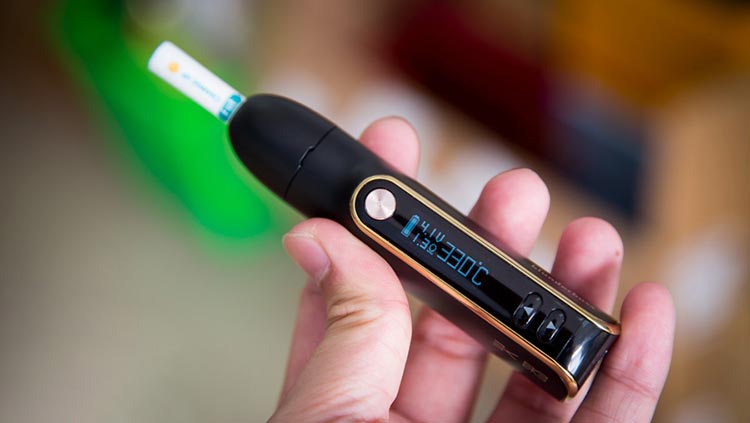
Moreover, the development momentum of e-cigarettes in developed Western countries is quite strong. The U.S. is the largest e-cigarette market globally, accounting for 43% of the $10 billion global market in 2016. However, the first-generation e-cigarettes dominate the U.S. market. The lack of popularity of IQOS in the U.S. is closely related to regulatory issues. The e-cigarette penetration rate in the U.S. reached over 17% last year.
In France, the e-cigarette usage rate has reached 21.3%, while the UK follows closely at 15.5%. These penetration rates serve as reference indicators for calculating the scale of the e-cigarette market in China.
This episode is just an appetizer; the next episode will focus on the enormous prospects for the development of e-cigarettes in China. Stay tuned.
A similar story happened at Alibaba, where a young woman started as a receptionist but eventually became the CEO of Ant Financial. If she hadn't seized the opportunity at the onset of an emerging industry, we wouldn't have seen the rise of female unicorn CEOs.
Today, we will discuss an emerging industry, a rocket about to launch: the new tobacco and e-cigarette industry. This industry, due to its association with tobacco, offers immense market potential.
Faced with such vast potential, many people remain unaware. If you don't plant seeds in spring, do you have a mine at home?
The industry we are discussing today is the new tobacco industry, which is on the verge of a historical opportunity as policies are about to loosen.
The e-cigarette company, MCV, listed on the New Third Board, has seen its value increase tenfold in two years.
First, let's talk about the tobacco industry and explore why it is so profitable. Why is tobacco a monopoly? It's simply because it is highly lucrative. China National Tobacco Corporation generates an annual revenue of 1.4 trillion yuan, with taxes and profits amounting to 1.1 trillion yuan. This revenue can sustain a military of several hundred thousand. If the China National Tobacco Corporation were to go public with a price-to-earnings ratio of 15, its valuation could reach 15 trillion yuan, over 2 trillion USD, far exceeding Apple's valuation. The profitability of tobacco has been recognized since ancient times, leading feudal governments to implement monopoly systems for highly profitable industries, such as salt and iron. Thus, tobacco is known to be extremely profitable worldwide.
Since traditional tobacco is highly profitable, is the new tobacco also profitable? Indeed, it is. Let's discuss the historical opportunities for the new tobacco industry from several perspectives.
First, let's look at the origins of e-cigarettes. The first e-cigarette was patented in 1963 by an American as a "smokeless, non-tobacco cigarette," but it failed commercially until 2000 when a pharmacist named Han Li from Beijing proposed the idea of diluting nicotine with propylene glycol and using ultrasonic devices to atomize the liquid. This marked the beginning of e-cigarette commercialization. The first e-cigarette developed in China ended in failure, but e-cigarettes thrived abroad. The real breakthrough came in 2014 with the launch of a heat-not-burn (IQOS) e-cigarette in Nagoya and Milan, establishing its mainstream market position. How popular is it? In just about a year, Philip Morris International's IQOS captured around 15% of the traditional tobacco market in Japan, solidifying the future mainstream status of heat-not-burn products.
The e-cigarette industry is quite simple:
The e-cigarette industry consists of two components: devices and pods.
This is not complicated, but it does involve patent issues. However, Chinese manufacturers can generally use others' patents or design around them, so there is no need for concern.
Additionally, let's discuss several reasons for the popularity of heat-not-burn e-cigarettes?
1. They do not contain tar or other carcinogenic substances. Traditional tobacco, when burned at 600 degrees Celsius, produces tar (carcinogenic and cancer-promoting substances) and other harmful pollutants (carbon monoxide, nitrogen oxides, etc.), which are major cancer-causing agents. In contrast, new tobacco is consumed by heating tobacco at around 350 degrees Celsius without combustion, thus not producing tar or harmful substances. Current research indicates that e-cigarettes reduce bodily harm by 90%. Therefore, in public places in Japan, there is a warning: "No smoking, except IQOS." Another reason for its popularity in Japan is that wives buy IQOS for their husbands, not only to protect their health but also to avoid secondhand smoke issues. The secondhand smoke problem is a significant advantage of new tobacco.
The second reason for the popularity of IQOS is its fashion and entertainment appeal, as it primarily involves tobacco consumption, unlike first-generation e-cigarettes that use flavored e-liquids, making it more acceptable to traditional smokers in terms of taste and experience. Here, it's important to clarify that nicotine was once thought to be the main harmful substance to health, but current conclusions suggest that it is the tar produced from combustion that is the real concern.
Moreover, the development momentum of e-cigarettes in developed Western countries is quite strong. The U.S. is the largest e-cigarette market globally, accounting for 43% of the $10 billion global market in 2016. However, the first-generation e-cigarettes dominate the U.S. market. The lack of popularity of IQOS in the U.S. is closely related to regulatory issues. The e-cigarette penetration rate in the U.S. reached over 17% last year.
In France, the e-cigarette usage rate has reached 21.3%, while the UK follows closely at 15.5%. These penetration rates serve as reference indicators for calculating the scale of the e-cigarette market in China.
This episode is just an appetizer; the next episode will focus on the enormous prospects for the development of e-cigarettes in China. Stay tuned.


