
Innovation: Zimbabwe Studies Expanding Tobacco Cultivation Nationwide
Introduction: Zimbabwe is reportedly studying the possibility of expanding tobacco cultivation nationwide, a move that has caused a strong reaction across the country. According to reports, Dr. Javi said they have already taken note of tobacco yields in n
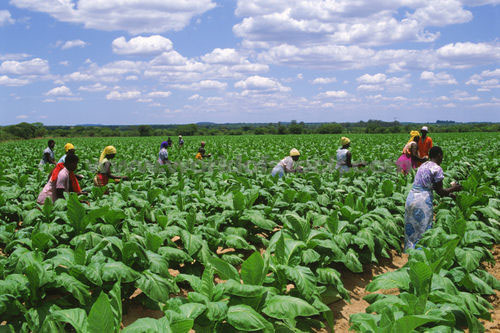
Introduction: It is reported that Zimbabwe is studying the possibility of expanding tobacco cultivation nationwide. This move has caused a nationwide stir. According to reports, Dr. Gavi said they have already been monitoring tobacco yields in non-traditional tobacco-growing regions such as Manicaland, Matabeleland, and Masvingo. She pointed out that the reason for the expansion is that tobacco offers the best returns of all crops grown in the country.
China vaping news: The Tobacco Research Board is conducting research on the feasibility of growing tobacco in non-traditional tobacco-growing areas. Dr. Dahlia Gavi, chief executive officer of the Tobacco Research Board, said that research into varieties suitable for arid regions has already made significant progress. She said the expansion of tobacco-growing areas can be seen from the increase in grower registrations, which rose from 1,500 mainly white farmers in the early 2000s to about 106,000 mainly black farmers in 2013. “For us, this is also a learning process. It means we can begin testing what will happen when tobacco is grown in drier regions, and whether we can achieve the same quality,” she said. In this regard, the Tobacco Research Board has established a total of 74 tobacco demonstration centers nationwide to teach tobacco farmers the best ways to cultivate this cash crop. So far, Dr. Gavi said they have already been monitoring tobacco yields in non-traditional tobacco-growing regions such as Manicaland, Matabeleland, and Masvingo. “The reason for the expansion is that the returns from growing tobacco are actually the best among all crops in this country,” she said. This year’s tobacco harvest has already reached 216 million kilograms, generating revenue of US$685 million, with an average price of US$3.17 per kilogram. Dr. Gavi said that compared with the lower prices for maize and cotton, returns from tobacco production are more attractive. “We even have tobacco growers in North Matabeleland, which is generally a very dry region,” she said. Against this background, Dr. Gavi said that understanding water requirements is the most important part of growing tobacco. She said farmers cannot rely solely on rainfall, because each plant needs at least 5 liters of water so that its roots can grow deep enough to reach groundwater. Dr. Gavi said the Tobacco Research Board is working with different stakeholders through Agritex, including the Ministry of Agriculture and the Ministry of Mechanisation and Irrigation Development, to guide tobacco farmers across the country.

