E-Cigarette Heating Wire Basics: How Much Do You Know?
This article mainly introduces you to some of the most common types of heating wires and discusses their uses and characteristics. Some heating wires are used for power and some heating wires are used for temperature control. We will introduce heating wires that can be used in both models.
We try our best to introduce you to the characteristics of different heating wires, and maybe we can help you decide which heating wire is most suitable for your style. Here, the focus will be on single strand standard silk and will not involve fancy heating silk such as Clapton, Alien, and Tiger Silk. We will try our best to make the article easy to understand and let everyone understand it quickly.
wire gaugeResistance and heating speed
Regardless of the material of the heating wire, there are some basic parameters for all heating wires.
The first basic parameter of all heating wires is the diameter of the heating wire, commonly called“Wire Gauge #p#Page Title #e#”, expressed in numbers. The wire diameter value does not represent the actual diameter, so the actual diameter value is not important. What is important is that as the wire gauge value increases, the wire diameter will become smaller. The 26GA heating wire is thinner than the 24GA and thicker than the 28GA. Common specifications for heating wires from small to large diameters are: 32, 30, 28, 26, 24 and 22GA. Of course, there are other specifications, even odd specifications.
Secondly, as the size of the heating wire increases, the resistance decreases. And due to the large mass of the heating wire, the heating wire usually takes a long time to heat. Thin heating wires like 32GA and 30GA will have a high resistance, but will heat up faster than 26GA and 24GA heating wires.
When you ignite the fire, the time it takes for the coil to heat up to the temperature required for the atomizing oil is the heating rate of the coil. Like many heating wires with multiple strands wound in parallel, such as Clapton, their heating speed will be slower. However, with the increase of heating wire gauges, a single coil can also be used to speed up the heating speed.
temperature control TC
Basically, the temperature control module detects when to adjust the current and the power output to the coil based on the parameter characteristics of the heating wire. Select a heating wire suitable for TC based on the temperature coefficient of resistance (TCR).
The TCR of a heating wire increases as the temperature increases, its resistance increases. The temperature-controlled box knows the resistance and material of your coil when it cools. It also knows that when the resistance of the coil rises (the temperature rises), the coil will overheat, and at this time it will reduce the current flowing to the coil as needed to prevent it from burning.
It's easy, right? If you still don't understand, you can check our previous article #p#pagination title #e#Steam Revolution Temperature Control”。
So, let's take a look at the specific types below.
A few years ago, I used the heating wire when I first DIY. At that time, I used 28GA and 30GA Kanthal wire to make my first coil.
Kanthal wire is composed of an iron-chromium-aluminum alloy with good oxidation resistance and is usually used for atomization in power mode. Kanthal is a great place to start if you are new to DIY. It is easy to work and has a certain hardness that makes it easy to shape when making coils. Kanthal is very popular, and I still use Kanthal as my first choice when making single-shot coils.
Kanthal is also very cheap and you can easily buy it.
#p#Pagination Title #e#+ Compatible power modes
+ Can be used in mechanical equipment
+ easy to use
+ Easy to shape
+ good adaptability
+ price is cheap
–Incompatible with TC mode
Another power mode heating wire, Ni80 for short, is composed of nickel chromium alloy. Nickel alloys are alloys composed of nickel and chromium, and may also contain other metals, such as iron. Nichrome is also used in dental treatments such as dental fillings.
The characteristics of Ni80 wire are very similar to those of Kanthal, but it also has lower resistance and heats faster than Kanthal's heating wires of the same specification. Like Kanthal, it is easy to shape when making coils. The melting point of Ni80 wire is lower than that of Kanthal, so be careful when drying the coil. If they are not controlled well, they can easily burn out. I have experienced this. When burning wire, click and gradually heat until the coil burns red.
Another shortcoming of Ni80 wire is the nickel content. A small number of people who are allergic to nickel may not be suitable for using Ni80 wire as their own heating wire.# p#pagination title #e#
+ Heating faster than Kanthal
+ easy to use
+ Easy to shape
– nickel content
– lower melting point
–Incompatible with TC mode
#p#Pagination Title #e#
Stainless steel wire is the most special heating wire we have introduced. It can be compatible with dual modes, both power mode and temperature control mode can be used. I will use stainless steel wire to test the two modes of the regulator box. You can switch between the two modes at will, which is really convenient.# p#pagination title #e#
Stainless steel wire is an alloy composed of chromium, nickel and carbon. There are many different grades of stainless steel, and they are represented by numbers. Because it is a brief introduction, we will not expand at this level. Most of the stainless steel heating wires we commonly use are 316 because it is used for medical, pharmaceutical and food grade materials.
Stainless steel is easy to form and maintains a good shape. Like nickel wire, it heats up faster than Kanthal.
+ Compatible with power and temperature control modes
+ Heating faster than Kanthal
+ easy to use
+ Easy to shape
–#p#Pagination Title #e# nickel content
– Resistance value is unstable, resistance jumps
#p#Pagination Title #e#
Nickel 200 is pure nickel wire, referred to as Ni200. Ni200 is the first heating wire used in temperature control mode.
Although I have a few rolls of Ni200 silk, I have been idle to eat dust. Why?
Ni200 is soft and difficult to shape. It is difficult to make a uniform coil. It is easy to deform during installation. It needs to be reshaped during wire burning, which is too troublesome for me. The cost of use is very good, but of course this does not refer to the price.
Because it is made of pure nickel. Although I am not allergic to nickel, I also don't like atomizing on Ni200. Of course, I know that other types of heating wires also have nickel, but it is not the main ingredient. This is a question of my personal preference and does not have any reference value. I'm sorry.
Ni200 is still a very popular temperature-controlled heating wire and is easy to buy.
#p#Pagination Title #e#+ Compatible with temperature control modes
+ easy to buy
– nickel content
– Difficult to shape
– not easy to use
The last thing we introduce is titanium wire, another wire for temperature control, made of pure titanium.
The safety of titanium wires used for atomization is controversial because it releases toxic components (titanium dioxide) at 648 ° C (1200 ° F). And, like magnesium, if titanium is ignited, it can be difficult to extinguish.
Please note that many people still use it. In theory, if your temperature-controlled box works properly, you don't really have to worry about it burning or titanium dioxide poisoning.# p#pagination title #e#
In fact, I have also used titanium wire, and there is no problem with normal use. It is also easy to make coils with it, and wire burning will not deform. But I still didn't continue to use it because there were better alternatives (stainless steel and kanthal) and I wasn't worth the risk.
+ Compatible with temperature control modes
+ easy to use
+ Easy to shape
–potentially toxic
– Fire risk
– Not easy to buy
#p#Pagination Title #e#
written in the end
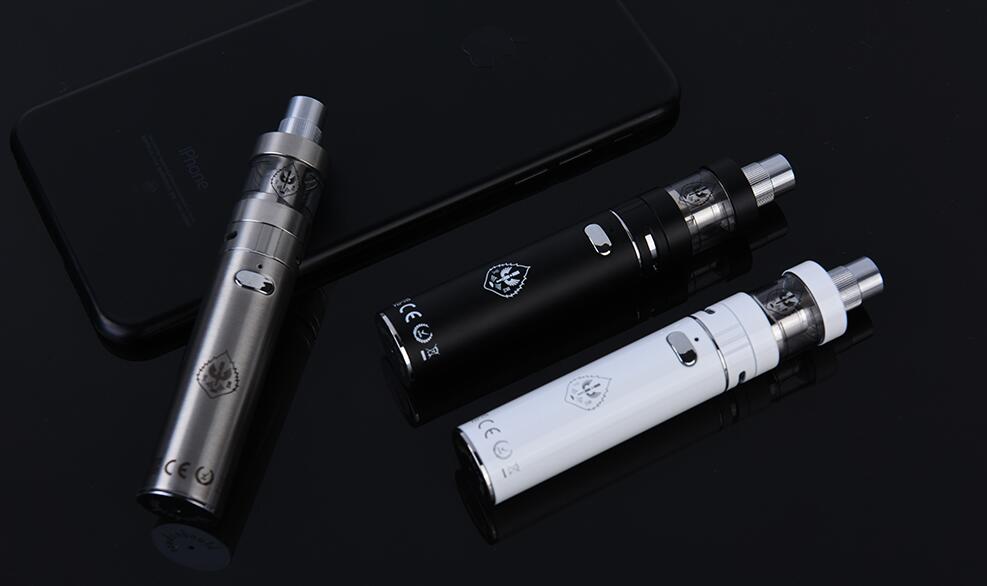
Heating wires are an important variable in the atomization experience. In fact, this is one of the factors that has a big impact on your atomization experience. Of course, TC wire (except SS stainless steel) can only be used in pressure regulating boxes with temperature control mode.# p#pagination title #e#
Changing the type and specification of the heating wire allows us to accurately control the heating time, current, power and final atomization effect. This is also the fun of DIY. In addition, we can also use different turns, coil diameters and more complex filaments to optimize our unique taste. Once I find a specific data that suits a particular atomizer, I will write it down, including the specifications of the heating wire for future reference.
So, what is the best heating wire for you? You can leave a message and discuss various issues related to heating wires with us.