
How Did Media, Lawyers, and Capital Respond to the Online Vape Ban?
After the announcement and policy interpretation were released, they quickly attracted strong attention across China’s vaping industry, and even foreign media followed up immediately. So, in response to the strictest new regulation in the history of vapin
After the announcement and policy interpretation were released, it quickly attracted strong attention in the domestic e-cigarette industry, and even foreign media followed up with reports. So, how did various enterprises and brands in the industry, media, lawyers, and capital respond to the strictest regulations in the history of e-cigarettes? Let's take a look at their viewpoints.
1. Industry Enterprises: Strongly Support the Announcement from the State Tobacco Monopoly Administration & National Market Supervision Administration on "Further Protecting Minors from E-cigarette Harm"
Click on the right to view → The strictest new e-cigarette regulations have been introduced, with over 50 industry organizations and brand enterprises expressing strong support!
Although most domestic e-cigarette enterprises and brands publicly stated their support, it is evident that they are extremely reluctant deep down, yet they feel helpless. For now, they can only remain passive and adapt to the changes.
2. Media Response: CCTV Financial Commentator Yao Zhenshan—The Core is Protecting Minors, Not Prohibition but Urging, Offline Market Still Exists.
On the evening of November 1, CCTV's Economic Information Broadcast commentator Yao Zhenshan stated in a CCTV financial program that the announcement from the State Tobacco Monopoly Administration and the National Market Supervision Administration is not a prohibition but an urging.



Yao Zhenshan discussed the three layers of meaning of this joint announcement: first, the core is to protect minors; second, it is not prohibition but urging; third, the offline market still exists.
Yao Zhenshan also mentioned that the current positioning and regulation of e-cigarettes are unclear. If they are considered electronic products, then the Ministry of Industry and Information Technology should intervene; if they are considered food, the National Health Commission should intervene; if they are tobacco, the State Tobacco Monopoly Administration should intervene.
3. Lawyers' Response: Is the Tobacco Monopoly Administration Acting Beyond Its Authority by Banning E-cigarettes Under the Pretext of Protecting Minors?
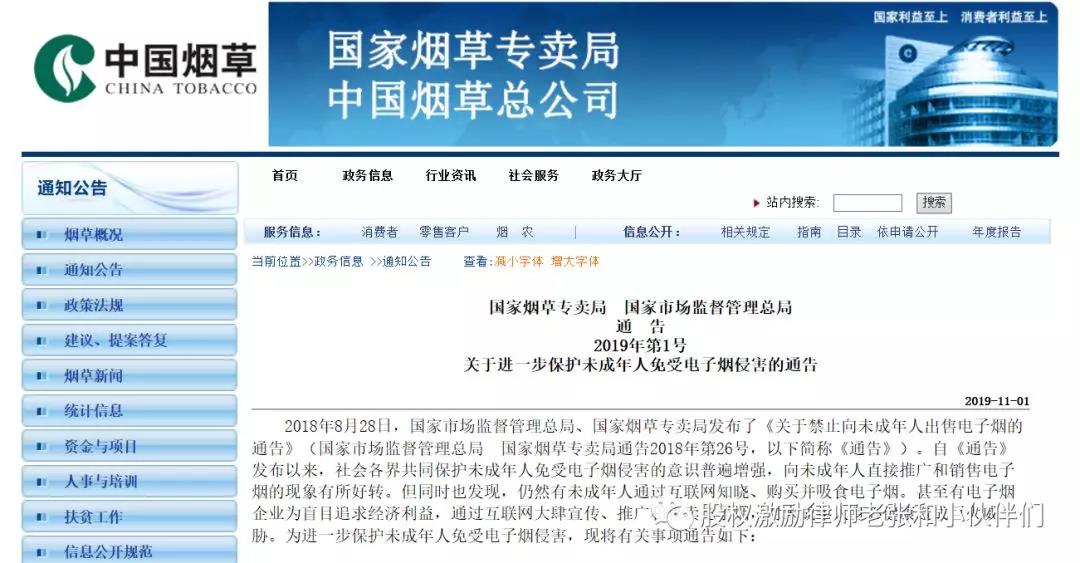
On November 1, 2019, the State Tobacco Monopoly Administration and the National Market Supervision Administration jointly issued Announcement No. 1 of 2019 on "Further Protecting Minors from E-cigarette Harm," stating: "To protect the physical and mental health of minors and prevent them from purchasing and using e-cigarettes through the internet, from the date of this announcement, e-cigarette production and sales enterprises or individuals are urged to promptly close e-cigarette internet sales websites or apps, and e-commerce platforms are urged to promptly close e-cigarette stores and remove e-cigarette products from shelves."
So the question arises: verifying the seller's age in e-commerce channels is not difficult, yet the two departments did not "urge" e-commerce channels to verify ages and exclude underage buyers, but instead required a complete shutdown. What is the scientific and rational basis for this announcement? Protecting minors' physical and mental health is not opposed by anyone, but the behavior of adults purchasing e-cigarettes is just as legal as buying traditional cigarettes from the State Tobacco Monopoly Administration's China Tobacco Group. Why does the announcement seek to restrict the legal rights of adults to protect minors?
The sales channels for traditional cigarettes are numerous, and to protect minors' health, the regulatory authorities require sellers not to sell to minors, which protects the rights of adults to purchase cigarettes while preventing minors from buying them. So why is the e-cigarette e-commerce channel being completely shut down? Some conspiracy theorists believe this is because e-cigarettes have encroached on the traditional cigarette market, threatening the profits of China Tobacco Group... If we don't believe in conspiracy theories, we can only explain it as administrative overreach by the regulatory agency.
Is the Tobacco Monopoly Administration Overstepping Its Authority?
The Tobacco Monopoly Administration is not a department that governs everything from the sky to the ground and even the air; its administrative power has boundaries. The scope of tobacco monopoly products under its jurisdiction comes from the "Tobacco Monopoly Law," which states: "The tobacco monopoly products referred to in this law are cigarettes, cigars, tobacco leaves, re-dried tobacco leaves, cigarette paper, filter rods, tobacco bundles, and tobacco-specific machinery."
Anyone with a little knowledge of e-cigarettes knows that there are two forms: one represented by IQOS, which is a heated non-combustion type of e-cigarette, and the other represented by JUUL, which is a vaporized e-cigarette. If IQOS and traditional cigarettes are banned because they look similar (extracting effective substances from tobacco leaves and reconstituting them into paper products), then the e-liquids made from propylene glycol, vegetable glycerin, flavoring, and nicotine should not fall under the category of tobacco monopoly products.
Administrative agencies exceeding their statutory powers and limits to make administrative actions that do not belong to their jurisdiction are called overreach.
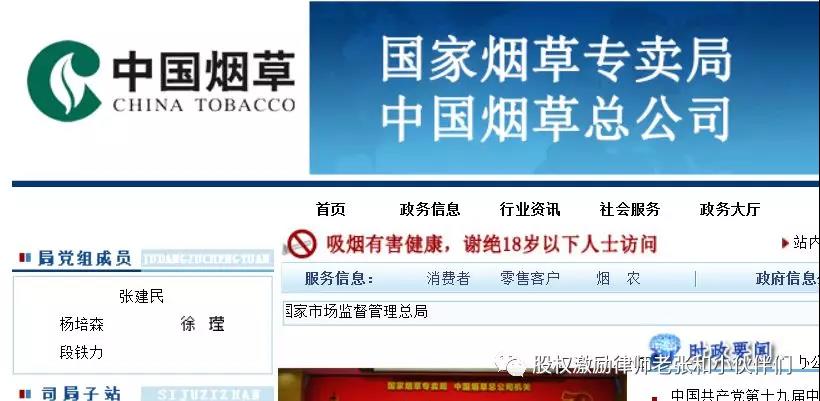
On the homepage of the Tobacco Monopoly Administration's official website, there is a line in red: "Smoking is harmful to health, and access is denied to individuals under 18 years old." Perhaps the administration feels embarrassed about the promotional content on its website, such as identifying genuine and fake Chinese cigarettes, hence the warning on the homepage. But what can you do to prevent a minor from wandering into your official website and harming their physical and mental health? According to the administration's logic, shouldn't this website be shut down?
Is This All-Ages Ban Legal?
There is no law prohibiting adults from purchasing and using e-cigarettes, thus this is a legal right of adults. While it is legally justified to restrict sales channels to minors under the "Minor Protection Law," the all-ages ban in the announcement, which requires e-commerce channels to shut down, inevitably affects the rights of adults to purchase e-cigarettes. Moreover, it is not difficult for e-commerce channels to technically verify the age of buyers, so what legal basis is there for this all-ages ban?
Article 80, Paragraph 2 of the "Legislation Law" states: "The matters regulated by departmental regulations should belong to the execution of laws or administrative regulations, decisions, and orders of the State Council. Without the legal basis of laws or administrative regulations, decisions, and orders of the State Council, departmental regulations shall not set norms that reduce the rights of citizens, legal persons, and other organizations or increase their obligations, nor shall they increase the powers of this department or reduce its statutory responsibilities."
The State Tobacco Monopoly Administration and the National Market Supervision Administration, for the sake of administrative convenience, prohibiting e-commerce channels from selling e-cigarettes to adults clearly violates the provisions of the "Legislation Law."
4. Capital Response: The Measures to Limit E-cigarette Sales to Minors Promote New Tobacco Regulation to "Tobacco-like"
The announcement focuses on protecting minors, stemming from unresolved issues in the e-cigarette industry.
The two departments had previously issued an announcement on August 28, 2018, prohibiting the sale of e-cigarettes to minors, aiming to protect minors from e-cigarette harm, and pointed out three points: first, minors smoking e-cigarettes pose significant health and safety risks; second, market entities must not sell e-cigarettes to minors; third, all sectors of society must work together to protect minors from e-cigarette harm. This new announcement further clarifies the issues, directly addressing the core of the industry's chaos. The new announcement states that e-cigarettes, as a supplement to traditional tobacco products, carry significant safety and health risks, with strong variability in raw material selection, additive use, process design, and quality control, and some products have quality and safety hazards such as e-liquid leakage, poor-quality batteries, and unsafe ingredient additions.
From "suggestions" to "urging," the regulatory focus is on online channels, without changing the original intention of protecting minors under the "Minor Protection Law." Both the 2018 and 2019 announcements clearly state that various market entities must not sell e-cigarettes to minors. More specifically, the new announcement proposes clear methods for various market entities, urging any organization and individual to discourage and stop the sale of e-cigarettes to minors, and upgrading from "suggestions" in the 2018 announcement to "urging," stating, "From the date of this announcement, e-cigarette production and sales enterprises or individuals are urged to promptly close e-cigarette internet sales websites or apps; e-commerce platforms are urged to promptly close e-cigarette stores and remove e-cigarette products from shelves; e-cigarette production and sales enterprises or individuals are urged to withdraw e-cigarette advertisements published on the internet."
We believe that: 1) In the short term, due to online channels accounting for about 20-30%, the closure of online channels and the prohibition of online marketing measures may affect the sales situation of related brands for a period of time, and each brand will increase its efforts to expand and deepen offline channels, which may further raise the costs of offline channels; 2) In the medium to long term, e-cigarette regulation may become "tobacco-like," gradually aligning with traditional cigarettes in terms of smoking control, product standards, licenses, and even taxation. In this context, we believe that industry chain service providers who have cooperated with the China Tobacco system for decades are likely to continue benefiting in the new tobacco field by serving China Tobacco and exploring new tobacco market opportunities together.
1. Industry Enterprises: Strongly Support the Announcement from the State Tobacco Monopoly Administration & National Market Supervision Administration on "Further Protecting Minors from E-cigarette Harm"
Click on the right to view → The strictest new e-cigarette regulations have been introduced, with over 50 industry organizations and brand enterprises expressing strong support!
Although most domestic e-cigarette enterprises and brands publicly stated their support, it is evident that they are extremely reluctant deep down, yet they feel helpless. For now, they can only remain passive and adapt to the changes.
2. Media Response: CCTV Financial Commentator Yao Zhenshan—The Core is Protecting Minors, Not Prohibition but Urging, Offline Market Still Exists.
On the evening of November 1, CCTV's Economic Information Broadcast commentator Yao Zhenshan stated in a CCTV financial program that the announcement from the State Tobacco Monopoly Administration and the National Market Supervision Administration is not a prohibition but an urging.
Yao Zhenshan discussed the three layers of meaning of this joint announcement: first, the core is to protect minors; second, it is not prohibition but urging; third, the offline market still exists.
Yao Zhenshan also mentioned that the current positioning and regulation of e-cigarettes are unclear. If they are considered electronic products, then the Ministry of Industry and Information Technology should intervene; if they are considered food, the National Health Commission should intervene; if they are tobacco, the State Tobacco Monopoly Administration should intervene.
3. Lawyers' Response: Is the Tobacco Monopoly Administration Acting Beyond Its Authority by Banning E-cigarettes Under the Pretext of Protecting Minors?
On November 1, 2019, the State Tobacco Monopoly Administration and the National Market Supervision Administration jointly issued Announcement No. 1 of 2019 on "Further Protecting Minors from E-cigarette Harm," stating: "To protect the physical and mental health of minors and prevent them from purchasing and using e-cigarettes through the internet, from the date of this announcement, e-cigarette production and sales enterprises or individuals are urged to promptly close e-cigarette internet sales websites or apps, and e-commerce platforms are urged to promptly close e-cigarette stores and remove e-cigarette products from shelves."
So the question arises: verifying the seller's age in e-commerce channels is not difficult, yet the two departments did not "urge" e-commerce channels to verify ages and exclude underage buyers, but instead required a complete shutdown. What is the scientific and rational basis for this announcement? Protecting minors' physical and mental health is not opposed by anyone, but the behavior of adults purchasing e-cigarettes is just as legal as buying traditional cigarettes from the State Tobacco Monopoly Administration's China Tobacco Group. Why does the announcement seek to restrict the legal rights of adults to protect minors?
The sales channels for traditional cigarettes are numerous, and to protect minors' health, the regulatory authorities require sellers not to sell to minors, which protects the rights of adults to purchase cigarettes while preventing minors from buying them. So why is the e-cigarette e-commerce channel being completely shut down? Some conspiracy theorists believe this is because e-cigarettes have encroached on the traditional cigarette market, threatening the profits of China Tobacco Group... If we don't believe in conspiracy theories, we can only explain it as administrative overreach by the regulatory agency.
Is the Tobacco Monopoly Administration Overstepping Its Authority?
The Tobacco Monopoly Administration is not a department that governs everything from the sky to the ground and even the air; its administrative power has boundaries. The scope of tobacco monopoly products under its jurisdiction comes from the "Tobacco Monopoly Law," which states: "The tobacco monopoly products referred to in this law are cigarettes, cigars, tobacco leaves, re-dried tobacco leaves, cigarette paper, filter rods, tobacco bundles, and tobacco-specific machinery."
Anyone with a little knowledge of e-cigarettes knows that there are two forms: one represented by IQOS, which is a heated non-combustion type of e-cigarette, and the other represented by JUUL, which is a vaporized e-cigarette. If IQOS and traditional cigarettes are banned because they look similar (extracting effective substances from tobacco leaves and reconstituting them into paper products), then the e-liquids made from propylene glycol, vegetable glycerin, flavoring, and nicotine should not fall under the category of tobacco monopoly products.
Administrative agencies exceeding their statutory powers and limits to make administrative actions that do not belong to their jurisdiction are called overreach.
On the homepage of the Tobacco Monopoly Administration's official website, there is a line in red: "Smoking is harmful to health, and access is denied to individuals under 18 years old." Perhaps the administration feels embarrassed about the promotional content on its website, such as identifying genuine and fake Chinese cigarettes, hence the warning on the homepage. But what can you do to prevent a minor from wandering into your official website and harming their physical and mental health? According to the administration's logic, shouldn't this website be shut down?
Is This All-Ages Ban Legal?
There is no law prohibiting adults from purchasing and using e-cigarettes, thus this is a legal right of adults. While it is legally justified to restrict sales channels to minors under the "Minor Protection Law," the all-ages ban in the announcement, which requires e-commerce channels to shut down, inevitably affects the rights of adults to purchase e-cigarettes. Moreover, it is not difficult for e-commerce channels to technically verify the age of buyers, so what legal basis is there for this all-ages ban?
Article 80, Paragraph 2 of the "Legislation Law" states: "The matters regulated by departmental regulations should belong to the execution of laws or administrative regulations, decisions, and orders of the State Council. Without the legal basis of laws or administrative regulations, decisions, and orders of the State Council, departmental regulations shall not set norms that reduce the rights of citizens, legal persons, and other organizations or increase their obligations, nor shall they increase the powers of this department or reduce its statutory responsibilities."
The State Tobacco Monopoly Administration and the National Market Supervision Administration, for the sake of administrative convenience, prohibiting e-commerce channels from selling e-cigarettes to adults clearly violates the provisions of the "Legislation Law."
4. Capital Response: The Measures to Limit E-cigarette Sales to Minors Promote New Tobacco Regulation to "Tobacco-like"
The announcement focuses on protecting minors, stemming from unresolved issues in the e-cigarette industry.
The two departments had previously issued an announcement on August 28, 2018, prohibiting the sale of e-cigarettes to minors, aiming to protect minors from e-cigarette harm, and pointed out three points: first, minors smoking e-cigarettes pose significant health and safety risks; second, market entities must not sell e-cigarettes to minors; third, all sectors of society must work together to protect minors from e-cigarette harm. This new announcement further clarifies the issues, directly addressing the core of the industry's chaos. The new announcement states that e-cigarettes, as a supplement to traditional tobacco products, carry significant safety and health risks, with strong variability in raw material selection, additive use, process design, and quality control, and some products have quality and safety hazards such as e-liquid leakage, poor-quality batteries, and unsafe ingredient additions.
From "suggestions" to "urging," the regulatory focus is on online channels, without changing the original intention of protecting minors under the "Minor Protection Law." Both the 2018 and 2019 announcements clearly state that various market entities must not sell e-cigarettes to minors. More specifically, the new announcement proposes clear methods for various market entities, urging any organization and individual to discourage and stop the sale of e-cigarettes to minors, and upgrading from "suggestions" in the 2018 announcement to "urging," stating, "From the date of this announcement, e-cigarette production and sales enterprises or individuals are urged to promptly close e-cigarette internet sales websites or apps; e-commerce platforms are urged to promptly close e-cigarette stores and remove e-cigarette products from shelves; e-cigarette production and sales enterprises or individuals are urged to withdraw e-cigarette advertisements published on the internet."
We believe that: 1) In the short term, due to online channels accounting for about 20-30%, the closure of online channels and the prohibition of online marketing measures may affect the sales situation of related brands for a period of time, and each brand will increase its efforts to expand and deepen offline channels, which may further raise the costs of offline channels; 2) In the medium to long term, e-cigarette regulation may become "tobacco-like," gradually aligning with traditional cigarettes in terms of smoking control, product standards, licenses, and even taxation. In this context, we believe that industry chain service providers who have cooperated with the China Tobacco system for decades are likely to continue benefiting in the new tobacco field by serving China Tobacco and exploring new tobacco market opportunities together.


